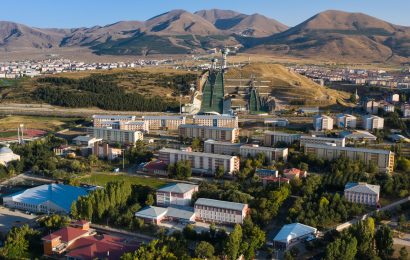
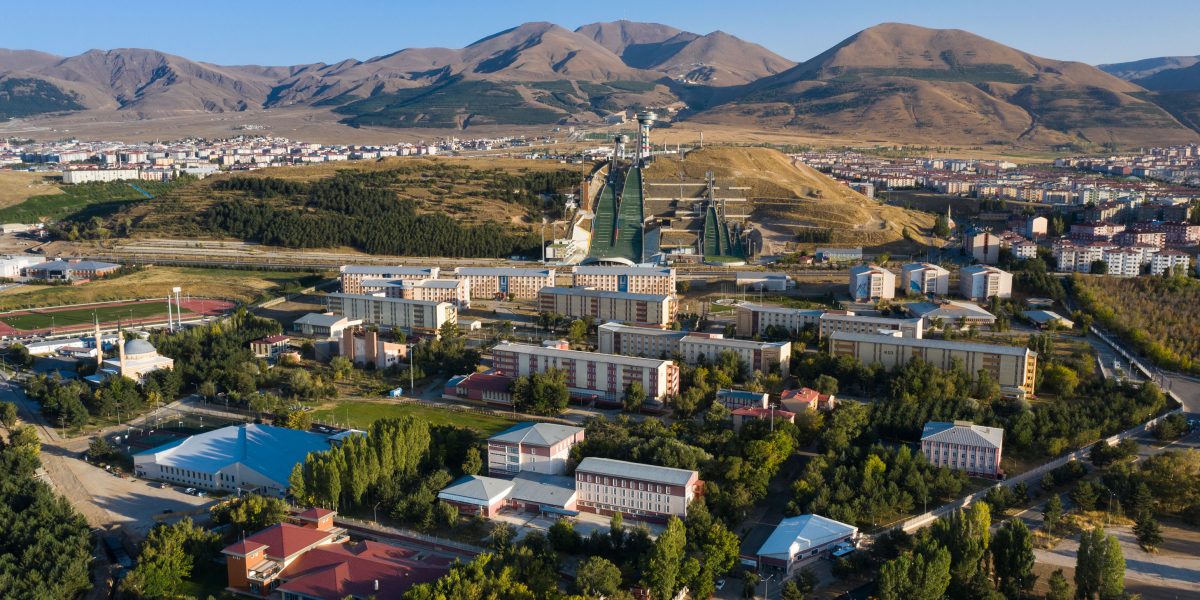
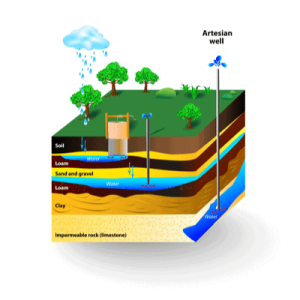
Atatürk University abstracts water from artesian/groundwater wells on university property and affiliated sites and operates these sources under a permit-led, monitored, and conservation-oriented framework. The system aligns with Türkiye’s Groundwater Law No. 167 (Yeraltı Suları Hakkında Kanun) and DSİ (State Hydraulic Works) procedures for exploration and use licences, and is integrated with campus-wide metering, water-quality control, and aquifer-protection measures. Tarım ve Orman Bakanlığı
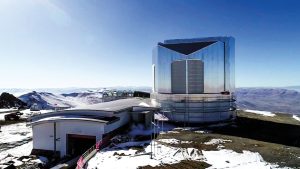
In addition to on-campus wells, the University has pursued well drilling for drinking water at the DAG (Eastern Anatolia Observatory) site, evidencing off-campus groundwater development managed as a formal project/tender. atasam.atauni.edu.tr
Historically, university-affiliated research has also evaluated artesian waters associated with Atatürk University wellfields for aquaculture suitability, showing long-standing institutional engagement with artesian sources and quality assessment. unis.kastamonu.edu.tr
1) Governance, Licensing & Compliance
-
Legal basis & permits: All wells are planned and operated in accordance with Law No. 167 and DSİ’s licensing regime (exploration → use licence), including submission of well logs, coordinates, dynamic/static levels, and sustainable yield tests as part of licensing. Tarım ve Orman Bakanlığı+2JMO

-
Operator responsibilities: The University engages certified hydrogeology contractors and DSİ-licensed professionals for siting, drilling, test-pumping, and commissioning, consistent with national technical guidance. JMO
-
Municipal coordination: Where campus networks interconnect with the municipal grid, practices are coordinated with ESKİ (Erzurum Water & Sewerage Administration) for system integrity and loss-control. eski.gov.tr
2) Extraction Technologies & Aquifer Protection
Atatürk University’s abstraction scheme prioritises technologies that minimise drawdown, energy use, and contamination risk:
-
Well design & sanitary protection: Hygienic wellheads with sealed casings and grouted annulus, raised aprons, and backflow prevention to avoid surface infiltration. (Aligned with DSİ technical norms.) JMO
-
Sustainable yield & test pumping: Each production well undergoes step-drawdown and constant-rate tests to determine safe abstraction limits; operational set-points are set below the tested sustainable yield to protect the aquifer. JMO
-
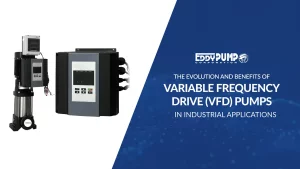
High-efficiency pumping: Submersible pumps with VFDs (variable-frequency drives) optimise flow to demand, reducing energy and limiting rapid water-level fluctuations.
-
Telemetry & metering: Inline electromagnetic meters and telemetry log instantaneous flow and cumulative abstraction; data are fed to the University’s analytics platform for trend and seasonal analysis (the same data fabric used in campus utilities management).
-
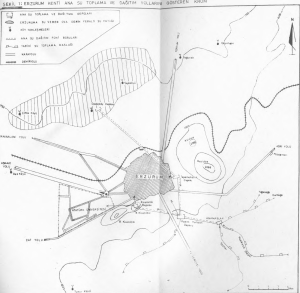
Recharge-aware scheduling: Seasonal pumping schedules (winter low-demand, summer capped abstractions) are tied to aquifer level trends and precipitation/recharge expectations for the Erzurum basin. Background on Erzurum’s drinking-water sources (springs & well waters) underscores the hydrogeographic context for conservative groundwater use. DergiPark
-
Energy & carbon footprint: When feasible, wellhouses are equipped for off-peak operation and renewable-assisted power to reduce Scope-2 emissions associated with pumping.
3) Water Quality Assurance & Potability
-
Regulatory testing: Groundwater from artesian wells intended for human consumption is tested against İnsani Tüketim Amaçlı Sular Yönetmeliği / TS 266 indicator parameters (e.g., microbiology, nitrates, hardness, metals), with corrective actions (shock chlorination, cartridge/UV polishing) as needed before distribution. (General standards context; artesian sources in Türkiye require robust monitoring.) DergiPark

-
Routine surveillance: Monthly operational checks (pH, EC, turbidity, residual disinfectant where applied) and periodic laboratory analyses are scheduled; any anomalies trigger immediate isolation and retesting prior to re-commissioning.
4) Monitoring, Data & Transparency
-
Wellfield dashboard: Abstraction volumes, dynamic levels, and pump run-times are logged and archived, supporting year-on-year comparisons, leak/loss detection, and early warning for abnormal drawdown.
-
Audit trail: Licensing files (exploration/use licences), well logs, and test-pump reports are maintained to ensure traceability and compliance with DSİ requirements. e-Devlet
-
Integration with research: University units (e.g., Fisheries, Engineering) have historically analysed local artesian water quality and suitability (e.g., for aquaculture and process uses), reinforcing the evidence base for sustainable extraction. unis.kastamonu.edu.tr
5) Off-Campus & Remote Sites
-
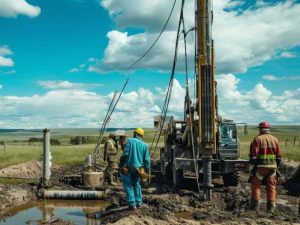
DAG (Eastern Anatolia Observatory) potable well project: The University initiated a tender for a drinking-water borehole at the observatory site, with the same sustainable siting, licensing, and monitoring controls required for campus wells—demonstrating consistent practices off campus. (Tender page present, content protected due to procurement sensitivity.) atasam.atauni.edu.tr
6) Safeguards & Contingencies
-
Protection zones: Wellhead protection areas (inner/outer zones) restrict hazardous storage and vehicle access; spill kits and impermeable floors are used in wellhouses.
-
Drought & emergency plans: Pre-defined abstraction throttling and switch-over to municipal supply prevent over-pumping during drought or maintenance.
-
Periodic review: Every licence cycle, abstraction data are re-assessed against aquifer response to keep withdrawals at or below the long-term safe yield.
Evidence (key public sources)
-
Groundwater Law No. 167 (Yeraltı Suları Hakkında Kanun) — licensing/DSİ authority. Tarım ve Orman Bakanlığı
-
DSİ e-Government service — exploration/use licence application pathway. e-Devlet
-
Atatürk Univ. — DAG potable-water well drilling tender (password-protected project page) — evidence of off-campus well project. atasam.atauni.edu.tr
-
Atatürk Univ. affiliated research on artesian waters & wellfields — historical use/assessment context. unis.kastamonu.edu.tr
-
ESKİ (Erzurum Water & Sewerage Administration) — municipal coordination framework. eski.gov.tr
-
Hydrogeography of Erzurum water sources (springs & wells) — regional context for conservative abstraction. DergiPark