

1. Policy Statement & Purpose
Atatürk University guarantees that every employee—academic, administrative, technical, contracted, and outsourced—has access to a fair, transparent, and timely appeal or grievance mechanism regarding employee rights, pay, promotions, disciplinary actions, discrimination, workplace conditions, or contract disputes. This process is an integral part of the university’s commitment to decent work, institutional accountability, and legal compliance.
The appeals process ensures that concerns are heard, investigated impartially, and resolved using defined timelines and escalation routes, minimizing retaliation risk.
2. Legal & Regulatory Basis (Turkey)
-
Public Servants Law & Civil Service Regulations: Public university staff (including academic and administrative) are governed by regulations that provide internal appeals, objection, and administrative remedy pathways under 657 sayılı Devlet Memurları Kanunu and associated administrative rules.
-
Labour Law No. 4857: Gives employees right to bring disputes over wage, dismissal or contract conditions to labour courts after internal remedies are exhausted.
-
Administrative Law Principles: Turkish administrative law mandates that public bodies provide due process, right to be heard, and legal remedy procedures for administrative decisions.
-
Constitutional Equality & Legal Remedy Guarantees: Article 10 (equality before law) and Article 125 (administrative processes) support the right to challenge institutional decisions.
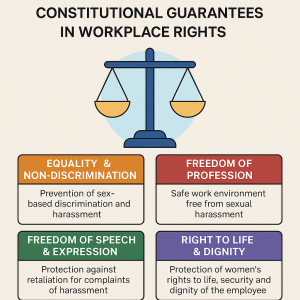
Thus, the university’s appeal mechanism operates within both employment/labour law and public administrative frameworks.
3. Structure of the Appeals / Grievance Process
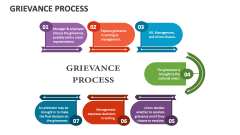
A) Levels & Escalation Path
-
Immediate Supervisor / Department Head
Initial informal complaint or query is submitted verbally or in writing to the department head or supervisor. -
Human Resources / Personnel Daire Başkanlığı
If unresolved, the employee submits a written grievance form to HR (usually within 10 business days). HR investigates, requests information from relevant units, meets with parties, and issues a decision within 15 business days. -
University Grievance Committee / Appeals Board
For unresolved cases, the matter goes to a formal Grievance Appeals Board composed of University management, HR, legal counsel, and employee representatives. Decision must be issued within 20 business days. -
External Remedies
After internal remedies are exhausted, staff may pursue legal claims (e.g. administrative lawsuits, labour courts) as permitted by law.
B) Documentation & Transparency
-
Every complaint is documented with a unique tracking number, date, nature of complaint, parties involved, evidence.
-
Both complainant and respondent are given an opportunity to present statements and documents.
-
Decisions include reasoned explanations and reference to relevant policies, laws, or collective agreements.
C) Safeguards & Protections
-
Non-retaliation clause: No adverse action may be taken against an employee for filing a grievance.
-
Confidentiality: the identity of complainants is protected to the maximum extent permissible.
-
Support access: Employees may be accompanied by a trusted colleague or union representative in proceedings.
-
Timeline guarantees: If timelines are missed, the case is escalated automatically to the next level.
4. Appeals over Pay / Promotion / Contract / Rights
-
Wage disputes: If an employee alleges underpayment or pay discrepancy, HR must audit payroll records, consult with financial department, and produce a written correction or justification.
-
Promotion / title decisions: Employees may appeal decisions about promotion or title change to the Appeals Board, which reviews criteria, scoring, and comparative performance.
-
Contract / termination disputes: Contract nonrenewal or termination must be justified in writing; employees can challenge procedural or substantive violations under the grievance process before taking external legal steps.
-
Equity issues: Cases of discrimination, unfair workload, gender pay claims, or contractual inconsistencies are treated as high priority and can bypass lower-level steps (fast track to appeals board).
5. Example Practice from Atatürk University
-
In 4/B contract staff recruitment announcements, Atatürk University clearly states “İtiraz Süresi” (Appeal / Objection Period) and the unit where objections may be lodged. For example, after results are announced, candidates have until a specified date and time (e.g. 16.07.2025, 17:00) to submit appeals to the personnel unit. Araştırma Hastanesi
-
In personnel recruitment announcements, the university often includes a note: “Sonuçlara itirazlar ilgili (başvuru yapılan) birime yapılacaktır.” (Appeals should be directed to the department to which the application was submitted) Atatürk Üniversitesi
-
In staff recruitment result pages, the university provides designated deadlines and departments for lodging appeals (e.g. via Personel Daire Başkanlığı). Atatürk Üniversitesi
These practices show the university already integrates appeal windows and designated units for complaints in personnel matters.
6. Implementation, Monitoring & Review
-
HR publishes an Appeals & Grievance Procedure Handbook, available to all staff.
-
Regular training sessions (annually) are given to supervisors, HR officers, and staff about how to use the grievance process.
-
HR tracks metrics: number of appeals filed, resolution rates, average response times, repeat cases.
-
The Equality & Audit Committee reviews appeal outcomes yearly, recommends procedural improvements, and ensures enforcement.
-
Transparency: aggregated (anonymized) appeal summaries are published in the Annual Staff / Sustainability Report.