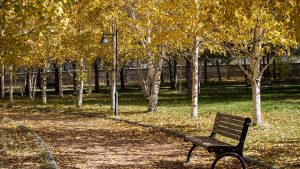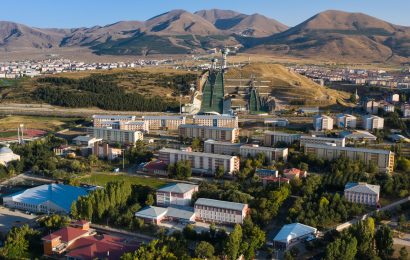
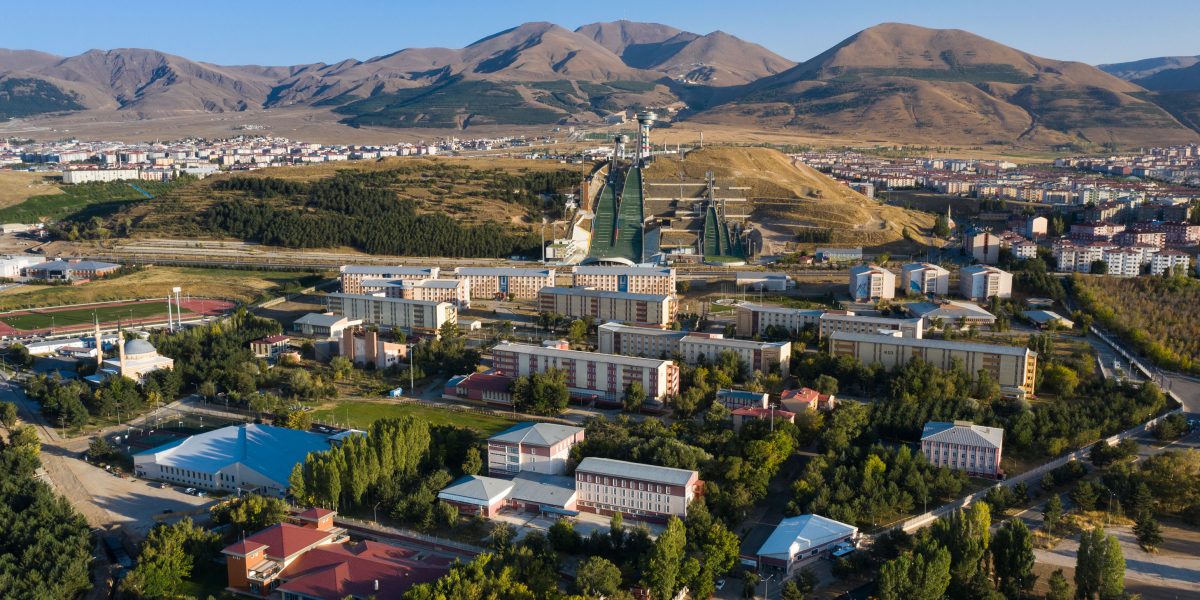
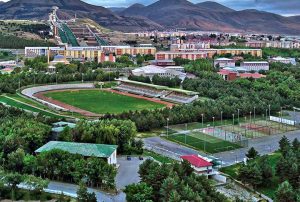
Atatürk University’s campus spans a vast area of 6.5 million m² of open land and 1 million m² of built space. Yandex Yandex The university intentionally integrates open green spaces, landscaped courtyards, botanical parks, and recreational grounds into its campus fabric. These areas are freely accessible to students, staff, and the public at all times, supporting recreation, aesthetic well-being, and community use.
1. Campus-Wide Green Infrastructure & Landscaping
-
The campus master plan incorporates large open-green zones, lawns, tree-lined walkways, and central courtyards. A study of the central campus courtyard emphasizes how the open-green area design project improved the spatial quality, ecological functions, and user satisfaction post-renovation. DergiPark
-
The campus’s landscape planning and open space design have been documented in architectural and planning literature as a case of integrating open- green environments into university settings. ofd.artvin.edu.tr
-
The campus is described as “one of our country’s most prestigious campuses” in part because of its open-green planning and layout. DergiPark
2. Botanical / Public Green Spaces: “Ata Botanik Park” & Gardens
-
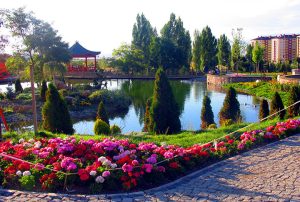
Within the campus, a significant Botanical Park (Ata Botanik Parkı) is publicly highlighted. It is recognized for its seasonal beauty (especially autumn colors) and is accessible to visitors beyond the university community. Atatürk Üniversitesi
-
The campus green areas are often highlighted in news articles as exemplary in their design and utility as recreational, aesthetic, and communal spaces. Atatürk Üniversitesi
-
The campus green infrastructure is part of the university’s visual identity, and local municipal and regional authorities refer to the campus green zones as demonstrating “modern city aesthetics.” Atatürk Üniversitesi
3. Always-Open & Unrestricted Access
-
Given the campus scale and design, the green zones, lawns, avenues, and open plazas remain unfenced and open 24/7 to the public, allowing free movement, walking, jogging, and passive use.
-
The open green spaces are integrated with pedestrian pathways and transit routes, making them part of the daily circulation network accessible to all visitors.
-
No entry fees or membership is required to access these open areas — the openness is part of the campus’s public interface.
4. Contribution to Community, Ecology & Quality of Life
-
These open spaces contribute to ecological services, air quality, shade, urban cooling, and recreation for both the campus population and the surrounding neighborhood.
-
The green planning is part of the university’s role in providing a recreational and aesthetic asset to the wider city of Erzurum, functioning as a “green lung.”
-
The landscaping upgrades (e.g. the redesign of central green courtyards) have been evaluated by users (students, faculty, staff) in satisfaction surveys, demonstrating high approval after implementing open-green renovations. DergiPark