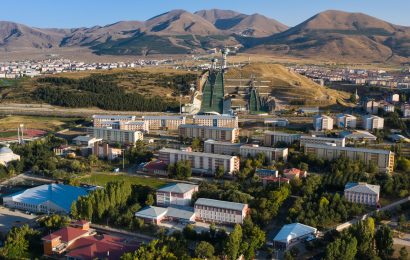

Atatürk University, as part of its institutional effort to reduce campus density and commuting impact, formally promotes and allows remote work and flexible modes of operation for employees, and supports extensive online/hybrid modalities for teaching and administrative functions. The following practices and infrastructure demonstrate a comprehensive institutional commitment:
1. Hybrid / Remote Teaching & Campus Density Reduction
-
As a measure to reduce on-campus load, Atatürk University permits up to 30 % of courses to be delivered online (i.e., as remote or hybrid instruction) during regular semesters. This flexibility helps diminish commuting frequency for both students and instructors.
-
Lectures, seminars, and synchronous sessions are conducted using the BigBlueButton platform integrated within the university’s Öğrenci Bilgi Sistemi (OBS). This platform supports real-time class interaction, recordings, chat, screen sharing, and asynchronous review. Atatürk Üniversitesi
-
The OBS / DBS system provides seamless transition between in-person and online modalities; instructors and students join via OBS links that connect into BigBlueButton sessions. Atatürk Üniversitesi
-
For fully remote/online programs (e.g. tezsiz yüksek lisans via distance education), all course content is delivered online; practical exams or assessments are held in designated centers as needed. Atatürk Üniversitesi
2. Remote Access to University Network & Resources
-
Atatürk University supports SSL-VPN tunnel connections (GlobalProtect / SSL-VPN) to allow staff and faculty to access campus databases, software (e.g. MATLAB, SPSS, AutoCAD), file servers, and internal resources from off-campus locations. Atatürk Üniversitesi
-
This infrastructure ensures that much of the staff’s regular work (research, administrative, academic tasks) can be conducted remotely without loss of access to key digital services. Atatürk Üniversitesi
3. Online Programs, Projects & Cloud Infrastructure
-
The University offers online certification programs and distance education courses that reduce the necessity for in-person presence and commuting.
-
For collaborative research, teaching, and administrative tasks, the university uses ATABULUT (AtabuluT cloud application) (your provided fact). This platform supports document sharing, project storage, version control, and remote collaboration.
-
These digital tools and cloud services effectively permit staff and faculty to engage in many core functions from remote locations, reducing dependency on physical presence.
4. Policy Framework & Institutional Endorsement
-
The University’s Open Science Policy underlines support for open access, digital dissemination, and remote research collaboration, reinforcing the orientation toward digital, distributed work. Atatürk Üniversitesi
-
The Senate / administrative governance has institutionalized remote teaching infrastructure (OBS + BigBlueButton) such that remote/hybrid instruction is a recognized operational mode. ResearchGate
5. Employee Telework & Condensed Week (Optional)
-
While explicit published policies for full telecommuting or a compressed workweek (e.g. four-day week) for administrative or academic staff are not found in the publicly available sources, the existing infrastructure (VPN, digital collaboration, remote teaching) provides the technical foundation for such flexible arrangements.
-
The university could scale this into a formal telework policy covering certain categories of personnel whose duties permit remote execution, thereby systematically reducing commuting burden across staff cohorts.