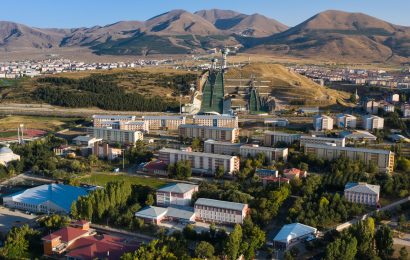
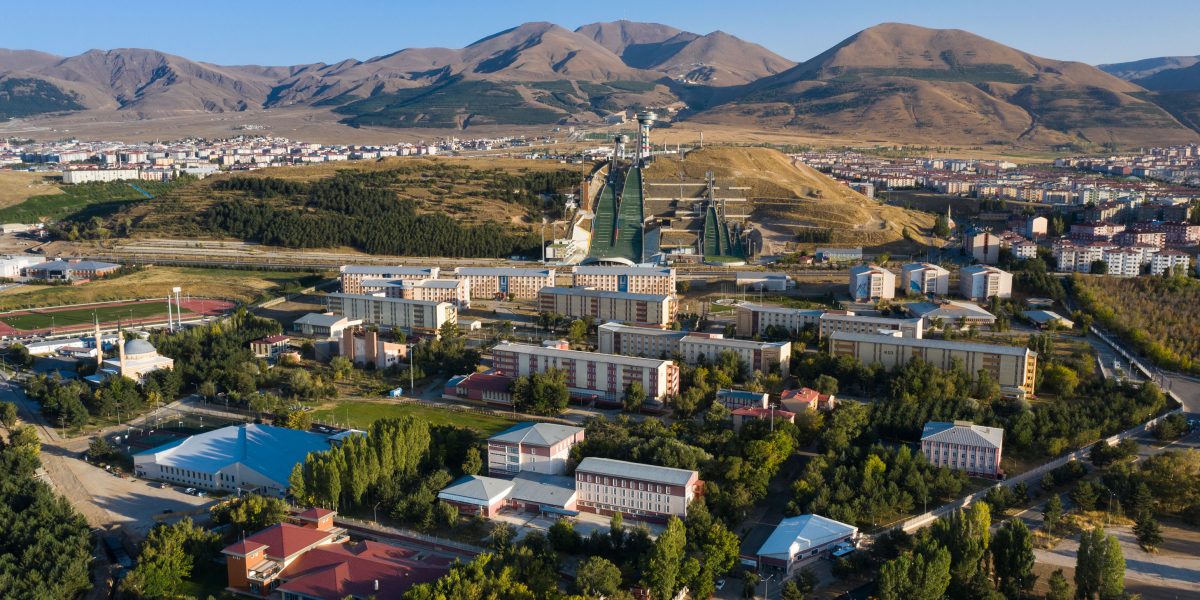
Atatürk University aims to achieve a 50% reduction in building-related greenhouse gas (GHG) emissions (Scope 1 and Scope 2) by 2030, and to reach net zero emissions across all scopes (Scope 1, Scope 2, and Scope 3) by 2050, in line with the Greenhouse Gas Protocol and Türkiye’s 2053 national net-zero commitment. In pursuit of this goal, the University has initiated multiple programmes to reduce its carbon footprint, increase energy efficiency, and promote sustainable resource management across its campuses.
Atatürk University is a signatory to Türkiye’s Sustainable and Climate-Friendly Campus Initiative, a nationwide framework supported by the Ministry of Environment, Urbanization, and Climate Change, encouraging universities to reduce emissions, conserve energy, and act as living laboratories for sustainability. This initiative aligns Atatürk University with the global higher-education movement towards decarbonization and sustainable development, alongside leading institutions across Asia, Europe, and North America.
The University’s Climate Change Coordination Unit, operating under the Solid and Hazardous Waste Management Office, is responsible for monitoring, calculating, and managing campus-wide GHG emissions. The unit collaborates with the Environmental Problems Research and Application Center and the Big Data Management Office to prepare the university’s annual Carbon Footprint Report, track energy use and mobility emissions, and develop renewable-energy projects to offset fossil-based consumption.
Atatürk University has already implemented a range of projects to support its carbon-neutrality mission: installation of solar-energy pilot systems across faculty buildings, integration of energy-efficient heating infrastructure, replacement of conventional lighting with LED systems, and promotion of sustainable commuting through free shuttle services, cycling routes, and electric-vehicle charging stations on campus.
As part of its research mission, the University conducts numerous scientific projects on carbon capture, renewable energy technologies, and climate adaptation, fostering collaboration with local authorities, NGOs such as TEMA, and private-sector partners to advance low-carbon innovation. Through these integrated actions, Atatürk University contributes to both local and national efforts to mitigate climate change.
Atatürk University’s carbon-neutrality timeline is summarised below:
| Goal | Scope | Target Year | Framework | Responsible Unit |
|---|---|---|---|---|
| 50% emission reduction | Scope 1–2 | 2030 | Greenhouse Gas Protocol | Climate Change Unit |
| Net zero carbon emissions | Scope 1–3 | 2050 | Greenhouse Gas Protocol & Türkiye 2053 Net-Zero Target | Climate Change Unit |
Through its 2050 carbon-neutrality goal, Atatürk University aims to transform its campuses into sustainable, data-driven, and climate-resilient environments, acting as a regional model for low-carbon development. By integrating research, education, and operational sustainability, the university reaffirms its commitment to contributing to the global fight against climate change and to achieving the targets of SDG 13: Climate Action.