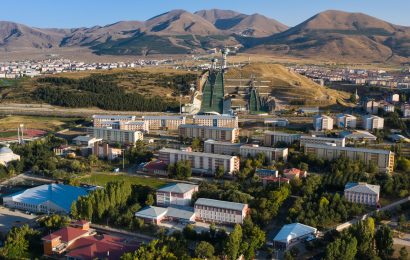
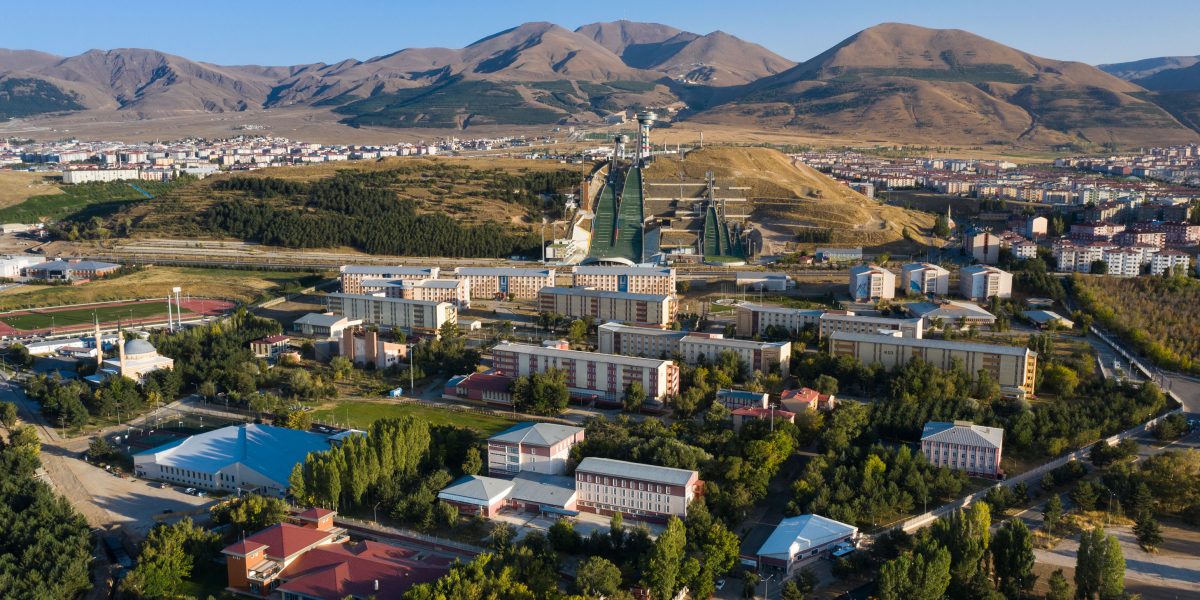
Atatürk University demonstrates a deliberate commitment to building new facilities on brownfield or previously developed sites when feasible, rather than expanding indiscriminately into undeveloped land. Institutional planning, master plan guidelines, and ongoing campus renewal projects reflect this approach to sustainable, efficient land use.
1. Master Plan Emphasis on Campus Infill & Redevelopment
-
The university’s Sustainable Campus Master Plan (finalized in recent years) explicitly frames redevelopment of existing campus zones and rearrangement of central campus sectors (e.g. the Fen Bilimleri, Sosyal Bilimler and Sağlık campus cores) as priority areas for future growth. Atatürk Üniversitesi
-
Under the master plan, existing built zones, circulation corridors, parking, and service infrastructures are reorganized, and new development areas (labeled “Batı-I” and “Batı-II” campuses) are positioned in continuity with existing uses, rather than purely as outer expansion. Atatürk Üniversitesi
-
The plan indicates that vehicular roads and parking are pushed toward perimeter zones to free central areas for pedestrian, green, and built infill development, thereby making the densification of existing structure zones more attractive. Atatürk Üniversitesi
2. Evidence of Reuse & Infill in Recent Projects
-
Although explicit labeling of “brownfield site conversion” is rare in published documents, several recent campus improvements embody infill redevelopment logic. For example, the redevelopment of central campus circulation and landscaping projects occur in contexts where prior infrastructure existed, reshaping older vehicular zones into pedestrian or green space. Atatürk Üniversitesi
-
The university has also undertaken renovation and rearrangement projects in the existing lojman (housing) area, such as restoration of the “Lojmanlar Camii” (lodging area mosque) following a five-month refurbishment in situ. This reflects maintenance and reuse of built assets rather than new suburban expansion. Facebook
3. Campus Footprint, Site Density & Land Efficiency
-
The campus occupies a large contiguous land area (~ 6.5 million m² open area, ~ 1 million m² built area). yakutiye.gov.tr
-
Because the university already holds a large land endowment, the planning emphasis is on intensification within the existing envelope, using redevelopment rather than outward sprawl, to minimize ecological and infrastructure cost burdens.
-
The university’s “Yeni Nesil Üniversite / Transformational Design” initiatives reinforce the adaptive reuse of internal campus spaces and systematic densification in certain sectors. Atatürk Üniversitesi+1
4. Institutional Policy & Design Principles Supporting Brownfield Prioritization
-
The campus master plan establishes development rules and phasing that favor using previously allocated parcels, underutilized building lots, or vacant nodes within the campus core before opening new greenfield sectors. Atatürk Üniversitesi
-
In planning rationales, the university states that “existing building clusters will be re-organized, and new faculties and lodgings will be located in planned zones while existing lodging areas undergo renewal” (rather than expansion into virgin land). Atatürk Üniversitesi
-
Through its Çevre Düzenleme Birimi (Environmental Landscaping Unit), the university maintains oversight of campus open spaces, green zones, planting, and site restoration, which supports the reuse of disturbed areas and integration of new buildings into existing fabric. Atatürk Üniversitesi
5. Limitations & Forward Agenda
-
Public documentation does not always explicitly identify a building project as a “brownfield reuse.” Some new buildings (e.g., new faculties) are on newly planned campus sectors (Batı-I / II) rather than strictly repurposed sites.
-
The formal policy commitment could be strengthened by requiring assessment of site history, contamination, or previous use and documenting the choice of infill over greenfield in each project’s design rationale.
-
Monitoring and disclosure of land-use change metrics (e.g. % new gross floor area built on previously developed land) would further substantiate claims of brownfield prioritization.