

Atatürk University demonstrates a strong, institutionalized commitment to diversity, equality, inclusion, and human rights through officially established and empowered units. These structures operate under the authority of the Rectorate and are integrated into the university’s governance, reporting, and resource systems — ensuring that equity and human rights are not peripheral initiatives, but central to the university’s strategic mission.
1. Institutional Framework and Legal Foundation
Atatürk University upholds the principles of equality and non-discrimination outlined in:
-
The Constitution of the Republic of Türkiye (Article 10) — equality before the law and the prohibition of discrimination.
-
Law No. 2547 (Higher Education Law) — ensuring equity and transparency in all academic and administrative activities.
-
Law No. 5378 (Law on the Disabled) — guaranteeing accessibility and protection against discrimination in education and employment.
-
UN Sustainable Development Goals (SDG 5, SDG 10, SDG 16) — promoting gender equality, reduced inequalities, and peace and justice through institutional governance.
These national and international frameworks underpin Atatürk University’s approach to diversity and equality management.
2. Official Diversity and Equality Structures
A) Toplumsal Cinsiyet Eşitliği Birimi (Gender Equality Unit)
🔗 https://birimler.atauni.edu.tr/toplumsal-cinsiyet-esitligi-3

The Gender Equality Unit is a formally recognized administrative structure established by the University Senate and operates under the Rector’s authority.
-
Its Director and Executive Board members are appointed directly by the Rector and serve under a clear mandate with defined budget, staffing, and operational powers.
-
The Unit coordinates the Atatürk University Gender Equality Attitude Document (Toplumsal Cinsiyet Eşitliği Tutum Belgesi) and oversees its Implementation and Monitoring Plan, ensuring gender equality in academic, administrative, and student environments.
-
The Unit monitors gender-based data and publishes annual statistics (e.g., ratios of women in senior management, female student representation, and gender distribution across faculties).
-
It also organizes training, seminars, and workshops on gender awareness, preventing sexual harassment and discrimination, and promoting women’s leadership in academia.
B) İnsan Hakları ve Şiddetle Mücadele Bilincini Güçlendirme Uygulama ve Araştırma Merkezi
🔗 https://birimler.atauni.edu.tr/insan-haklari-ve-siddet
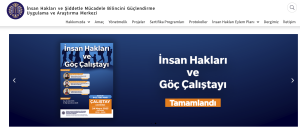
The Human Rights and Violence Awareness Center is another official university center established with the approval of the Senate.
-
The Director and Deputy Directors are appointed by the Rector and are supported by a dedicated team and an independent operational budget.
-
The Center conducts training programs, certification courses, and public events to promote awareness of human rights, prevent violence, and build peace-oriented communication across the university community.
-
Its Regulation (Yönetmelik) explicitly defines its purpose, governing bodies, and responsibilities, aligning with Türkiye’s Human Rights Action Plan.
-
The Center also carries out applied research and produces reports on violence prevention, inclusion, and human rights education.
3. Governance, Accountability, and Reporting
Both units operate under official mandates issued by the Rectorate, and their leaders:
-
Report directly to the Rector and the University Senate at least once annually, presenting detailed analyses, activities, and strategic recommendations.
-
Submit annual performance reports outlining program outcomes, participation data, and future action plans.
-
Participate in Senate-level consultations when revising institutional equality or inclusion policies, ensuring that recommendations are implemented at the highest governance level.
Through this dual reporting structure, Atatürk University guarantees transparency, oversight, and continuous improvement in all matters related to diversity, equality, and human rights.
4. Programmes, Activities and Trainings
These institutional bodies organize campus-wide initiatives, including:
-
Gender equality and anti-discrimination trainings for students, staff, and faculty.
-
Workshops on human rights awareness, conflict resolution, and inclusive education.
-
Certificate programs on peacebuilding, women’s leadership, and non-violent communication.
-
Collaborative events with NGOs, government agencies, and other universities to promote social inclusion and gender justice.
The outputs of these programs are regularly disseminated through university channels and published on the respective unit websites.
5. Continuous Improvement and Strategic Integration
-
The activities of both the Gender Equality Unit and the Human Rights Center are integrated into the university’s 2024–2028 Strategic Plan, aligning with institutional performance indicators related to equality and inclusion.
-
The Big Data Management Office assists these units by analyzing and visualizing data on gender balance, accessibility, and diversity across university operations.
-
Ongoing coordination ensures compliance with national equality legislation and international human rights standards.