SDG 17 – Partnerships for the Goals
Indicator 17.4.1 – Does your university as a body have a commitment to meaningful education around the SDGs across the university, relevant and applicable to all students?
Reporting Year: 2025 | THE Sustainability Impact Ratings 2027
1. Institutional Commitment to Education for Sustainable Development
Atatürk University is institutionally committed to providing meaningful education on the United Nations Sustainable Development Goals (SDGs) across its academic community.
This commitment is reflected in the University’s 2024–2028 Strategic Plan, its institution-wide elective course system, sustainability-related content within disciplinary curricula, student community engagement projects and institutional quality assurance mechanisms.
The University recognises education for sustainable development as a responsibility extending beyond individual academic departments. Students from different disciplines should have opportunities to understand sustainability challenges and relate them to their academic studies, professional responsibilities and everyday decisions.
Atatürk University supports this objective through two complementary approaches:
- University-wide elective education, providing opportunities to study sustainability-related subjects beyond students’ primary disciplines.
- Discipline-specific curriculum integration, connecting sustainability with the knowledge and professional competencies required in individual academic programmes.
The University’s institutional arrangements also support practical learning through social awareness projects and community engagement activities.
These mechanisms demonstrate a formal commitment to making sustainability education relevant to students from different academic backgrounds.
2. Strategic Alignment with the Sustainable Development Goals
Atatürk University’s 2024–2028 Strategic Plan establishes the institutional framework for educational development, research and societal contribution.
In June 2024, the University’s Big Data Management Office published the Sustainable Development Goals and Strategic Plan Alignment Report.
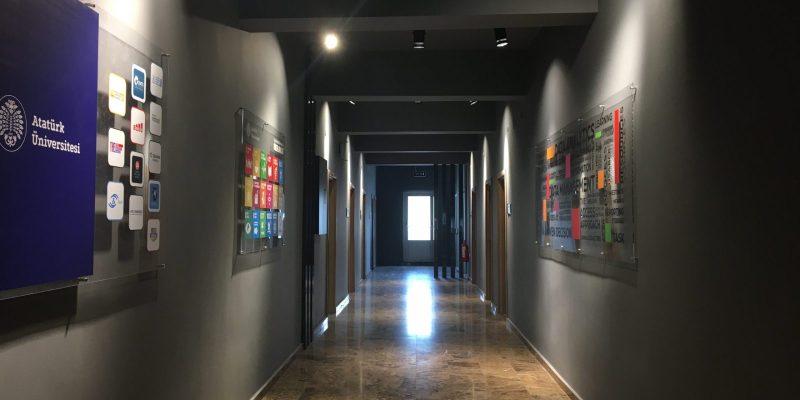
The report examines the relationship between institutional objectives, performance indicators and the SDGs.
The alignment particularly identifies:
- SDG 4 – Quality Education: Educational quality, learning opportunities and student development.
- SDG 8 – Decent Work and Economic Growth: Employment-related competencies and economic development.
- SDG 9 – Industry, Innovation and Infrastructure: Innovation, research and technological development.
- SDG 17 – Partnerships for the Goals: Institutional and international cooperation.
The report also considers SDG targets at a more detailed level, connecting institutional performance indicators with specific sustainability objectives.
2.1. University-Level Ownership
The alignment was developed as an institutional planning activity coordinated by the Big Data Management Office.
2.2. Educational Relevance
The report links educational development with the University’s wider sustainability commitments.
2.3. Performance Monitoring
Strategic objectives are associated with measurable institutional performance indicators.
2.4. Institutional Continuity
The 2024–2028 planning period provides a multi-year framework that remained applicable throughout 2025.
Official Evidence
SDG and Strategic Plan Alignment Report
Official Announcement – Strategic Plan Alignment with the SDGs
3. University-Wide Elective Course Framework
Atatürk University operates an institution-wide elective course system known as Üniversite Seçmeli Dersler (ÜSD).
This system provides a formal curricular mechanism through which students can study subjects outside their principal academic disciplines.
The University publishes an official list of elective courses containing a dedicated SDG Area (SDG Alanı) classification.
This classification links elective course offerings with sustainability-related subject areas.
3.1. Cross-Disciplinary Access
The University elective system is designed to provide students with educational opportunities extending beyond their own departments.
3.2. SDG Classification
The official elective course list identifies the SDG areas associated with courses.
3.3. Curriculum Integration
University elective courses are incorporated into formal study programmes.
3.4. Student Choice
Students can select courses according to the applicable programme requirements and course availability.
3.5. Institutional Coordination
The elective course system is administered under University-wide academic regulations.
3.6. Academic Recognition
Elective courses form part of students’ formal credit-bearing education.
The system provides an established route for students from different academic backgrounds to access sustainability-related education.
Official Evidence
University Elective Courses – 2024–2025 Academic Year
4. Formal Curriculum Requirements and Student Accessibility
Atatürk University’s University Elective and Common Compulsory Courses Implementation Principles establish the formal position of University Elective Courses within academic programmes.
The regulations specify elective course credit ranges according to programme duration.
| Programme Type | University Elective Credit Requirement |
|---|---|
| Associate degree programmes | 6–12 ECTS |
| Four-year undergraduate programmes | 12–24 ECTS |
| Undergraduate programmes longer than four years | 15–30 ECTS |
The implementation principles also provide for distance education delivery of University Elective Courses where appropriate.
This arrangement supports access to elective education across different University units.
4.1. Formal Academic Integration
University electives are part of approved academic study plans.
4.2. Credit Recognition
Students receive academic credit for successfully completing relevant elective courses.
4.3. Flexible Delivery
Distance education can support access to courses across different faculties and campuses.
4.4. Cross-Disciplinary Learning
The elective system allows students to study topics beyond their primary academic specialisation.
4.5. Sustainability Opportunities
The SDG classification within the elective course catalogue enables sustainability-related offerings to be identified within this system.
Mandatory and Optional Education
The University’s elective credit requirements do not mean that every student must complete a specific SDG course.
The documented commitment is to provide sustainability-related educational opportunities through a formal University-wide elective framework, alongside sustainability content embedded in individual academic programmes.
Official Evidence
University Elective and Common Compulsory Courses Implementation Principles
5. Implementation During the 2025–2026 Academic Year
Atatürk University’s University Elective Course system continued to operate during the 2025–2026 academic year.
Official academic announcements published in November and December 2025 document examination arrangements for University Elective Courses.
These announcements confirm the continued operation of the institution-wide elective course framework during the reporting period.
The University also maintained its published sustainability-related course classification and curriculum arrangements.
The combination of a formal regulatory framework and documented course administration provides evidence that University Elective Courses were an operational component of academic education in 2025.
Official Evidence
2025–2026 University Elective Course Examination Programme – Tourism Faculty
2025–2026 University Elective Course Final Examination Programme
6. Sustainability Education Within Discipline-Specific Curricula
Atatürk University also integrates sustainability-related subjects into academic programmes according to their disciplinary relevance.
A documented example is provided by the Department of Agricultural Economics.
The Department’s official curriculum description identifies sustainability-related developments during the 2020–2025 period.
6.1. Sustainability in Compulsory Courses
The Department identifies compulsory courses addressing subjects such as:
- Agriculture, people and consumption.
- Agriculture, innovation and the future.
- Environment and sustainability.
- Nutrition and health.
- Smart agriculture.
These subjects connect sustainable development with the professional competencies required in agricultural economics.
6.2. Sustainability in Elective Courses
The Department also identifies elective subjects including:
- Climate change economics.
- Development economics.
- Sustainable agricultural finance.
- Green economy.
- Circular agriculture.
- Entrepreneurship.
6.3. Application to Professional Practice
These courses address the relationship between environmental sustainability, economic development and agricultural production.
6.4. Curriculum Review
The Department reports that curriculum revisions take account of student, graduate and employer feedback.
6.5. SDG Relevance
The curriculum addresses subjects related to SDGs 2, 4, 8, 12, 13 and 15.
This provides a concrete example of sustainability education being embedded in both compulsory and elective components of a disciplinary programme.
Official Evidence
Department of Agricultural Economics – Curriculum Development and Sustainability
7. Environmental Sustainability Education
The University’s academic course records provide further examples of sustainability-related teaching.
Within environmental engineering and related fields, documented course subjects include:
- Environmental Awareness and Social Responsibility.
- Waste Management and Hygiene.
- Solid and Hazardous Waste Management.
- Environmental Problems.
- Environmental Health.
- Green Chemistry and Cleaner Production Technologies.
- Water and Wastewater Treatment.
- Environmental Toxicology.
These subjects address practical sustainability challenges involving pollution prevention, responsible production, resource management and environmental protection.
The courses demonstrate how sustainability-related knowledge can be integrated into disciplinary education.
Their academic relevance is associated particularly with SDGs 3, 6, 9, 11, 12 and 13.
Official Evidence
Atatürk University AVESİS – Environmental Sustainability Course Records
8. Sustainability Education in Urban Planning and Governance
The University’s academic records also identify sustainability-related teaching in urban planning, public administration and governance.
Examples include:
- Environmental Policies.
- Urbanisation Policies.
- Urban Management.
- Resilient Urban Governance.
- Urban Sociology.
- Cities, Migration and Politics.
- Foundations of Sustainability and Development.
These subjects connect sustainable development with urban planning, governance and public policy.
The course Foundations of Sustainability and Development addresses the environmental, social and economic dimensions of sustainability.
Its published description considers sustainability challenges and the mechanisms used by decision-makers to address them.
The course was designed at doctoral level and therefore provides evidence of advanced sustainability education rather than universal undergraduate access.
The broader course portfolio demonstrates the application of sustainability-related subjects to governance and planning education.
Official Evidence
Foundations of Sustainability and Development – Course Description
Academic Course Records – Urban Planning and Sustainability
9. SDG Education Through Social Awareness Projects
Atatürk University complements classroom education with practical learning through its Social Awareness Projects (Toplumsal Duyarlılık Projeleri) framework.
The Social Awareness Projects Application and Research Centre supports student participation in community-oriented initiatives.
These projects provide opportunities for students to apply academic knowledge to social and environmental challenges.
The University’s institutional quality assurance documentation describes project application, evaluation and reporting mechanisms.
9.1. Experiential Learning
Students can participate in activities addressing real community needs.
9.2. Social Responsibility
Projects encourage awareness of social challenges and civic responsibility.
9.3. Environmental Education
Projects can address waste management, environmental protection and responsible consumption.
9.4. Community Engagement
Students can cooperate with external stakeholders and civil society organisations.
9.5. SDG Classification
The University’s community engagement framework links project activities to the Sustainable Development Goals.
9.6. Academic Relevance
Practical activities provide opportunities to connect sustainability concepts with students’ academic learning.
This framework supports meaningful education beyond conventional classroom instruction.
Official Evidence
Social Awareness Projects Application and Research Centre
Institutional Accreditation Report
10. Environmental Awareness Through Practical Educational Projects
The University’s Social Awareness Projects archive includes the educational initiative:
“TEMA Foundation as a Civil Society Organisation and Zero Waste Education.”
The project concerns environmental awareness and responsible waste management.
Its educational focus connects sustainability concepts with everyday behaviour.
The activity addresses:
- Waste reduction.
- Environmental responsibility.
- The role of civil society in environmental protection.
- Awareness of responsible consumption.
The project is relevant to SDGs 4, 12, 13 and 15.
Although the documented project predates 2025, it provides evidence of the University’s established practice of delivering sustainability education through community engagement.
Official Evidence
TEMA Foundation and Zero Waste Education Project
11. Sustainability Education Across Academic Disciplines
The University’s documented educational framework supports sustainability learning through different disciplinary perspectives.
| Academic Area | Sustainability-Related Educational Themes | Relevant SDGs |
|---|---|---|
| Agriculture and Agricultural Economics | Sustainable agriculture, food systems, green economy | 2, 8, 12, 13 |
| Environmental Engineering | Waste, water, pollution prevention, cleaner production | 6, 9, 12, 13 |
| Urban Planning and Governance | Resilient cities, environmental policy, urban management | 11, 13, 16 |
| Health Sciences | Health, well-being, public health and community needs | 3, 4 |
| Economics and Business | Sustainable finance, development and responsible production | 8, 9, 12 |
| University Elective Courses | SDG-classified interdisciplinary course offerings | Multiple SDGs |
| Social Awareness Projects | Environmental awareness, social responsibility and community engagement | Multiple SDGs |
This structure allows sustainability-related subjects to be taught in ways that are relevant to different professional fields.
The University-wide elective system provides a complementary opportunity for students to explore subjects outside their main disciplines.
12. Publicly Accessible SDG Educational Information
Atatürk University makes sustainability-related educational information available through official institutional websites.
12.1. University Elective Course Catalogue
The official catalogue identifies elective courses and their associated SDG areas.
12.2. Academic Course Information
Academic information systems provide descriptions of courses and teaching activities.
12.3. Faculty SDG Pages
University faculties publish information concerning the Sustainable Development Goals and related activities.
12.4. Research Information System
AVESİS provides information about sustainability-related academic activities and courses.
12.5. Strategic Planning Documents
The University’s SDG and Strategic Plan Alignment Report is publicly accessible.
These resources support transparency concerning the University’s educational commitment to sustainable development.
Official Evidence
Faculty of Health Sciences – SDG Activities
Faculty of Science – Sustainable Development Goals
Atatürk University Sustainability Research Portal
13. Institutional Governance and Coordination
Atatürk University’s commitment to sustainability education is supported by multiple institutional structures.
13.1. University Administration
Provides institutional direction through strategic planning and academic governance.
13.2. Big Data Management Office
Coordinates institutional SDG information and the relationship between strategic performance indicators and sustainability goals.
13.3. Student Affairs Department
Administers institutional arrangements relating to course registration and University Elective Courses.
13.4. Academic Faculties and Departments
Develop and deliver discipline-specific education, including sustainability-related content.
13.5. Social Awareness Projects Application and Research Centre
Supports practical learning and community engagement projects.
13.6. Quality Assurance Structures
Support institutional monitoring and the continuous improvement of academic programmes.
The distribution of responsibilities across these units demonstrates that sustainability education is supported through University-level arrangements.
14. Quality Assurance and Continuous Improvement
Atatürk University’s academic quality assurance processes provide mechanisms for reviewing educational programmes.
The University’s Institutional Accreditation Report documents institutional arrangements concerning educational planning, stakeholder participation and programme improvement.
Sustainability-related educational activities can be considered within these established processes.
14.1. Curriculum Review
Academic programmes undergo review and development.
14.2. Stakeholder Feedback
Student, graduate and external stakeholder feedback can inform programme revisions.
14.3. Learning Outcomes
Academic programmes define learning outcomes and educational objectives.
14.4. Course Documentation
Course content is recorded through institutional academic information systems.
14.5. Institutional Monitoring
The University monitors educational activities through its quality assurance arrangements.
These mechanisms provide a basis for maintaining and developing sustainability education.
A University-wide assessment showing how many students complete SDG-related courses would provide additional evidence of educational reach and effectiveness.
Official Evidence
Atatürk University Institutional Accreditation Report
15. Meaningful and Applicable Education for Students
Atatürk University’s approach is designed to connect sustainability education with students’ academic and professional development.
Environmental Application
Students in environmental and technical fields can study pollution prevention, waste management and cleaner production.
Economic Application
Students in economics and agriculture can examine sustainable production, development economics and green finance.
Social Application
Students can participate in community engagement activities addressing social needs and environmental awareness.
Governance Application
Students in planning and public administration can examine environmental policies, urban resilience and sustainable development.
Interdisciplinary Application
The University Elective Course system provides opportunities to engage with subjects beyond students’ principal academic disciplines.
These approaches connect sustainability education with practical challenges relevant to different fields of study.
16. Mandatory and Optional SDG Education
The University distinguishes between compulsory programme requirements and optional sustainability-specific learning opportunities.
Compulsory Programme Content
Some academic programmes incorporate sustainability-related topics into their compulsory courses, as documented by the Department of Agricultural Economics.
University-Wide Elective Education
University Elective Courses form part of formal academic programmes, with sustainability-related courses identified through the SDG classification system.
Practical and Community-Based Education
Social Awareness Projects provide additional opportunities to apply sustainability-related knowledge.
Institutional Position
The available documentation supports a commitment to sustainability education through both programme-specific teaching and institution-wide elective opportunities.
It does not establish that every student is required to complete a dedicated SDG course.
17. Evidence Summary for the 2025 Reporting Year
| Institutional Evidence | Documented Contribution |
|---|---|
| 2024–2028 Strategic Plan and SDG Alignment Report | Formal University-level sustainability commitment |
| University Elective Course Catalogue | SDG-classified course offerings |
| University Elective Course Implementation Principles | Formal curriculum integration and ECTS requirements |
| 2025–2026 Elective Course Announcements | Continued operation of the elective system in 2025 |
| Agricultural Economics Curriculum | Sustainability in compulsory and elective courses |
| Environmental Engineering Course Records | Discipline-specific sustainability education |
| Urban Planning and Governance Course Records | Sustainability education in policy and planning |
| Social Awareness Projects | Applied sustainability learning and community engagement |
| Institutional Accreditation Report | Educational quality assurance and monitoring mechanisms |
Together, these records establish an institutional framework for providing meaningful sustainability-related education across different academic disciplines.
18. Contribution to SDG 4.7
Atatürk University’s educational approach is particularly relevant to SDG Target 4.7, which concerns the knowledge and skills needed to promote sustainable development.
The University’s activities support this target through:
- Sustainability-related courses within formal academic programmes.
- Interdisciplinary elective education.
- Environmental and social responsibility education.
- Practical community engagement projects.
- Educational opportunities connected with students’ future professions.
The University’s approach recognises that sustainable development education should address environmental, social and economic challenges.
It also recognises that sustainability knowledge must be applicable to different academic and professional contexts.
19. Official Evidence and References
1. SDG and Strategic Plan Alignment Report
https://veri.atauni.edu.tr/wp-content/uploads/2025/05/SDG-SP.pdf
2. Institutional Announcement of SDG Strategic Alignment
3. University Elective Course Catalogue – 2024–2025
4. University Elective and Common Compulsory Courses Implementation Principles
5. University Elective Courses – November 2025
6. University Elective Courses – December 2025
7. Department of Agricultural Economics – Curriculum Development
https://atauni.edu.tr/tarim-ekonomisi-bolumu/tarihce/
8. Environmental Sustainability Course Records
https://avesis.atauni.edu.tr/zceylan/deneyim
9. Foundations of Sustainability and Development – Course Description
10. Social Awareness Projects Application and Research Centre
11. Institutional Accreditation Report
https://atauni.edu.tr/kalite-koordinatorlugu/wp-content/uploads/sites/821/2025/12/2025-KAR.pdf
12. Faculty of Health Sciences – SDG Activities
https://birimler.atauni.edu.tr/saglik-bilimleri-fakultesi/sdg
13. Faculty of Science – SDG Information
https://atauni.edu.tr/fen-fakultesi/surdurulebilir-kalkinma-amaclari-2/
20. Institutional Statement on SDG Education Across the Curriculum
Atatürk University demonstrates an institution-wide commitment to meaningful education on the United Nations Sustainable Development Goals, making sustainability-related learning relevant to students across different academic disciplines.
The University’s 2024–2028 Strategic Plan is formally aligned with the SDGs, establishing a multi-year institutional framework for education, research and societal contribution.
Sustainability education is supported through the University’s University Elective Course system, which includes an official SDG Area classification identifying sustainability-related courses. University electives are incorporated into formal academic programmes and governed by institutional regulations, providing opportunities for interdisciplinary learning.
In addition, sustainability-related content is integrated into discipline-specific curricula. The Department of Agricultural Economics documents sustainability subjects in compulsory and elective courses, including environmental sustainability, smart agriculture, climate change economics, green economy and circular agriculture. Academic course records also demonstrate sustainability education in environmental engineering, urban planning and governance.
The University’s Social Awareness Projects Application and Research Centre complements classroom learning through practical activities that connect students with environmental and social challenges.
During 2025, the University maintained its strategic sustainability commitments and continued operating its formal University Elective Course system.
These arrangements demonstrate Atatürk University’s commitment to providing accessible, academically relevant and practically applicable sustainability education across the University, supporting SDG 17.4.1 – Education for the Sustainable Development Goals and SDG Target 4.7.