

Atatürk University implements a comprehensive and institutionalized mentoring, counseling, and peer support system that actively supports students, staff, and faculty from underrepresented or disadvantaged groups. These mechanisms are embedded in university governance, endorsed by the Rectorate and Senate, and coordinated by units such as the Toplumsal Cinsiyet Eşitliği Birimi, the Toplumsal Duyarlılık Projeleri Merkezi (TDP), and the Human Rights and Anti-Violence Awareness Center.
1. Institutional Mentoring and Counseling Mechanisms
Academic and Career Mentorship
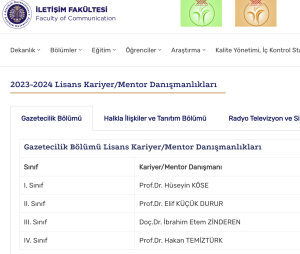
Each faculty at Atatürk University assigns academic and career mentors to students in every class level. For example, the Faculty of Communication publishes annual mentor lists, ensuring that every student has an assigned academic or career advisor. These mentors provide guidance on coursework, internships, professional development, and research skills.
🔗 Faculty of Communication Mentor Counseling Programme (2023–2024)
Counseling and Psychological Support
The university offers free and confidential counseling services for students and staff through the Psychological Counseling and Guidance Center, as well as faculty-based support programs. These services include stress management, adaptation, and academic counseling, particularly benefiting low-income, disabled, or first-generation students.
Social Responsibility-Linked Mentoring (TDP)
The Toplumsal Duyarlılık Projeleri Uygulama ve Araştırma Merkezi (TDP) integrates peer mentorship into social projects. Projects such as “Uzun Yolculuklar İlk Adımla Başlar” and “Engelsiz Gökyüzü” match university student mentors with high-school students, children, or disabled individuals, fostering inclusion, awareness, and mentorship beyond the campus.
🔗 TDP Official Portal

Capacity-Building and Coaching Training
Through ATASEM (Atatürk University Continuing Education Center), the Eğitim Koçluğu Sertifika Programı (Educational Coaching Certificate Programme) trains academic and administrative staff in mentoring, guidance, and motivational coaching, ensuring institutional quality in mentorship practice.
🔗 ATASEM Coaching Certificate
2. Comprehensive and Fully Implemented Support System
All elements listed below are implemented university-wide under Rectorate oversight, with dedicated budgets, annual reporting, and Senate approval:
| Support Dimension | Description and Implementation |
|---|---|
| Formal Mentorship Matching | Every underrepresented student or staff member can apply for mentorship; matches are made based on discipline, background, and interests. Mentor–mentee agreements define meeting schedules and goals. |
| Counseling & Psychological Support | Free, confidential counseling services available across faculties; specialized sessions for stress management, career guidance, adaptation to university life, and social challenges. |
| Peer Support Networks | Established “Buddy Systems” for new and disabled students; peer mentors organize study groups, skill workshops, and adaptation sessions at semester start. |
| Inclusion Training for Mentors | The Gender Equality Unit and Human Rights Center run periodic workshops on inclusion, empathy, gender equality, disability awareness, and human rights sensitivity for all mentors. |
| Monitoring & Reporting | Data on mentorship participation, outcomes, and satisfaction are tracked annually. Reports are submitted to the Rectorate and Senate for review. |
| Institutional Support & Budget | Mentoring programs are officially endorsed by the Rectorate; each unit receives an allocated budget for implementation, training, and reporting. |
| Recognition of Mentors | Faculty mentors and student peer mentors receive recognition certificates during university award ceremonies, promoting mentorship culture. |
3. Integration with Social and Equity-Driven Structures
-
The Toplumsal Cinsiyet Eşitliği Birimi conducts regular trainings and panels to promote gender equality and mentorship for female students and early-career staff.
🔗 Gender Equality Unit -
The Human Rights and Anti-Violence Awareness Center supports mentoring on respect, equality, and non-discrimination principles, ensuring that all programs comply with national human rights standards.
🔗 Human Rights and Anti-Violence Awareness Center

-
The TDP Center links mentorship to community engagement, helping underrepresented students gain real-world experience in social, environmental, and inclusive projects.
4. THE Impact Narrative
Atatürk University offers comprehensive mentoring, counseling, and peer support systems aligned with SDG 10.6.6.
Through a structured approach combining academic advising, psychological support, peer mentorship, and social engagement projects, the university ensures that underrepresented groups — including women, disabled individuals, low-income students, and first-generation learners — are supported both academically and socially.
All initiatives are institutionally embedded, financially supported, and systematically monitored. Annual reports are submitted to the Rectorate and Senate, ensuring accountability, inclusivity, and sustainability.
🔗 Key References: