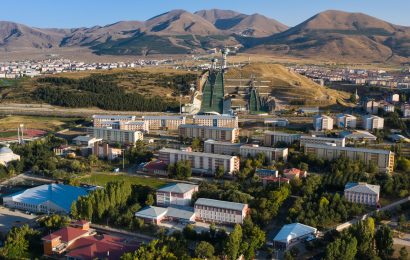
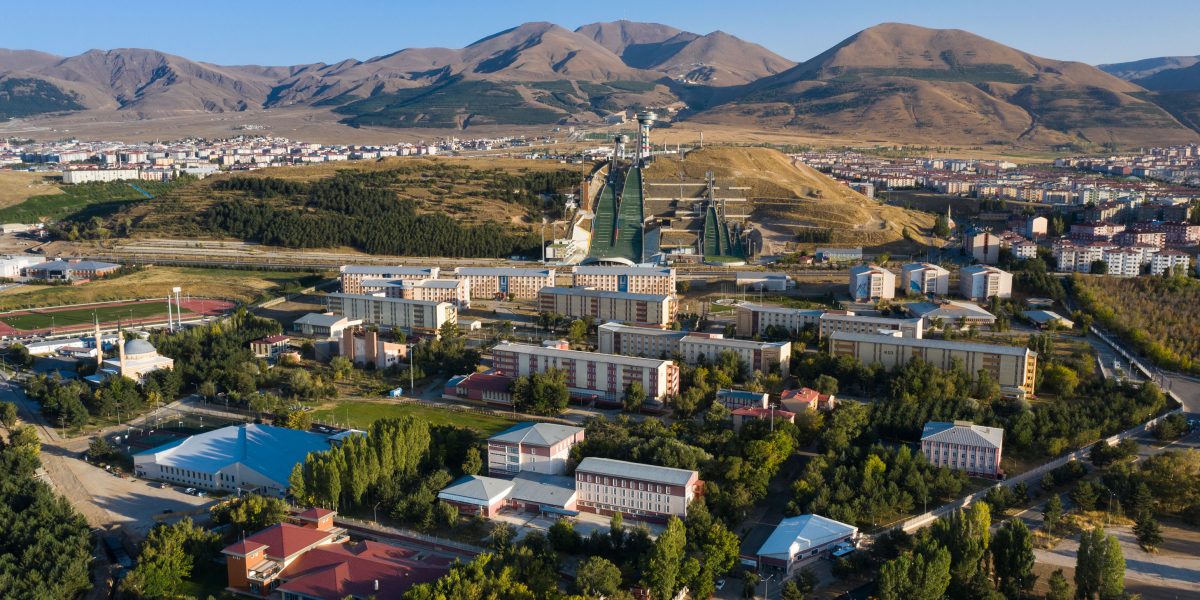
Atatürk University formally embeds pedestrian priority across its campus through institutional policy, traffic regulations, spatial planning, and signage systems. The university ensures that pedestrians are given precedence over vehicular traffic within campus grounds, and embeds this principle into its Traffic Directive, public communication, and access control systems.
1. Policy & Traffic Regulations Favoring Pedestrians
-
According to the university’s Transportation / Campus Life web page, the university explicitly states that “pedestrians on campus always have priority” over vehicles. Atatürk üniversitesi
-
Drivers on campus must be aware that pedestrian right-of-way is mandated, and all drivers must abide by speed, parking, and traffic violation rules outlined in the university’s Traffic Directive (Security Directorate). Atatürk Üniversitesi
-
Vehicular access to campus is regulated via the Rapid Pass / HGS system, and drivers must obtain this card for entry—this system enables enforcement of controlled access, which supports limiting traffic in pedestrian zones. Atatürk Üniversitesi
-
The Traffic Directive also governs speed limits, parking rules, and signage to reinforce pedestrian dominance and safety on internal campus roads. Atatürk Üniversitesi
2. Infrastructure, Signage & Spatial Design
-
The campus site includes walkable paths, pedestrian walkways, and landscaping woven among academic and residential zones. The transportation page references that on-campus car access requires a Rapid Pass, implicitly promoting non-motorized movement within campus. Atatürk Üniversitesi+1
-
The university communicates on its official site that “all drivers must know that pedestrians on campus always have priority”, making this a publicly displayed principle. Atatürk Üniversitesi
-
Internal campus signage, speed zones, and driver guidance systems are structured to alert vehicle operators to yield to pedestrians, consistent with the Traffic Directive. Atatürk Üniversitesi+1
-
On its “Kampüs Ulaşım / Kampüste Yaşam” pages, internal vehicle entries are regulated; the campus map and ring service description suggest infrastructure is balanced with pedestrian movement in mind. Atatürk Üniversitesi
3. Controlled Access, Gate Systems & Vehicle Separation
-
Vehicle circulation inside the campus is constrained by access control gates, permitting only authorized vehicles with HGS/Rapid Pass cards. This reduces unnecessary vehicular intrusion into pedestrian zones and campus core areas. Atatürk Üniversitesi
-
Parking and driving zones are delineated so that pedestrian pathways maintain priority and safe separation from vehicular traffic. The regulation framework in the Traffic Directive supports these delineations. Atatürk Üniversitesi
-
The use of the Rapid Pass system enables enforcement, monitoring of vehicle entry/exit, and potential restriction during high pedestrian flow periods (e.g. class changes, events). Atatürk Üniversitesi
4. Public Transparency & Communication
-
The principle of pedestrian priority is made clear to students, staff, and visitors through the university’s public website, which states that “pedestrians on campus always have priority” and provides access to the university’s Traffic Directive. Atatürk Üniversitesi
-
The transportation pages include references to the traffic rules, parking and speed regulation, and car access protocol, which together communicate the hierarchy of pedestrian precedence. Atatürk Üniversitesi
-
The university publishes maps, car access rules, ring shuttle stops, and internal access protocols accessible via its web infrastructure, making associated pedestrian policies publicly accessible. Atatürk Üniversitesi
5. Integration with Broader Campus Mobility Strategy
-
The pedestrian priority policy sits alongside complementary sustainable commuting measures such as ring shuttle service, controlled vehicular access, and multimodal campus transport, ensuring that walking and cycling receive structural support in transport planning. Atatürk Üniversitesi Kayıt Bilgilendirme+1
-
By enforcing vehicle limitations and signage, the university minimizes motor vehicle conflicts in pedestrian areas, thereby encouraging walking or cycling for short intra-campus trips.
-
The controlled access system, together with traffic rules, helps to maintain low-speed, low-volume vehicle flows in zones where pedestrian density is high (e.g. near main academic buildings, libraries).