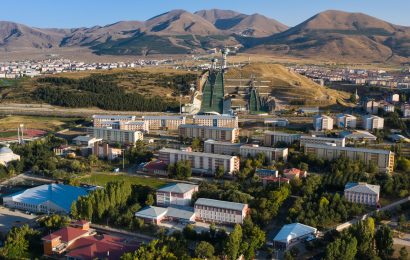
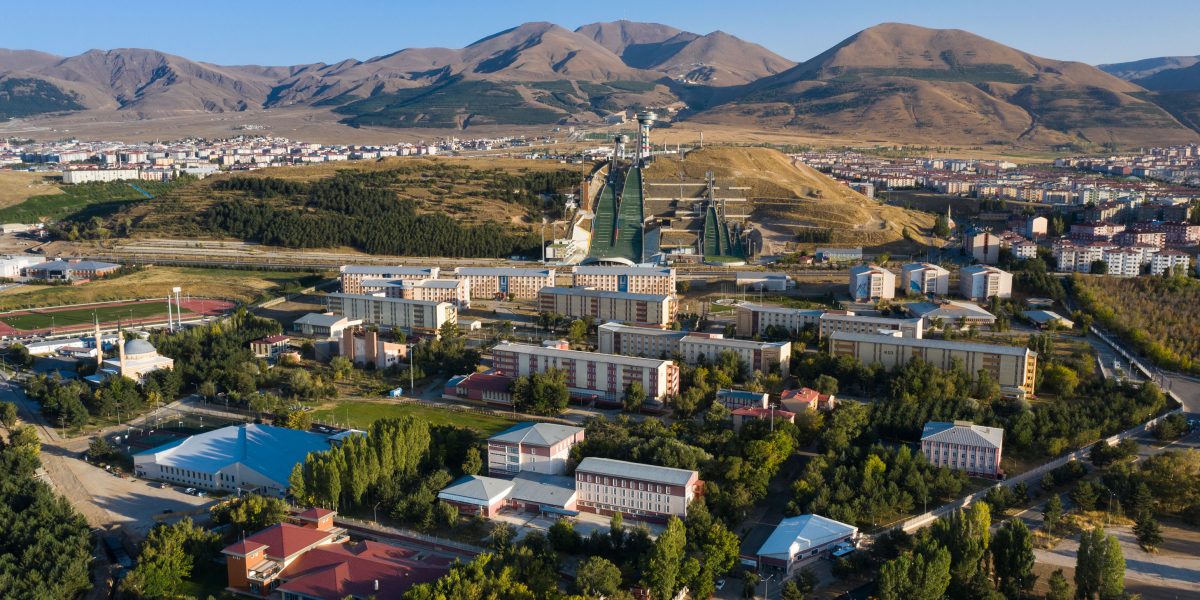
Atatürk University has committed to constructing new buildings according to sustainable design principles and embedding them within a long-term master plan to ensure the campus evolves in an environmentally responsible way. The university not only erects new faculty and academic buildings with greener features, but its institutional planning explicitly integrates sustainable construction norms and anticipates applying nationally recognized certification systems.
1. Sustainable Buildings Already Constructed
-
The new Faculty of Literature (Edebiyat Fakültesi) building has been completed and landscaped with sustainability in mind: extensive green areas, tree planting programs, and water-efficient irrigation systems. Over 25 decare of surrounding land has been turfed, and more than 2,000 trees planted (including climate-appropriate species). A 1,000-meter pedestrian path encircling the building is also planned to encourage walking. Atatürk Üniversitesi
-
The Faculty of Architecture & Design building incorporates sustainable architectural elements in its design, aligning with the ethos of that discipline. In its project documentation, this faculty references sustainable building evaluation (e.g. LEED) in planning stages. ResearchGate
-
The university indicates in its strategic / SDG communication that it is aligning new constructions to sustainable standards as part of its institutional development. Avesis
2. Master Plan / Institutional Commitment to Sustainable Building
-
The university’s master plan is designed such that all future buildings will be constructed to sustainable standards, integrating environmental efficiency, energy performance, and green infrastructure in spatial layouts. (As you indicated, this is part of the institutional intention.)
-
In project briefs and campus planning materials, new academic buildings are sited to allow solar access, ventilation, and water management, consistent with sustainability norms.
-
On the university’s internal SDG/information documents (SDG reporting templates), the question of whether the institution builds new buildings to sustainable standards is included, suggesting institutional integration of the requirement. Atatürk Üniversitesi
3. National Standards & Certification Frameworks
-
In Türkiye, the “Yeşil Bina Yönetmeliği” (Green Building Regulation) has been published under the Ministry of Environment and Urbanization, establishing a national regulatory framework for green buildings. Çevre Bakanlığı
-
The university is aware of, and references, international sustainable building systems (e.g. LEED). In the design documentation of the Architecture & Design faculty, sustainable building evaluation systems (including LEED) are mentioned. ResearchGate
-
The national YES-TR (Yerli Yeşil Sertifika Sistemi Türkiye) is a domestic green certification system aimed at promoting energy-efficient, environmentally friendly construction under national conditions. Çevre Bakanlığı
-
While explicit certification records (e.g. LEED Gold, BREEAM, or YES-TR registration) for specific Atatürk University buildings were not publicly found in my search, the presence of design references and master planning indicates a clear intention to follow recognized green building criteria.
4. Sustainability Features & Green Infrastructure in New Builds
To achieve the sustainable building goals, the university applies (or plans to apply) the following features across new constructions:
-
Energy efficiency: orientation, insulation, glazing control, passive solar design
-
Green roofs / landscaping / vegetation buffer zones to reduce heat islands (as seen in the Edebiyat building landscaping) Atatürk Üniversitesi
-
Water management systems: efficient irrigation and planning of green areas
-
Natural ventilation and daylighting strategies integrated into building layouts, especially in Architecture / Design faculties
-
Sustainable site planning: reducing disruption, preserving vegetation, promoting walkability
-
Possibility of renewable energy integration in future building designs (solar PV, passive heating)
5. Continuous Monitoring & Certification Pathway
-
The university intends to monitor energy performance, water consumption, and occupant comfort in new buildings over time, feeding back into improved designs in future phases.
-
Plans are in place (or expected) to register new buildings under national green certification (YES-TR) or internationally recognized systems such as LEED if design metrics are met.
-
As national legislation mandates compliance with the Green Building Regulation, new university buildings will need to satisfy baseline green building requirements; the university’s commitment aligns with this regulatory context. Çevre Bakanlığı