Policy statement and scope
Atatürk University formally measures its community’s commuting modes and sets time-bound targets to increase the share of sustainable commuting—defined here as walking, cycling (and other non-motorized modes), university ring shuttles and public transport, vanpools/carpools, motorcycles/mopeds, and electric vehicles (EVs) used for essential car trips. This policy covers all employees (academic and administrative), students, long-term contractors, and campus residents who commute to, from, or within the Yakutiye main campus and affiliated sites.
The policy is supported by existing campus mobility systems and requirements:
-
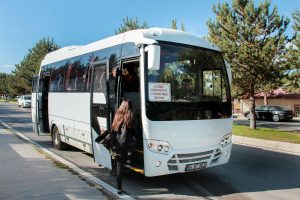
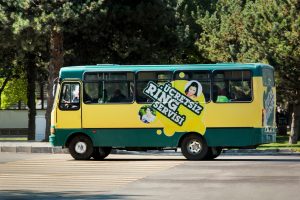
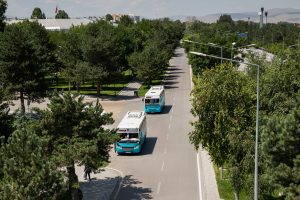
An on-campus ring shuttle network operating on fixed routes and timetables for students and staff. Atatürk Üniversitesi Atatürk Üniversitesi Kayıt Atatürk Üniversitesi
-
Access-controlled driving and parking (Hızlı Geçiş Sistemi – HGS) and pedestrian priority regulations inside campus roadways. Atatürk Üniversitesi
-
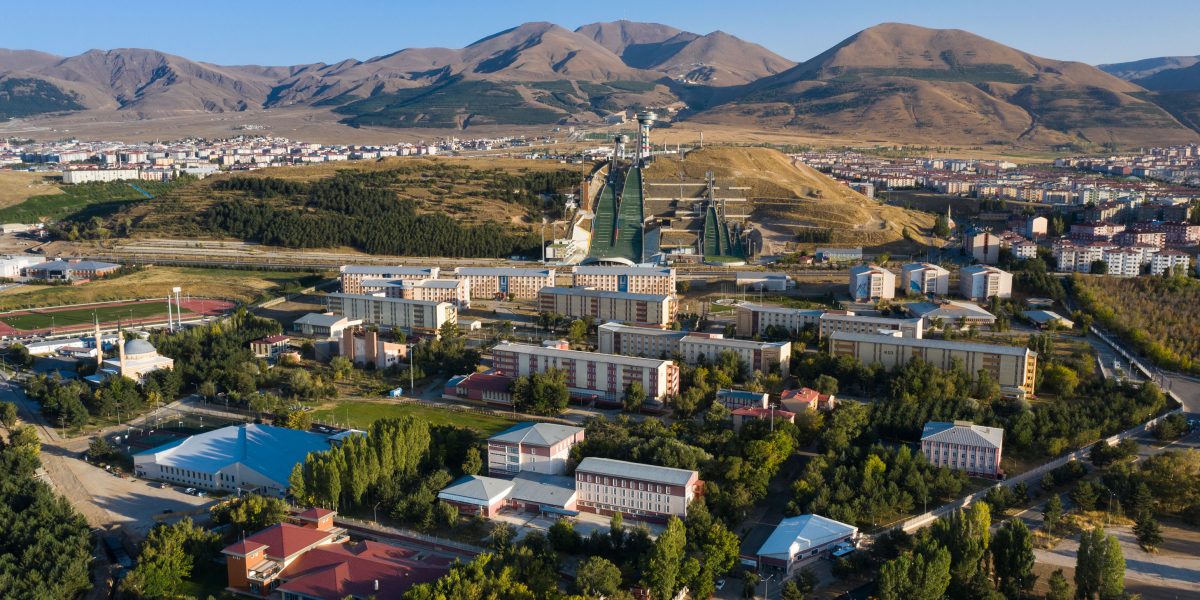
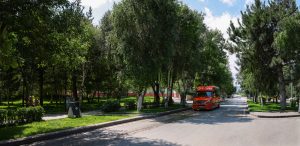
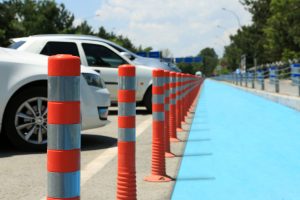
A campus environment explicitly featuring bicycle paths and walkable areas. Atatürk Üniversitesi
-
Frequent city buses/minibuses linking Erzurum city with campus. Atatürk Üniversitesi
-
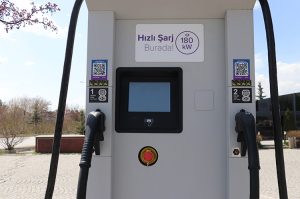
Multiple EV fast-charging points located on and adjacent to university premises (e.g., Rectorate, hospitals, lodgings, and pools), enabling low-emission commuting by car when necessary. Araba Şarj İstasyonları
Definitions
-
Sustainable commuting (headline indicator): Sum of trips by walking, cycling, ring shuttle/public transport, vanpool/carpool, motorcycles/mopeds, and EVs (for car users).
-
Trip: A one-way movement between home (or off-campus residence) and a campus destination.
-
University community: Employees (including contracted essential services), students (full-time equivalent), and on-campus
-
residents.
Measurement system (methods, frequency, and coverage)
Frequency and cadence
-
Annual university-wide travel survey each April–May (aligned with spring term).
-
Continuous operational data capture throughout the year from:
-
Ring shuttle: boarding counts by route/time (from operators’ logs). Atatürk Üniversitesi Kayıt
-
Access control (HGS): daily car entries/exits by gate/lot; enables SOV vs. carpool estimation when matched with car-sharing permits. Atatürk Üniversitesi
-
Parking records & permits (including EV charging session logs where available) to quantify EV usage share among car commuters. Araba Şarj İstasyonları
-
Public transport information (timetables/lines serving campus) to validate reported bus/minibus commuting rates. Atatürk Üniversitesi
-
Survey instrument and representativeness
-
The survey records primary mode, secondary mode, trip frequency, distance band, and seasonal constraints.
-
Stratified sampling ensures representation of students, academic staff, administrative staff, and contractors. Non-response is corrected with post-stratification weights using current FTE/HR totals.
-
The survey also captures barriers to walking/cycling, awareness of ring shuttle, carpool participation, and EV availability to inform targets and mode-shift programs.
Data integration and QA
-
Survey outcomes are reconciled with ring shuttle counts, HGS/parking data, and EV charging sessions to produce a validated modal split for the reporting year. Outliers and inconsistencies are resolved via documented QA rules (e.g., ±5% tolerance checks against operator totals).
Baseline and reporting
-
Baseline year: 2024 (to align with THE Impact Rankings data window).
-
Indicators reported annually:
-
Headline sustainable commuting share (% of all trips), and
-
Disaggregated shares for walking, cycling, ring shuttle/public transport, vanpool/carpool, motorcycle/moped, and EV car commuting.
-
-
Results and methodology are summarized on the university’s public Campus Transportation/Campus Life pages that already present ring operations, pedestrian-priority driving rules, and campus cycling environment; annual commuting results are appended to these pages to maintain public accessibility. Atatürk Üniversitesi Atatürk Üniversitesi Kayıt
Time-bound targets (institution-level)
All targets below are university-wide (employees + students), time-bound, and expressed against the 2024 baseline (100% = total commuting trips). Targets combine absolute percentage-point (pp) changes for headline share and relative increases for sub-modes where appropriate. Progress is reviewed each October with the Senate-approved sustainability report.
Headline target
-
Increase the sustainable commuting share by +12 percentage points by 2026, and +20 percentage points by 2030, versus 2024 baseline (all modes listed below combined).
Mode-specific targets (by end-year)
-
Walking & Cycling (non-motorized):
-
2026: +5 pp vs. 2024; 2030: +8 pp vs. 2024.
Rationale & enablers: Established campus-wide bicycle paths/walkable environment and winter-resilient routing; enhanced wayfinding on major academic spines. Atatürk Üniversitesi+1
-
-
Ring Shuttle & Public Transport (bus/minibus):
-
2026: +5 pp vs. 2024; 2030: +8 pp vs. 2024.
Rationale & enablers: Documented ring services with fixed timetables/routes and city bus/minibus connectivity to campus hubs. Atatürk Üniversitesi Kayıt Atatürk Üniversitesi
-
-
Vanpool/Carpool:
-
2026: At least 10% of car commutes reported as shared rides; 2030: 15%.
Measurement: Carpool permits and matching service records cross-checked with HGS entries to differentiate SOV vs. shared vehicle entries. Atatürk Üniversitesi
-
-
Motorcycle/Moped:
-
2026: Maintain or gently increase share where safety standards are met; annual safety audit reported within commuting annex.
-
-
Electric Vehicles (for remaining car trips):
-
2026: ≥25% of on-campus charging sessions attributable to employee/student commuters; 2030: ≥40%.
Rationale & enablers: Presence of multiple DC fast-charging points on university premises (e.g., Rectorate, hospitals, lodgings/pools) as listed by national charging maps/providers. Araba Şarj İstasyonları
-
-
Single-Occupancy Vehicles (SOV):
-
2026: −10 pp vs. 2024; 2030: −18 pp vs. 2024, driven by mode shift to options above.
Enabler: Access control (HGS) and parking management, with pedestrian-priority rules on internal roads. Atatürk Üniversitesi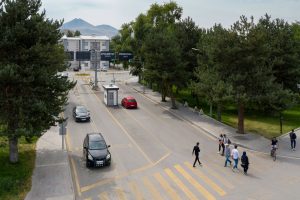
-
-
Governance, roles, and review
-
Data ownership: Institutional Research & Big Data Office (lead), with inputs from Security/Transport for HGS/parking, ring-service operators for ridership, and Facilities for EV charging logs.
-
Approval and oversight: Senate-endorsed policy; annual results and target progress summarized on the Campus Life/Transportation pages to ensure public availability alongside existing mobility information (ring schedules, driving rules, cycling environment). Atatürk Üniversitesi+2Atatürk Üniversitesi Kayıt
-
Continuous improvement: Each cycle includes a variance analysis (survey vs. system counts), published with the results.
Evidence of campus systems enabling sustainable commuting
-
Ring shuttle network: University pages and departmental announcements publish ring routes and times. Atatürk Üniversitesi Kayıt Atatürk Üniversitesi
-
Pedestrian priority & controlled access (HGS): Drivers must yield to pedestrians; HGS cards are required for regular vehicle entry—supporting SOV management. Atatürk Üniversitesi
-
Cycling & walkability: Campus life pages emphasize bicycle paths and nature-friendly campus layout. Atatürk Üniversitesi
-
Public transport connectivity: City buses/minibuses run between Erzurum and campus throughout the day; university pages reference schedules and lines. Atatürk Üniversitesi
-
EV charging on/near premises: Current charging locations (e.g., Rectorate, hospitals, pools, lodgings) listed by national charging networks cover university sites, supporting low-emission commuting by car. Araba Şarj İstasyonları