SDG 1 – No Poverty | Indicator 1.3.1: Low-Income Student Admission Target | Reporting Year: 2025
Institutional Commitment and Admission Target
Atatürk University is committed to expanding access to higher education for students from economically disadvantaged households, with particular attention to individuals belonging to the lowest 20% of the national household income distribution. The University’s approach seeks to address financial barriers to educational participation and support students throughout their studies.
The University maintains a specific institutional commitment to improving the representation and educational outcomes of students from the lowest household income quintile. This commitment is reflected in its approach to student access, financial assistance, academic guidance and student welfare.
According to the institutional data reported in the University’s previous sustainability submission, approximately 17.7% of its student population comes from households within the lowest 20% of the national income distribution. This figure provides an important reference point for assessing the participation of economically disadvantaged students and identifying opportunities to improve access.
The University’s objective extends beyond initial admission. It seeks to create conditions that enable students facing financial hardship to continue their education and complete their degree programmes.
Monitoring Access and Student Success
Atatürk University’s approach includes monitoring the participation of students from low-income households and examining their academic progression.
The institutional monitoring framework described in the University’s previous submission considers the representation of students from the lowest income quintile alongside indicators such as student retention and graduation. These measures are intended to inform decisions on student assistance and identify barriers that may affect educational continuity.
By connecting information on socioeconomic disadvantage with student support needs, the University seeks to make its commitment to equitable access measurable and responsive to changing circumstances.
Access to Higher Education within Türkiye’s Centralised Admission System

Under Türkiye’s national higher education framework, admission to undergraduate programmes is primarily administered through the centralised Higher Education Institutions Examination (YKS) and placement procedures coordinated by the Measurement, Selection and Placement Centre (ÖSYM).
The 2025 national placement process was completed on 25 August 2025, following the examination results and candidates’ programme preferences.
This national system means that universities generally cannot independently select students for centrally allocated places solely on the basis of household income.
Atatürk University therefore pursues its commitment to students from the lowest income quintile within the national admissions framework, focusing on reducing financial obstacles to participation and supporting disadvantaged students after enrolment.
Official reference: ÖSYM – 2025 Higher Education Placement Results
Targeted Financial Support through University Meal Scholarships
One of the University’s established mechanisms for supporting students with limited financial resources is its meal scholarship programme, administered through the Department of Health, Culture and Sports.
The programme explicitly targets academically successful students with low household income. Students apply through their respective academic units, and applications are accepted until the end of October.
Eligible recipients receive one free meal every weekday throughout the academic year at dining facilities operated by the University.
This programme addresses an immediate cost of university attendance. By reducing students’ daily food expenditure, it helps them allocate limited financial resources to other educational and living expenses.
The existence of a defined application process, an institutional administrative unit and a specified benefit demonstrates that financial assistance is delivered through an established student welfare mechanism.
Official reference: Atatürk University – Social Services Branch Directorate
Paid Part-Time Employment Opportunities for Students
Atatürk University also operates a structured part-time student employment programme through its Department of Health, Culture and Sports.
The programme enables eligible students to work in faculties, schools, institutes, research centres and administrative units. Employment contracts, social insurance procedures and salary payments are administered through the University’s Part-Time Student Employment Unit.
The University’s 2025 Departmental Activity Report provides evidence of the scale of this support.
For the 2024–2025 academic year, authorisation was obtained to employ:
- 350 students for nine months under part-time student employment arrangements.
- 150 students for three months under the same programme.
The report records TRY 6,608,439.31 in gross payments to students during the reported period.
These arrangements provide opportunities for students to earn income while continuing their studies. The University’s administrative framework also ensures that employment is formally managed and documented.
Part-time employment forms part of the University’s broader student assistance system, particularly where students face economic difficulties.
Official reference: Atatürk University – Department of Health, Culture and Sports, 2025 Activity Report
Additional Financial Participation through the İŞKUR Youth Programme
The same 2025 institutional activity report documents Atatürk University’s administrative participation in the national https://www.iskur.gov.tr/is-arayan/aktif-isgucu-programlari/iskur-genclik-programi/.
The report records TRY 142,615,255 in salary payments associated with the programme, alongside student insurance and payment administration.
This initiative provides a further mechanism through which students can access paid work opportunities during their university education.
As a nationally supported programme, it complements rather than replaces the University’s own financial assistance arrangements. Its inclusion in the University’s official activity reporting demonstrates institutional involvement in administering student employment opportunities.
Official reference: Atatürk University – 2025 Activity Report, Social Affairs Branch
Scholarships and Coordination with External Funding Organisations
Atatürk University’s Social Services Branch Directorate also provides information and administrative support concerning scholarship opportunities.
Its official student services page identifies the Atatürk University Achievement Scholarship and scholarships associated with external organisations, including the Turkish Education Foundation (TEV), Vehbi Koç Foundation and the Turkish Foundation for Disabled Sports, Education and Assistance (TESYEV).
The University’s 2025 activity report further describes the role of the Social Affairs Branch in supporting scholarship procedures for students identified by faculties, schools and vocational schools.
These arrangements establish institutional channels through which students can receive information and assistance concerning available financial support.
Eligibility criteria differ across programmes. Accordingly, these scholarships are considered complementary student support opportunities rather than being classified automatically as assistance exclusively for students in the lowest household income quintile.
Official reference: Atatürk University – Scholarships and Social Services
Psychological Counselling and Support for Educational Continuity
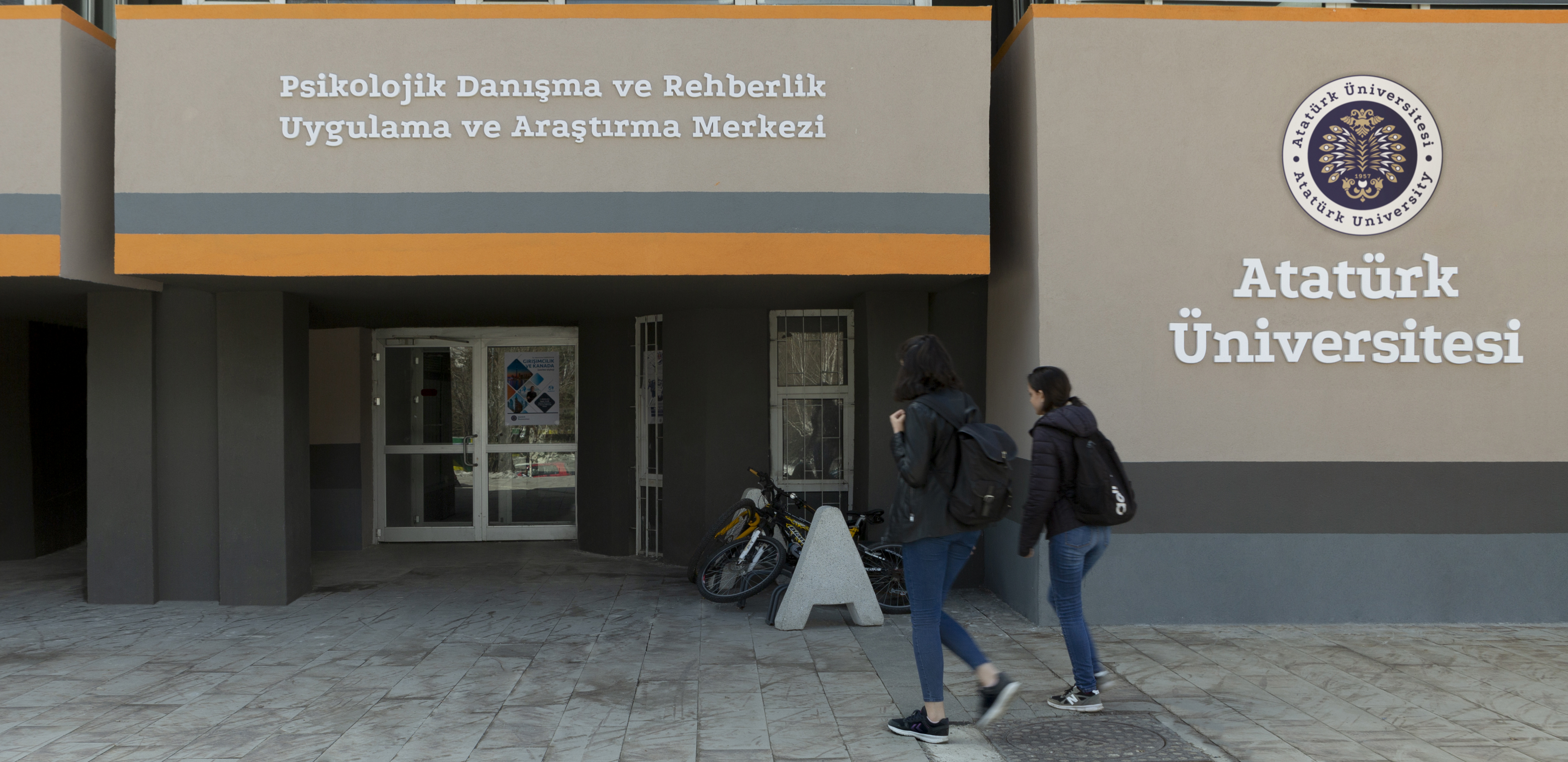
Financial disadvantage can be accompanied by academic adjustment difficulties and personal pressures that affect students’ ability to remain in higher education.
Atatürk University addresses these broader student needs through its https://eski.atauni.edu.tr/en/rehberlik-ve-psikolojik-danismanlik-merkezi/kampuste-yasam, established in 2017.
The Centre provides individual counselling services designed to support students’ personal development, decision-making, communication skills, academic achievement and adaptation to university life.
Counselling is delivered by qualified professionals under confidentiality principles. The University states that these services are available to its students free of charge.
Although the Centre serves the wider student population rather than exclusively students from the lowest income quintile, it contributes to the University’s support infrastructure by removing the direct cost of accessing institutional psychological counselling.
Official references:
Atatürk University – Psychological Counselling and Guidance Centre
Student Counselling Registration Platform
Integration of Access, Financial Assistance and Student Retention
Atatürk University’s approach recognises that admission to higher education does not, by itself, remove the disadvantages associated with low household income.
The University’s existing student support arrangements address several costs and difficulties that may affect students’ ability to continue their education. Meal scholarships reduce daily living expenses, paid employment provides opportunities to earn income, scholarship administration facilitates access to additional funding, and counselling services support student wellbeing and academic adjustment.
These mechanisms operate within the national higher education system while giving the University practical ways to assist students who encounter financial difficulties.
The reported 17.2% representation of students from the lowest national household income quintile provides a baseline for the University’s commitment to widening participation. The documented financial assistance and student services demonstrate the institutional capacity to support this commitment through established programmes.
Conclusion
Atatürk University maintains a commitment to improving access to higher education for students from the lowest 20% of the national household income distribution.
Its approach combines a stated access objective with student participation monitoring and documented assistance programmes. The 2025 institutional activity report provides measurable evidence of student employment expenditure, while the University’s official student services pages document targeted meal scholarships and other support arrangements.
Within Türkiye’s centralised admissions framework, these measures demonstrate how Atatürk University works to reduce the financial barriers that may prevent economically disadvantaged students from entering and completing higher education.
This commitment directly supports United Nations Sustainable Development Goal 1 – No Poverty, particularly the objective of improving educational opportunities for students from low-income households.