Atatürk University | SDG 2 – Zero Hunger | Indicator 2.3.1 | Reporting Year: 2025
1. Institutional Commitment to Combating Student Food Insecurity
Atatürk University recognises that access to adequate, nutritious and affordable food is essential for student wellbeing, academic achievement and equal participation in higher education.
Financial difficulties can prevent students from meeting their daily nutritional needs, potentially affecting their physical health, concentration, academic performance and overall educational experience.
To address these challenges, the University operates an institutional food support system combining affordable university dining services, need-based meal scholarships, nutritional menu planning and financial support mechanisms.
The programme is coordinated primarily through the Department of Health, Culture and Sports (Sağlık, Kültür ve Spor Daire Başkanlığı), which is responsible for student welfare and dining services.
During 2025, Atatürk University provided 700,310 student meals through its institutional dining services.
The student contribution was maintained at TRY 37 per meal throughout 2025, while eligible students experiencing financial difficulties could apply for meal scholarships providing one free meal per weekday during the academic year.
Together, these arrangements constitute an established institutional approach to reducing financial barriers to adequate nutrition.
Official evidence:
Atatürk University – 2025 Department of Health, Culture and Sports Activity Report
Atatürk University – Social Services and Meal Scholarships
2. University Dining Infrastructure and Accessibility
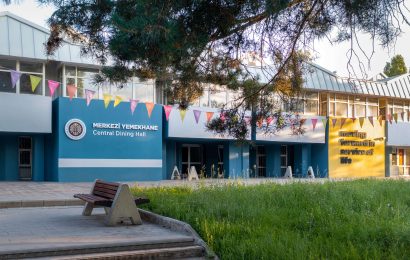
Atatürk University maintains an extensive dining service network serving students across its main campus and affiliated vocational schools.
According to the University’s official dining services information, its student dining infrastructure includes one central dining hall and eight additional dining areas, with an indicative daily service capacity of approximately 10,000 students.
The University’s 2025 activity report identifies dining services in several academic units and campus facilities, including:
- Central student and staff dining facilities.
- Faculty of Dentistry.
- Faculty of Fine Arts.
- Faculty of Medicine.
- Faculty of Letters.
- Faculty of Agriculture.
- Kazım Karabekir Faculty of Education’s Yoncalık facilities.
- University guesthouse dining facilities.
Food services are also provided to students studying at vocational schools in Tortum, Horasan, Oltu, Narman, Aşkale, Hınıs, Pasinler and İspir.
This geographically distributed provision is important because students studying outside the central campus also require access to affordable meals.
The dining network therefore supports food accessibility across different educational locations.
The University’s published dining infrastructure description and the facility count in the 2025 activity report use different reporting categories; the daily service capacity should not be confused with the actual number of meals served.
Official evidence:
Atatürk University – Dining Halls and Cafeterias
2025 Department of Health, Culture and Sports Activity Report
3. Affordable Meals Through Institutional Financial Support
3.1. Student Meal Pricing in 2025
Atatürk University maintains an affordable meal pricing policy to reduce the financial burden of daily nutrition.
According to the University’s official 2025 activity report, the student meal contribution was:
TRY 37 per meal from January to December 2025.
The same report lists the personnel meal contribution as TRY 90.50.
| Meal Price Indicator | 2025 |
|---|---|
| Student contribution per meal | TRY 37.00 |
| Personnel contribution per meal | TRY 90.50 |
| Student meal price period | January–December 2025 |
| Standard meal format | Four-course set menu |
The student contribution was therefore substantially lower than the personnel contribution.
This pricing structure supports students by providing access to meals through university-managed facilities at an institutionally determined rate.
The University also incurs additional expenditure to operate its dining services, as documented in the annual activity report.
3.2. Financial Contribution by the University
The 2025 activity report identifies institutional expenditure associated with dining services.
The report records:
| Institutional Dining Expenditure | 2025 |
|---|---|
| Institutional payment for meal services | TRY 48,460,944.50 |
| Institutional payment for district dining services | TRY 20,077,749.24 |
| Combined reported institutional payments | TRY 68,538,693.74 |
These figures demonstrate the University’s financial commitment to maintaining food service provision.
They should not be interpreted as an amount spent exclusively on low-income students or as a calculated subsidy per student meal, since the report does not establish that allocation.
The University’s dining services combine student contributions with institutional financing, helping maintain access to prepared meals across its educational facilities.
Official evidence:
2025 Department of Health, Culture and Sports Activity Report – Nutrition Services
4. Need-Based Meal Scholarship Programme
4.1. Free Meals for Students Facing Financial Difficulties
The University’s Meal Scholarship Programme (Yemek Bursu) is the most direct component of its response to student food insecurity.
According to the Department of Health, Culture and Sports, the programme supports students who demonstrate financial need and academic success.
Eligible students can receive one free meal every weekday throughout the academic year at dining facilities operated by the Department.
This mechanism directly addresses the affordability of food for students who may otherwise struggle to meet their nutritional needs.
The programme provides practical support rather than relying solely on general student welfare commitments.
4.2. Application and Administration
Meal scholarship applications are submitted through students’ registered academic units.
The University’s central Social Services Unit indicates that applications are normally submitted by the end of October.
The faculty or department-level application process helps connect the scholarship programme with students across different academic disciplines.
The programme is administered within the University’s established student welfare structure.
Official evidence:
Atatürk University – Social Services Unit: Meal Scholarships
5. Documented Continuation of Meal Scholarships in 2025
Atatürk University’s meal scholarship programme remained active during the 2025–2026 academic year.
On 30 September 2025, the Department of Industrial Engineering published an official meal scholarship application announcement.
Students were instructed to complete the application form and submit it to their academic advisers by 7 October 2025.
Additional university units, including the Faculty of Law and the Department of Electrical and Electronics Engineering, also published meal scholarship announcements in October 2025.
These dated records provide direct evidence that the programme was being administered during the 2025 reporting period.
| 2025 Evidence | Date | Significance |
|---|---|---|
| Industrial Engineering meal scholarship application | 30 September 2025 | Documented application process |
| Faculty of Law meal scholarship announcement | 2 October 2025 | Faculty-level access to the programme |
| Electrical and Electronics Engineering meal scholarship announcement | 3 October 2025 | Additional departmental implementation |
The announcements demonstrate programme continuity and institutional accessibility.
The total number of successful scholarship recipients in 2025 is not established by these announcements and should be confirmed through the Department of Health, Culture and Sports.
Official evidence:
Industrial Engineering – Meal Scholarship Application, 30 September 2025
Faculty of Law – Official Announcements
Electrical and Electronics Engineering – Official Announcements
6. Number of Meals Provided in 2025
The University’s 2025 Department of Health, Culture and Sports Activity Report provides quantitative evidence of actual dining service delivery.
Annual Meal Service Statistics
| Service Category | Number of Meals in 2025 |
|---|---|
| Student meals | 700,310 |
| Personnel meals | 114,087 |
| Total recorded meals | 814,397 |
These figures refer to meals served, not the number of unique individuals receiving food.
The provision of 700,310 student meals demonstrates the operational scale of the University’s food support infrastructure.
The University also reported providing free meals in connection with certain social activities, visiting students, excursions, visits and fairs.
These additional services contribute to institutional hospitality and student participation but should not be counted as need-based food assistance without further evidence.
Official evidence:
2025 Department of Health, Culture and Sports Activity Report
7. Nutritional Quality and Balanced Meals
Food insecurity is not limited to insufficient food quantity; it also concerns the ability to obtain adequate and nutritionally appropriate meals.
Atatürk University’s official dining services information states that menus are prepared according to students’ daily nutritional requirements, taking into account calorie and protein values.
The 2025 activity report confirms that dining facilities serve four-course set menus.
The University’s dining information also describes routine checks by responsible personnel before meals are served.
These arrangements support the provision of planned and nutritionally considered meals.
Nutritional Planning Principles
The documented dining model includes:
- Four-course meal provision.
- Menu planning based on nutritional requirements.
- Consideration of calorie and protein values.
- Routine checks before meal service.
- Organised dining services across university facilities.
The University’s public sources support these nutritional planning practices.
However, universal availability of vegan, gluten-free or other specialised diets at every dining facility has not been established by the reviewed 2025 evidence and should be documented separately if included in institutional reporting.
Official evidence:
Atatürk University – Dining Halls and Cafeterias
2025 Department of Health, Culture and Sports Activity Report
8. Complementary Financial Assistance for Students
Atatürk University’s approach to reducing student hardship extends beyond dining services.
The University provides information about additional financial support opportunities through its institutional units and partner organisations.
8.1. Atatürk University Development Foundation Scholarships
In November 2025, the Atatürk University Development Foundation announced applications for the 2025–2026 academic year.
The Foundation stated that its scholarship arrangements had been expanded to include students requiring financial assistance alongside academically successful students.
Applications were accepted between 17 November and 15 December 2025.
Although these scholarships are not specifically designated as meal scholarships, financial assistance can help eligible students manage essential living expenses, including food.
Official evidence:
Atatürk University Development Foundation – 2025–2026 Scholarship Applications
8.2. Turkish Education Foundation Support

On 2 October 2025, the University’s Pasinler Vocational School announced scholarship opportunities offered by the Turkish Education Foundation (TEV).
The announcement described:
- A monthly education scholarship of TRY 5,800.
- A scholarship period covering October to June.
- Additional support opportunities, including meal assistance, for eligible TEV scholarship recipients.
The announced supplementary meal assistance was TRY 1,500 per month for students selected under the Foundation’s relevant support arrangements.
This is an external foundation programme promoted through the University’s communication channels, rather than a direct university-funded meal scholarship.
It nevertheless provides an additional route through which eligible students may obtain financial assistance relevant to their nutritional needs.
Official evidence:
TEV 2025–2026 Scholarship Announcement – Pasinler Vocational School
9. Accessibility and Student-Friendly Dining Procedures
Atatürk University’s dining facilities are designed to provide students with organised access to meals through university-managed service arrangements.
The University’s official dining information explains that students can load meal balances onto their university identification cards.
Electronic kiosk devices allow students to complete balance-loading transactions without cash handling at the dining service point.
This system supports the administration of meal access through student identification cards.
The University’s dining network also extends beyond the central campus to district vocational schools.
Together, these arrangements support the practical accessibility of university dining services.
Official evidence:
Atatürk University – Dining Halls and Cafeterias
10. Programme Monitoring and Institutional Responsibility
The University’s Department of Health, Culture and Sports is responsible for the coordination of student welfare services, including nutrition-related provision.
Its Nutrition Services Branch is a key operational unit for university dining.
The University’s 2025 activity report provides documented information concerning:
- Student and personnel meal prices.
- Numbers of meals served.
- Financial contributions collected.
- Institutional expenditure on meal services.
- Dining facilities and their physical areas.
- Food service provision in district vocational schools.
The existence of these records demonstrates that the University maintains administrative information about its dining operations.
For more detailed monitoring of student food insecurity, the University could additionally compile:
- Number of meal scholarship applications.
- Number of approved scholarship recipients.
- Number of free meals actually redeemed through scholarships.
- Distribution of scholarship recipients across academic units.
- Annual expenditure specifically attributable to need-based meal support.
- Student feedback concerning food affordability and accessibility.
These additional indicators would help distinguish general dining provision from targeted assistance for students experiencing food insecurity.
11. Programme Outcomes and 2025 Evidence Summary
| Programme Component | Documented 2025 Evidence |
|---|---|
| Institutional dining provision | 700,310 student meals served |
| Student meal affordability | TRY 37 per meal throughout 2025 |
| Nutritional provision | Four-course set menus |
| Dining infrastructure | Central and faculty dining facilities, plus district vocational school provision |
| Need-based food support | Free weekday meal scholarship programme |
| Programme continuity | September–October 2025 scholarship application announcements |
| Complementary student support | Development Foundation scholarship applications expanded to students needing financial assistance |
| External support opportunities | TEV scholarship and supplementary meal assistance information |
| Administrative monitoring | Official 2025 activity report containing dining statistics and financial data |
The University’s programme combines universal access to affordable dining services with targeted assistance for students experiencing financial hardship.
The most direct evidence of action against student hunger is the need-based free meal scholarship, while the annual meal service statistics demonstrate the broader scale of university food provision.
12. Contribution to SDG 2 – Zero Hunger
Atatürk University’s student food support arrangements contribute to SDG 2 – Zero Hunger by addressing financial and practical barriers to adequate nutrition.
The programme operates through several complementary mechanisms.
Affordable food access: University dining facilities provide meals at a student contribution rate established by the institution.
Targeted assistance: Eligible students experiencing financial difficulties can access one free meal per weekday through the meal scholarship programme.
Nutritional consideration: Four-course menus are planned with reference to calorie and protein requirements.
Geographical coverage: Dining services extend to central campus facilities and affiliated vocational schools.
Institutional continuity: Official scholarship application announcements from 2025 demonstrate the continuation of targeted food assistance.
Financial resilience: University and external scholarship opportunities may help eligible students meet essential living costs.
Together, these arrangements help reduce the risk that financial hardship will prevent students from accessing regular meals.
Conclusion
Atatürk University maintains an established institutional programme to address student food insecurity through affordable dining services, targeted meal scholarships and nutritional meal planning.
During 2025, the University served 700,310 student meals, with a student contribution of TRY 37 per meal.
The University’s meal scholarship programme provides eligible students experiencing financial difficulties with one free meal every weekday throughout the academic year.
Official application announcements published in September and October 2025 demonstrate that the programme continued during the reporting period.
Supported by the Department of Health, Culture and Sports, the University’s dining network serves students across central campus facilities and district vocational schools.
These measures demonstrate Atatürk University’s commitment to reducing financial barriers to food access, supporting student wellbeing and promoting educational equity.
Through its established and documented food support mechanisms, Atatürk University contributes to SDG 2 – Zero Hunger, Indicator 2.3.1: A Programme for Student Food Insecurity / Hunger.