Atatürk University | SDG 2 – Zero Hunger | Indicator 2.3.2 | Reporting Year: 2025
1. Institutional Commitment to Preventing and Alleviating Student Hunger
Atatürk University recognises that reliable access to affordable, safe and nutritious food is essential for students’ health, academic achievement and equal participation in higher education.
Students experiencing financial hardship may struggle to meet their daily nutritional needs. These difficulties can affect physical wellbeing, concentration, educational performance and participation in university life.
To address these challenges, Atatürk University maintains a coordinated system of interventions that combines subsidised student meals, need-based free meal scholarships, accessible dining facilities, nutritional menu planning and additional food assistance during Ramadan.
These interventions are coordinated primarily through the Department of Health, Culture and Sports (Sağlık, Kültür ve Spor Daire Başkanlığı) and its Nutrition Services and Social Services branches.
In 2025, Atatürk University provided 700,310 student meals through its institutional dining services.
The student contribution was maintained at TRY 37 per meal, while eligible students experiencing financial hardship could receive one free meal every weekday throughout the academic year through the University’s Meal Scholarship Programme.
In addition, the University organised free iftar meals during Ramadan 2025, extending food assistance through central and district dining facilities.
Together, these measures demonstrate a structured institutional approach to preventing and alleviating student hunger.
Official evidence:
Atatürk University – 2025 Department of Health, Culture and Sports Activity Report
Atatürk University – Social Services and Meal Scholarships
2. Intervention One: Subsidised Student Meals
Affordable Dining Services
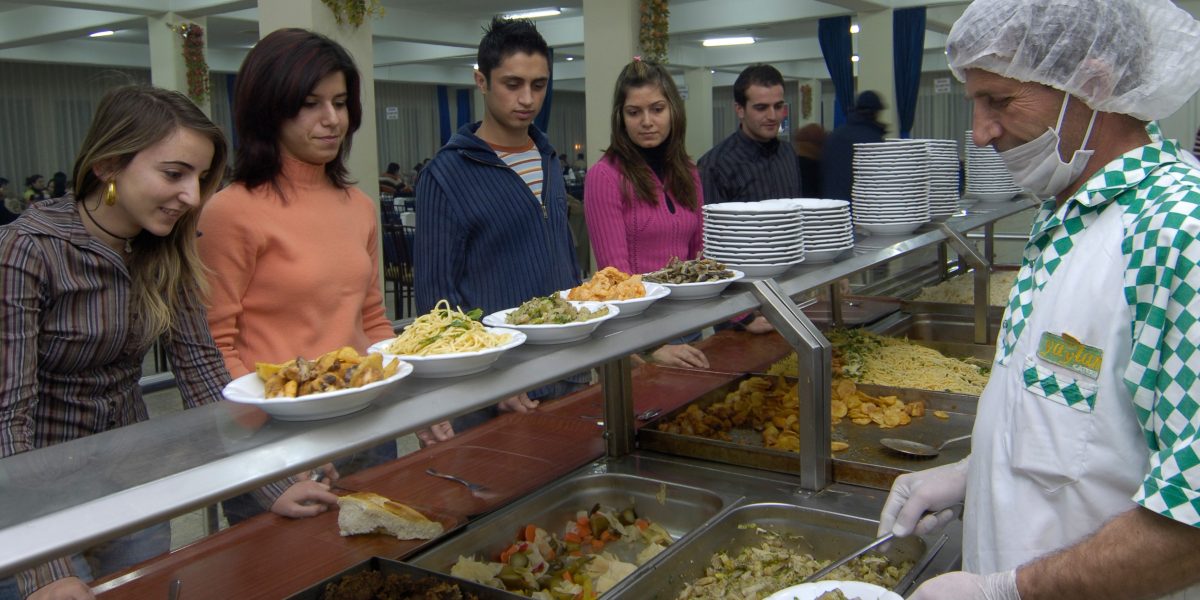
Atatürk University’s primary intervention to reduce the financial burden of food is the provision of affordable meals through university-managed dining facilities.
The University’s Nutrition Services Branch coordinates the provision of meals to students and personnel.
According to the official 2025 activity report, the student meal contribution was TRY 37 throughout the year.
The University provided four-course set menus through its institutional dining facilities.
2025 Meal Prices and Service Statistics
| Indicator | 2025 Result |
|---|---|
| Student contribution per meal | TRY 37.00 |
| Personnel contribution per meal | TRY 90.50 |
| Student meals served | 700,310 |
| Personnel meals served | 114,087 |
| Total recorded meals | 814,397 |
| Standard meal format | Four-course set menu |
The student contribution was substantially lower than the personnel contribution.
This pricing arrangement helps students access prepared meals at a predictable and institutionally determined cost.
The figures refer to the number of meals served, not the number of unique individuals receiving meals.
Institutional Financing
The University’s 2025 activity report records substantial institutional expenditure on dining services.
| Expenditure Category | 2025 Amount |
|---|---|
| Institutional payment for meal services | TRY 48,460,944.50 |
| Institutional payment for district dining services | TRY 20,077,749.24 |
| Combined institutional payments | TRY 68,538,693.74 |
These payments demonstrate the University’s financial commitment to maintaining its dining infrastructure and food services.
They do not represent expenditure exclusively allocated to low-income students.
Official evidence:
2025 Department of Health, Culture and Sports Activity Report
3. Intervention Two: Need-Based Free Meal Scholarships
Direct Food Assistance for Financially Disadvantaged Students
The University’s Meal Scholarship Programme (Yemek Bursu) provides targeted food assistance to students experiencing financial difficulties.
The programme is administered through the Social Services Branch of the Department of Health, Culture and Sports.
According to the University’s official programme description, meal scholarships are available to students who meet the relevant financial need and academic achievement criteria.
Eligible students receive one free meal every weekday throughout the academic year at dining facilities operated by the Department.
This intervention directly reduces the cost of obtaining regular meals for financially disadvantaged students.
Application and Administration
Applications are submitted through students’ registered academic units, generally by the end of October.
The application process enables faculties, schools and departments to participate in identifying and supporting eligible students.
Verified Programme Continuity in 2025
The University’s meal scholarship programme continued during the 2025–2026 academic year.
On 30 September 2025, the Department of Industrial Engineering published an official application announcement.
Students were instructed to submit their applications by 7 October 2025.
Additional academic units, including the Faculty of Law and the Department of Electrical and Electronics Engineering, published meal scholarship announcements in October 2025.
These records demonstrate that the programme remained active during the 2025 reporting period.
The total number of scholarship recipients and the number of free meals redeemed in 2025 should be confirmed through the University’s administrative records.
Official evidence:
Atatürk University – Social Services Branch
Meal Scholarship Application – 30 September 2025
4. Intervention Three: Free Iftar Meals During Ramadan 2025
Additional Food Support During Ramadan
Atatürk University implemented an additional food assistance intervention during Ramadan 2025.
On 27 February 2025, the University officially announced that students would receive free iftar meals throughout Ramadan.
The initiative was intended to reduce students’ food-related expenses during the fasting period and support their wellbeing.
The University’s announcement identified several dining facilities participating in the programme.
Service Availability
The announced arrangements were:
- Central Dining Hall: Free iftar service on weekdays and weekends.
- District Dining Halls: Free iftar service on weekdays and weekends.
- Faculty of Letters Dining Hall: Free iftar service on weekdays.
The Central Dining Hall was scheduled to begin serving iftar meals on the first day of Ramadan, while the Faculty of Letters and district dining halls were scheduled to begin service on the following Monday.
This arrangement expanded the availability of free meals beyond the usual weekday academic schedule.

Contribution to Hunger Prevention
The Ramadan programme represents a direct intervention because it provides meals without requiring a student contribution.
It is particularly relevant to students who may experience financial pressure when purchasing evening meals.
The inclusion of district dining halls also helped extend access beyond the central campus.
The official announcement establishes the University’s commitment to providing free iftar meals and identifies the planned service locations and days.
The total number of free iftar meals served during Ramadan 2025 should be documented separately if available.
Official evidence:
Atatürk University – Free Iftar Meals for Students, 27 February 2025
5. Intervention Four: Accessible Dining Infrastructure
University Dining Network
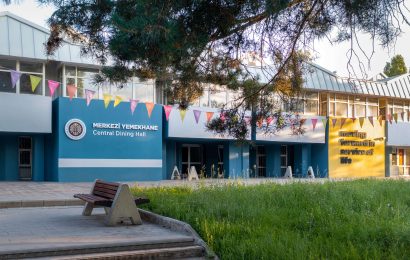
Atatürk University maintains an extensive food service infrastructure designed to meet the nutritional needs of students across its campus.
According to the University’s official dining information, its student dining network includes:
- One central dining hall.
- Eight additional dining facilities.
- An indicative daily service capacity of approximately 10,000 students.
The University’s broader food service infrastructure also includes canteens, restaurants and cafeterias.
An official institutional description identifies approximately:
| Facility Type | Reported Number |
|---|---|
| Central dining hall | 1 |
| Secondary dining facilities | 8 |
| Canteens | 40 |
| Restaurants | 5 |
| Cafeterias | 7 |
These figures describe the University’s published infrastructure and should not be interpreted as an independently verified inventory of facilities operating throughout every month of 2025.
Dining Services Beyond the Central Campus
The University’s 2025 activity report documents meal provision at several district vocational schools, including:
- Tortum Vocational School.
- Horasan Vocational School.
- Oltu Vocational School.
- Narman Vocational School.
- Aşkale Vocational School.
- Hınıs Vocational School.
- Pasinler Vocational School.
- İspir Vocational School.
This geographical distribution helps students studying outside the central campus access university dining services.
Official evidence:
Atatürk University – Dining Halls and Cafeterias
Atatürk University – Food and Beverage Facilities
2025 Department of Health, Culture and Sports Activity Report
6. Dining Hall and Canteen Opening Hours
6.1. Dining Hall Meal Service Hours
The University’s previously published student dining information identified the following meal service periods:
| Meal Service | Previously Published Time |
|---|---|
| Lunch | 11:00–14:00 |
| Dinner | 16:00–18:00 |
These hours provide a reference for the University’s established dining arrangements.
However, the reviewed 2025 official sources do not establish that every dining facility operated under identical hours throughout the reporting year.
Actual service times may vary according to the facility, academic calendar, semester arrangements and special events.
The University’s official food service information confirms the provision of lunch and dinner services, including special iftar arrangements during Ramadan.
For the purposes of 2025 reporting, the above hours should be treated as previously published service information rather than independently verified operating hours for every facility.
6.2. Canteen and Cafeteria Opening Hours
Canteens and cafeterias complement university dining halls by providing students with additional opportunities to purchase food and beverages.
The University maintains canteens in faculty buildings and other campus locations.
Opening hours are generally organised at the individual facility level.
An official faculty orientation document identifies the following example:
| Facility | Documented Opening Hours |
|---|---|
| Faculty of Fine Arts canteen | Weekdays, 08:00–17:00 |
This example demonstrates that some campus canteens provide access to food and beverages throughout the teaching day.
However, it does not establish a uniform timetable for all university canteens.
The operating hours of other canteens and cafeterias should be confirmed through the relevant faculty or facility administration.
6.3. Extended Access During Ramadan
The University’s 2025 Ramadan arrangements provide a documented example of food service availability beyond normal weekday schedules.
During Ramadan:
- The Central Dining Hall was scheduled to operate for iftar on weekdays and weekends.
- District dining halls were scheduled to operate for iftar on weekdays and weekends.
- The Faculty of Letters Dining Hall was scheduled to operate for iftar on weekdays.
This additional provision helped students access free evening meals during the Ramadan period.
The precise daily iftar service time followed the relevant fasting schedule and was not specified as a fixed clock time in the University’s announcement.
Official evidence:
Atatürk University – Food and Beverage Facilities
Faculty of Fine Arts – Orientation Information
Atatürk University – Ramadan 2025 Free Iftar Programme
7. Intervention Five: Nutritionally Planned Meals
Preventing hunger requires not only access to food but also attention to nutritional adequacy.
Atatürk University’s dining facilities provide four-course set menus.
According to the University’s official dining information, weekly menus are prepared with consideration of students’ daily nutritional needs, including calorie and protein requirements.
Meals are provided through organised self-service arrangements following routine checks by responsible personnel.
Nutritional Planning Practices
The documented dining arrangements include:
- Four-course meal provision.
- Weekly menu planning.
- Consideration of calorie and protein values.
- Routine checks before meal service.
- Organised food preparation and distribution.
These arrangements support access to planned meals rather than relying exclusively on commercial food options.
Specialised dietary provision, including vegan or gluten-free menus, should be confirmed separately for each relevant facility before being reported as universally available.
Official evidence:
Atatürk University – Dining Halls and Cafeterias
8. Intervention Six: Complementary Financial Assistance
Atatürk University also facilitates access to financial support programmes that may help students meet essential living expenses, including food costs.
8.1. Atatürk University Development Foundation Scholarships
In November 2025, the Atatürk University Development Foundation announced scholarship applications for the 2025–2026 academic year.
The Foundation indicated that scholarship opportunities had been expanded to include students requiring financial assistance, alongside academically successful students.
Applications were accepted between 17 November and 15 December 2025.
Although these scholarships are not exclusively food-related, they may help eligible students manage the costs of daily necessities.
Official evidence:
Atatürk University Development Foundation – 2025–2026 Scholarship Applications
8.2. Turkish Education Foundation Scholarships
In October 2025, the University publicised scholarship opportunities offered by the Turkish Education Foundation (TEV).
The announcement included information about:
- Monthly educational support of TRY 5,800.
- Scholarship provision during the academic year.
- Supplementary meal assistance of TRY 1,500 per month for eligible recipients.
This support is administered by TEV rather than directly funded by Atatürk University.
Nevertheless, its promotion through university communication channels provides students with information about additional resources that may help meet their nutritional needs.
Official evidence:
TEV Scholarship Announcement – 2 October 2025
9. Complementary Campus Food Access Facilities

Beyond university dining halls, students can access additional food and beverage facilities.
These include faculty canteens, cafeterias, restaurants, small retail outlets and other campus food service locations.
The University’s official shopping information also identifies a Farm Products Sales Canteen, located near the entrance to university residential facilities.
This outlet provides products associated with the University’s Food and Livestock Application and Research Center.
The University’s published information describes the availability of products such as milk, eggs and honey.
The existence of this facility broadens the food purchasing options available on campus.
However, the public information does not establish that products were sold at subsidised prices to financially disadvantaged students during 2025.
Accordingly, the Farm Products Sales Canteen is presented as complementary food access infrastructure rather than a verified targeted hunger relief programme.
Official evidence:
Atatürk University – Shopping and Farm Products Sales Canteen
10. Sustainability-Linked Initiatives
10.1. Deposit Return System Introduced in 2025
In August 2025, a Deposit Management System was introduced at Atatürk University.
Deposit return machines were installed at the Central Dining Hall and Reading Hall.
The system enables users to return eligible beverage containers and recover the applicable deposit through a digital wallet.
This initiative supports recycling and resource recovery.
Although students may use refunded deposits for personal expenses, the system is not a dedicated free meal programme and should not be counted as a direct hunger relief intervention.
10.2. Historical Recycling-for-Meals Innovation
In 2021, a student-developed recycling machine associated with ATA Teknokent received public attention for its proposed ability to connect recyclable materials with meal-related credits.
The project demonstrated an innovative approach to combining environmental sustainability with potential student support.
However, available evidence does not establish that meal redemption through this system was operational in 2025.
It is therefore included as a historical innovation rather than as a verified 2025 hunger prevention outcome.
Evidence:
Anadolu Agency – Recycling Machine Project
11. Institutional Governance and Monitoring
The University’s food assistance interventions are supported by an established administrative structure.
Department of Health, Culture and Sports
The Department coordinates key student welfare activities, including dining services.
Nutrition Services Branch
The Nutrition Services Branch is responsible for organising university meal provision.
Social Services Branch
The Social Services Branch administers student support mechanisms, including the Meal Scholarship Programme.
Academic Units
Faculties, schools and departments support the communication and administration of scholarship applications.
Institutional Monitoring
The University’s 2025 activity report provides quantitative information on:
- Meal prices.
- Student and personnel meals served.
- Dining service expenditure.
- Dining facility locations.
- Food service provision at district vocational schools.
These records support the monitoring and continuity of institutional food services.
To assess the direct impact of hunger prevention interventions more precisely, the University should also maintain annual data on:
- Meal scholarship applications.
- Approved scholarship recipients.
- Free meals redeemed through scholarships.
- Free iftar meals served.
- Student feedback concerning food affordability.
- Unmet demand for food assistance.
These additional indicators would strengthen the evidence of how targeted support reaches students experiencing food insecurity.
12. Summary of Documented 2025 Interventions
| Intervention | 2025 Evidence | Contribution |
|---|---|---|
| Subsidised meals | TRY 37 student contribution | Improves food affordability |
| Institutional meal provision | 700,310 student meals | Demonstrates service delivery |
| Free meal scholarships | One free weekday meal for eligible students | Directly addresses food insecurity |
| Scholarship applications | September–October 2025 announcements | Confirms programme continuity |
| Free Ramadan iftar meals | Official announcement dated 27 February 2025 | Provides additional free meals |
| Dining infrastructure | Central, faculty and district facilities | Improves geographical accessibility |
| Dining hours | Previously published lunch and dinner periods | Provides reference service information |
| Canteen access | Faculty of Fine Arts weekday 08:00–17:00 example | Provides supplementary daytime food access |
| Nutritional menu planning | Four-course meals and nutritional planning | Supports adequate nutrition |
| Complementary scholarships | Development Foundation and TEV announcements | Helps students manage living expenses |
| Campus food outlets | Canteens, cafeterias and farm products outlet | Expands food purchasing options |
The strongest direct interventions are the subsidised dining services, need-based free meal scholarships and free Ramadan iftar meals.
Other activities provide complementary financial, nutritional and practical support.
13. Contribution to SDG 2 – Zero Hunger
Atatürk University’s interventions address several dimensions of student food insecurity.
Affordability: Subsidised student meal prices reduce the direct cost of prepared food.
Targeted food assistance: Meal scholarships provide free meals to eligible students experiencing financial hardship.
Additional hunger relief: Free iftar meals during Ramadan extend food assistance during a specific period of need.
Accessibility: Dining facilities are distributed across the central campus and district vocational schools.
Service availability: Lunch, dinner and canteen services provide different opportunities to obtain food during the day, subject to facility-specific schedules.
Nutritional adequacy: Four-course menus are prepared with reference to nutritional requirements.
Financial resilience: Scholarship opportunities may help students manage essential living expenses.
Institutional continuity: The Department of Health, Culture and Sports provides an administrative framework for maintaining food-related services.
Together, these interventions reduce practical and financial barriers to adequate nutrition and support students’ wellbeing and educational participation.
Conclusion
Atatürk University implements a comprehensive institutional approach to preventing and alleviating student hunger through affordable dining services, targeted free meal scholarships, accessible food facilities, nutritional menu planning and additional food assistance.
During 2025, the University provided 700,310 student meals at a student contribution of TRY 37 per meal.
Its Meal Scholarship Programme continued to provide eligible students experiencing financial hardship with one free meal every weekday throughout the academic year.
The University also announced free iftar meals throughout Ramadan 2025, with services planned at the Central Dining Hall, Faculty of Letters Dining Hall and district dining facilities.
The University’s dining infrastructure is complemented by faculty canteens, cafeterias and other food outlets.
Previously published dining information identifies lunch and dinner service periods, while faculty-level documentation provides examples of canteen opening hours.
Through its coordinated food provision, direct assistance and institutional support mechanisms, Atatürk University demonstrates its commitment to reducing student food insecurity and promoting equitable access to adequate nutrition.
These interventions contribute directly to SDG 2 – Zero Hunger, Indicator 2.3.2: Interventions to Prevent or Alleviate Hunger Among Students.