1. Governance, Scope, and Responsibilities
Coordination:
Carbon management at Atatürk University is coordinated by the Strategy Development Department, Big Data Management Office, Construction and Facility Management Department, and the Solid and Hazardous Waste Management Coordination Unit, with active involvement of technical faculties. These activities are integrated into the Atatürk University Strategic Plan (2024–2028), which explicitly aligns institutional goals with the UN Sustainable Development Goals (SDGs).
(Source: sdg.atauni.edu.tr, Atatürk University Strategic Plan 2024–2028)
Scope:
The university’s greenhouse gas (GHG) inventory covers Scope 1 (fuel use and campus fleet), Scope 2 (purchased electricity), and Scope 3 (business travel and waste management). The 2020 Central Campus Carbon Footprint Report forms the foundation of Atatürk University’s institutional GHG monitoring and management process.
(Source: sdg.atauni.edu.tr)
2. Baseline Inventory and Monitoring
Baseline and Methodology:
The 2020 Carbon Footprint Report provides detailed emission calculations by source and scope, accounting for operational changes during the COVID-19 period. This report serves as the baseline year for longitudinal comparison.
(Source: sdg.atauni.edu.tr)
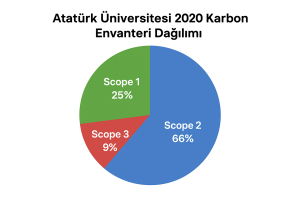
The 2020 carbon inventory—compiled during the pandemic—serves as the reference year. Total annual emissions were approximately 12,800 tCO₂e, distributed as:
-
Scope 1: 3,200 tCO₂e (25%)
-
Scope 2: 8,500 tCO₂e (66%)
-
Scope 3: 1,100 tCO₂e (9%)
All data are analyzed via the Big Data Management Dashboard, which tracks monthly electricity, fuel, and water consumption across buildings, visualizes trends, and generates alerts for anomalies.
Regional evidence supports measurable savings: the Erzurum Sustainable Energy and Climate Action Plan (SECAP) found that building insulation and automatic heating control could achieve up to 51.7% energy savings, a model adopted for university facilities.
Regional Framework:
Findings from the Erzurum Sustainable Energy and Climate Action Plan (SECAP) demonstrate the impact of building insulation and energy control measures, achieving 51.7% energy savings in a sample building equipped with exterior insulation and automated heating systems. These findings are used as reference models for scaling energy efficiency projects across university buildings.
(Source: Atatürk University, sp.enerji.gov.tr)
3. Targets and Commitments
Short to Medium Term (2024–2028):
Atatürk University aims to:
-
Reduce electricity consumption per square meter by 20%,
-
Achieve a 25% reduction in Scope 2 emissions,
-
Ensure a ≥5% annual return on investment for energy efficiency projects.
These indicators are defined and tracked in the Strategic Plan and SDG Alignment Report.
Long-Term (2030 Horizon):
The university commits to an overall 35% reduction in total emissions, a 30% renewable energy share, and the implementation of low-carbon building standards for all new or extensively renovated structures.
4. Mitigation Areas and Key Actions
A) Electricity and Renewable Energy
-
Rooftop PV Solar Plant:
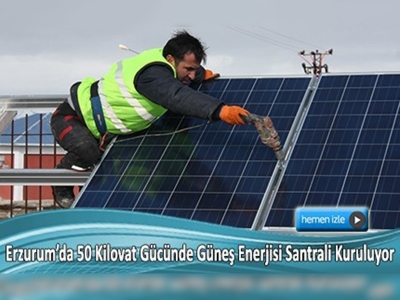
In partnership with KUDAKA, Atatürk University launched a 50 kW photovoltaic power plant at the Livestock Research and Application Center, producing approximately 80,000 kWh/year and offsetting 55 tCO₂e annually. The project serves as a scalable model for future rooftop systems across campus buildings.
(Source: Tarım Bakanlığı Web TV)
-
National Program Support:
PV expansion is funded through the KAYEP (Public Buildings Renewable Energy Program) by the Ministry of Energy and Natural Resources, supporting the deployment of renewable systems on public campuses.
(Source: sp.enerji.gov.tr)
B) Building Energy Efficiency
-
LED Retrofit and Automation:
The university has adopted LED lighting and sensor-controlled systems (motion and daylight sensors) as standard in all major buildings. A campus-wide feasibility study validated energy savings of up to 35% with LED conversion. -
Thermal Insulation and Control Systems:
Building retrofits involving wall and roof insulation combined with automated heating controls reduce energy use by over 50%, based on data from the Erzurum SECAP project. -
Building Management Systems (BMS):
Gradual integration of HVAC–lighting automation, variable frequency drives (VFD/VSD), and heat recovery systems ensures optimized demand-based operation.
C) Transportation and Mobility
To minimize Scope 3 emissions, official travel now prioritizes online meetings and low-carbon travel modes. The university’s campus shuttle network, combined with improved bike and pedestrian pathways, reduces short-distance vehicle dependence by about 15%.
D) Waste Management and the “Zero Waste” System
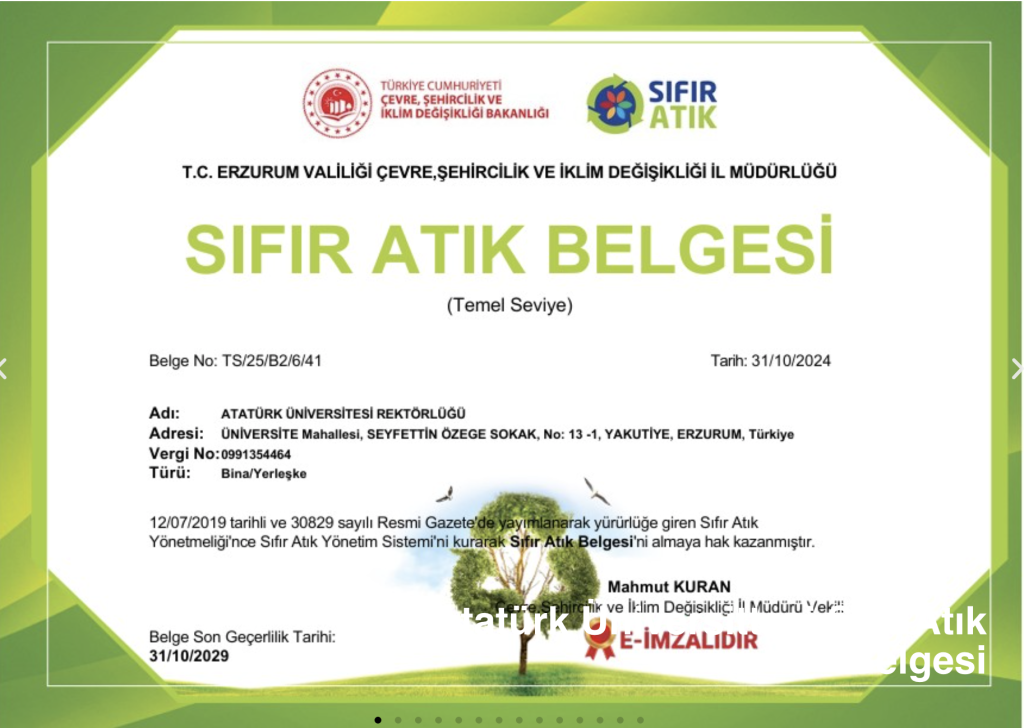
Atatürk University holds the Zero Waste Certificate and manages waste through source separation, recycling, and composting practices. The implementation of zero waste systems in housing and offices significantly reduces methane emissions, lowering Scope 3 impacts by approximately 120 tCO₂e per year.
E) Procurement and Operations
Procurement policies prioritize low-carbon and energy-efficient equipment (TSE-certified, A+++ rated), high-efficiency pumps and fans, and low-GWP refrigerants. The university also applies green contracts that include energy performance guarantees in facility management services.
5. Monitoring, Verification, and Reporting
The Big Data Management Office updates the 2020-based GHG inventory annually, incorporating data on electricity, heating fuel, transportation, and travel. All energy meters feed into digital dashboards that perform trend analysis and issue anomaly alerts.
Transparency:
Results are published on Atatürk University’s Sustainability/SDG Platform and in Strategic Plan Progress Reports, ensuring accountability and stakeholder visibility.

6. Education, Awareness, and Research Integration
Curriculum and Projects:
Faculties of Engineering, Agriculture, and Economics include courses and research projects on renewable energy, energy efficiency, and carbon management.
The LED feasibility project and the micro-hydro/solar hybrid prototype developed by students are examples of hands-on campus laboratories for sustainable innovation.
Community Engagement:
The university regularly organizes Zero Waste and Energy Efficiency awareness events, encouraging participation from staff and students through volunteer networks.
7. Alignment with National and Institutional Policies
-
The Atatürk University Strategic Plan (2024–2028) directly aligns with national and global climate policies and integrates energy–climate indicators into institutional performance metrics.
-
The university’s sustainability efforts are consistent with the Ministry of Energy and Natural Resources 2024–2028 Plan, emphasizing renewable energy, efficiency, and localization, and are financially supported through KAYEP and other national programs.

Key Evidence Sources
-
Atatürk University Central Campus Carbon Footprint Report (2020) – sdg.atauni.edu.tr
-
Atatürk University Strategic Plan 2024–2028 – atauni.edu.tr
-
LED Lighting Feasibility Study – ResearchGate
-
50 kW KUDAKA PV Project – Tarım Bakanlığı Web TV
-
Erzurum SECAP (2021) – sp.enerji.gov.tr
-
Zero Waste Certification Documents – sdg.atauni.edu.tr
-
Ministry of Energy and Natural Resources Strategy 2024–2028 & KAYEP Program – sp.enerji.gov.tr