SDG 15 – Life on Land
Indicator 15.2.3 – Does your university as a body work directly to maintain and extend existing ecosystems and their biodiversity, of both plants and animals, especially ecosystems under threat?
Reporting Year: 2025 | THE Sustainability Impact Ratings 2027
1. Institutional Commitment to Ecosystem and Biodiversity Conservation
Atatürk University undertakes institutional activities to maintain terrestrial ecosystems, support the development of green spaces and advance the conservation of plant and animal biodiversity.
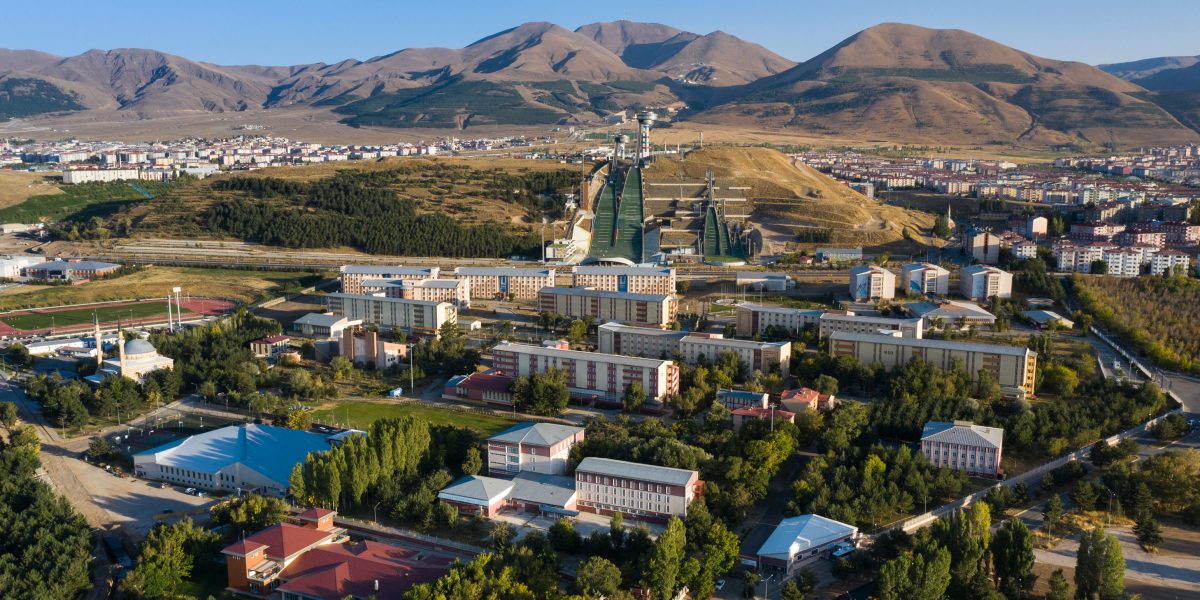
Located in Eastern Anatolia, the University recognises the ecological importance of the region’s mountain habitats, grasslands, agricultural ecosystems, forests and other terrestrial environments. These habitats support diverse plant and animal communities and are exposed to pressures associated with land-use change, habitat degradation, pollution and climate variability.
The University’s conservation activities are supported by established institutional structures, particularly the Biodiversity Application and Research Centre, the Community Engagement Projects Application and Research Centre, the Faculty of Agriculture and academic units working in ecology, forestry and biological sciences.
The University’s approach combines direct planting activities with biodiversity research, species identification, ecosystem conservation and community-based environmental projects.
During 2025, Atatürk University implemented documented activities to develop green spaces and supported scientific investigations relevant to terrestrial biodiversity.
These activities demonstrate institutional involvement in the protection and improvement of terrestrial environments.
2. Institutional Framework for Biodiversity Conservation
2.1. Biodiversity Application and Research Centre
The Biodiversity Application and Research Centre provides an institutional framework for research and education concerning biological diversity.
The Centre’s work addresses the identification, documentation and conservation of species and ecosystems.
Its published materials describe species conservation and ecosystem protection as interconnected activities.
The Centre identifies habitat protection, species monitoring, scientific research, restoration, community participation and sustainable land use as important components of biodiversity conservation.
This approach recognises that protecting biodiversity requires attention to both individual species and the ecosystems supporting them.
2.2. Conservation of Plant and Animal Diversity
The Centre’s scientific activities are relevant to the conservation of terrestrial plants and animals, including organisms associated with agricultural soils and other managed habitats.
Taxonomic research and biological inventories contribute to understanding species distributions and ecological relationships.
Such information can support the identification of conservation priorities and environmental pressures.
2.3. Conservation of Threatened Ecosystems
The Centre’s conservation framework addresses the risks associated with habitat destruction, pollution, climate change and other human activities.
It also explains the importance of protecting species whose populations may be threatened.
These institutional priorities provide a basis for research and conservation planning concerning vulnerable ecosystems.
Official Evidence
Biodiversity Application and Research Centre
Species and Ecosystem Conservation
3. Direct Ecosystem Development in 2025: Gaza Memorial Forest
Project: Gaza Memorial Forest – Gazze Hatıra Ormanı
Year: 2025
Location: Western Campus, Atatürk University, Erzurum
Activity: Sapling planting and development of a memorial forest area
Institutional Support: University Rectorate and participating academic units
In 2025, Atatürk University supported the establishment of the Gaza Memorial Forest through a campus-based tree-planting initiative.
The event was organised through cooperation between the University’s Jerusalem Studies Application and Research Centre and the Nihâvend Music Club of the Faculty of Theology, with support from the Rectorate.
The planting activity took place in the Western Campus area near the Food and Livestock Application and Research Centre.
University administrators, academic staff and students participated directly in planting saplings and providing initial watering.

3.1. Direct Environmental Intervention
The project involved planting trees in a designated university area.
This represents a physical intervention intended to increase planted vegetation and develop campus green space.
3.2. Institutional Participation
The activity received direct support from university management.
The Rector, vice rectors, academic staff and students participated in the planting programme.
3.3. Development of Vegetation Cover
Establishing planted areas can contribute to the development of vegetation cover and, where planting is successful, support future habitat development.
3.4. Environmental Stewardship
The activity encouraged students and staff to participate directly in caring for the campus environment.
3.5. Implementation Evidence
The University’s official announcement, published on 3 June 2025, documents the planting activity and includes photographs.
Official Evidence
Atatürk University – Gaza Memorial Forest Saplings Planted
Atatürk University Bulletin – June 2025
4. Direct Ecosystem Development in 2025: Greening the Future
Project Title: Yeşeren Gelecek – Greening the Future
Project Period: October–December 2025
Implementation Date: 17 November 2025
Location: Tortum, Erzurum
Implementing Unit: Tortum Vocational School
Supporting Institution: Atatürk University
Local Partner: Tortum Municipality
The Greening the Future project provides direct evidence of the University’s contribution to developing vegetation and green spaces outside its central campus.
The project was implemented by first-year Computer Programming students at Tortum Vocational School through the University’s community engagement project framework.
4.1. Selection of the Planting Area
The planting area in Tortum was identified with support from Tortum Municipality.
The project team prepared the selected area before planting.
4.2. Selection of Plant Species
Pine and fruit saplings were selected with consideration of the area’s climatic and soil conditions.
This demonstrates attention to local environmental characteristics when undertaking planting activities.
4.3. Implementation
On 17 November 2025, students and project participants planted saplings in Tortum.
The activity involved site preparation, planting and initial watering.
4.4. Maintenance Responsibilities
The project report states that watering and maintenance responsibilities were distributed among students at designated intervals.
This is particularly relevant to Indicator 15.2.3 because the project included arrangements for caring for the planted vegetation after the initial activity.
4.5. Community Cooperation
The project was supported by Tortum Municipality and involved the University’s academic and student community.
4.6. Documented Outcomes
The project report confirms that planting was completed.
The activity contributed to the development of local green spaces and encouraged environmental responsibility among participating students.
The project demonstrates direct institutional action to extend planted vegetation, with documented arrangements for subsequent maintenance.
Official Evidence
AVESİS – Greening the Future Project
The project’s result report is available through its AVESİS project records.
5. Maintenance of Planted Areas and Continuing Vegetation Care
Maintaining newly planted vegetation is important for the long-term development of green spaces.
The University’s 2025 conservation-related activities include both planting and documented arrangements for maintenance.
5.1. Initial Watering
Participants watered newly planted saplings during the Gaza Memorial Forest activity.
5.2. Assigned Maintenance Responsibilities
The Greening the Future project established responsibilities for periodic watering and care among participating students.
5.3. Local Environmental Suitability
The Tortum project considered soil and climate conditions when selecting saplings.
5.4. Institutional Plant Production
The University’s greenhouse and landscaping activities provide additional institutional capacity for managing planted areas.
These measures support the establishment and maintenance of vegetation.
Long-term survival rates and measured changes in habitat quality would require follow-up monitoring data.
6. Plant Biodiversity Conservation and Botanical Expertise
Atatürk University’s research and teaching infrastructure contributes to knowledge of terrestrial plants and their environments.
The Biodiversity Application and Research Centre provides scientific resources relevant to plant identification and ecosystem conservation.
The Faculty of Agriculture supports research and education concerning plant production, soil conditions and sustainable land management.
6.1. Plant Identification
Accurate identification of plant species supports biodiversity inventories and conservation planning.
6.2. Plant–Environment Relationships
Understanding how plant species respond to soil, climate and environmental pressures can inform conservation and restoration decisions.
6.3. Vegetation Development
The University’s planting projects demonstrate practical efforts to establish additional vegetation in selected locations.
6.4. Plant Conservation Education
Academic and community projects provide opportunities to develop knowledge of plants and their ecological importance.
6.5. Living Collections and Educational Resources
The Biodiversity Centre’s educational materials include botanical collections and arboretum-related topics.
These resources support learning about plant diversity and conservation.
Institutional Evidence
Biodiversity Centre – Education and Conservation Resources
7. Animal Biodiversity Conservation and Scientific Research
Terrestrial biodiversity conservation also requires understanding animal species, their distributions and their relationships with habitats.
Atatürk University contributes through taxonomic research and studies of organisms associated with agricultural and natural environments.
7.1. Documented 2025 Research: Soil-Associated Nematodes
The University’s academic publication records include the 2025 study:
A New Longidoridae Member, Xiphinema brevicolle, from Citrus Orchards in Türkiye
Published in the Turkish Journal of Agriculture and Forestry.
DOI: 10.55730/1300-011X.3320
The study contributes to scientific knowledge of nematode diversity associated with terrestrial agricultural environments.
Nematodes are animals, and their identification contributes to understanding soil-associated biodiversity.
7.2. Documented 2025 Research: Pasinler Plain
The University’s Biodiversity Application and Research Centre also lists a 2025 conference contribution:
Distribution of Plant-Parasitic Nematodes at Genus Level in Sunflower Production Areas of Pasinler Plain
The research addresses nematode diversity in an agricultural landscape in Eastern Anatolia.
Its location-specific focus is relevant to understanding animal communities associated with regional soils and vegetation.
7.3. Biodiversity Knowledge and Conservation
These studies contribute to the scientific documentation of terrestrial animal diversity.
Species identification and distribution research can inform environmental assessment and land management.
The research outputs provide evidence of biodiversity investigation, while direct population protection or habitat restoration would require additional intervention records.
Official Evidence
2025 Publications – Biodiversity Application and Research Centre
8. Protecting Ecosystems Under Environmental Pressure
The University’s biodiversity conservation framework recognises threats to terrestrial ecosystems.
These include:
- Habitat loss and fragmentation.
- Soil degradation.
- Pollution.
- Climate variability.
- Unsustainable resource use.
- Changes in biological communities.
- Declines in species populations.
The University’s scientific and educational activities support understanding of these pressures.
8.1. Habitat Protection
Maintaining vegetation and limiting unnecessary disturbance can help protect terrestrial habitats.
8.2. Soil Ecosystems
Research on soil-associated organisms contributes to understanding biodiversity within agricultural landscapes.
8.3. Plant Diversity
Plant identification and botanical research provide information relevant to habitat management.
8.4. Animal Diversity
Taxonomic studies document animal species and their distributions.
8.5. Environmental Education
Community engagement projects encourage participation in ecosystem conservation.
These activities contribute to the knowledge and practical measures needed to address ecosystem degradation.
9. Community Engagement as an Institutional Conservation Mechanism
The Community Engagement Projects Application and Research Centre supports university-led projects addressing environmental and social needs.
This institutional mechanism enables students and academic staff to undertake practical environmental activities.
9.1. Direct Conservation Projects
The Greening the Future project demonstrates the use of this framework to implement planting activities.
9.2. Student Participation
Students take part in project planning and field implementation.
9.3. External Cooperation
Projects can involve municipalities and other community partners.
9.4. Practical Environmental Responsibility
Participants gain experience in planting and caring for vegetation.
9.5. Institutional Continuity
The Centre provides an established structure through which environmental projects can be proposed and supported.
Official Evidence
Community Engagement Projects Centre
Greening the Future – University-Supported Project
10. Previous Conservation Projects Demonstrating Institutional Continuity
Atatürk University’s ecosystem-related work extends beyond the 2025 reporting year.
Earlier initiatives provide evidence of an established institutional interest in biodiversity and environmental protection.
10.1. Biodiversity Conservation Workshop – 2022
The University organised a biodiversity conservation workshop addressing the protection of species and ecosystems.
The event contributed to scientific discussion and environmental awareness.
10.2. Environmentally Friendly Planting Activities – 2023
The Community Engagement Projects Centre supported tree-planting activities in Tortum.
Saplings were planted in educational institution grounds, including Tortum Kindergarten, Atatürk Primary School and Tortum Vocational School.
The project involved species such as cornelian cherry, mulberry, walnut and apple.
10.3. Sustainable Ecosystems – 2024
The University’s community engagement project portfolio included a project titled Sustainable Ecosystems.
10.4. Sustainable Aquaponic Systems – 2024
A university-supported educational project introduced sustainable aquaponic systems to high-school students.
These projects demonstrate continuity in environmental engagement and ecosystem-related education.
The 2025 planting projects represent more recent evidence of direct physical intervention.
Official Evidence
Biodiversity Conservation Workshop
Community Engagement Projects Centre
11. Academic and Research Infrastructure Supporting Ecosystem Conservation
Atatürk University maintains academic structures relevant to ecosystem protection.
| Institutional Unit | Conservation-Related Contribution |
|---|---|
| Biodiversity Application and Research Centre | Species identification, biodiversity research and ecosystem conservation |
| Faculty of Agriculture | Plant science, soil research and sustainable land management |
| Department of Forestry | Forestry education and knowledge of terrestrial environments |
| Community Engagement Projects Centre | Support for practical environmental projects |
| Tortum Vocational School | Implementation of community-based planting activities |
| Relevant Biological Sciences Departments | Research on plants, animals and ecosystems |
| University Administrative Units | Institutional support for conservation and campus planting |
Together, these units support the University’s capacity to undertake conservation-related activities.
12. Direct Institutional Contributions During 2025
The University’s documented 2025 activities can be distinguished by the type of contribution they make.
| Activity | Ecosystem Component | Type of Contribution | 2025 Evidence |
|---|---|---|---|
| Gaza Memorial Forest | Terrestrial vegetation | Direct sapling planting | Official University announcement |
| Greening the Future | Local vegetation and green spaces | Direct planting and maintenance arrangements | University-supported project and result report |
| Nematode biodiversity research | Terrestrial animal diversity | Species identification and scientific documentation | Academic publication |
| Pasinler Plain nematode research | Soil-associated animal communities | Location-specific biodiversity assessment | Conference contribution |
| Biodiversity Centre activities | Plant and animal biodiversity | Institutional conservation expertise | Centre publications and resources |
| University plant production and landscaping | Planted vegetation | Operational support for vegetation management | Institutional activity reporting |
The planting initiatives provide the most direct evidence of physical ecosystem development.
The biodiversity studies provide scientific evidence concerning terrestrial animal diversity.
13. Relationship Between Plant and Animal Biodiversity
Terrestrial ecosystems depend on interactions between plants, animals, microorganisms and their physical environments.
Atatürk University’s activities address different parts of this relationship.
Plant-Related Activities
Tree planting, vegetation development, botanical research and plant-related education.
Animal-Related Activities
Species identification, nematode biodiversity research and scientific assessment of terrestrial organisms.
Ecosystem-Level Activities
Biodiversity conservation research, environmental education and the management of planted areas.
Combining these activities supports a broader institutional understanding of terrestrial ecosystems.
However, changes in animal populations following planting activities have not been established by the cited project records.
14. Ecosystem Maintenance and Extension Framework
The University’s activities can be organised according to their conservation functions.
| Conservation Function | Institutional Activity | Evidence |
|---|---|---|
| Extending planted vegetation | Gaza Memorial Forest | Official 2025 event report |
| Extending local green spaces | Greening the Future | 2025 project report |
| Supporting vegetation maintenance | Assigned watering and care responsibilities | Greening the Future result report |
| Documenting animal biodiversity | Nematode research | 2025 academic publications |
| Supporting plant biodiversity knowledge | Biodiversity and agricultural research | Institutional research structures |
| Promoting ecosystem conservation | Biodiversity Centre | Institutional conservation programme |
| Supporting community participation | Community Engagement Projects Centre | Project records |
This framework demonstrates that the University contributes through both direct field activities and supporting scientific work.
15. Monitoring and Evaluation of Ecosystem Conservation
The effectiveness of ecosystem conservation activities can be evaluated through measurable indicators.
| Indicator | Measurement Purpose | Evidence Type |
|---|---|---|
| Number of planted saplings | Scale of planting activity | Project reports |
| Planting area | Spatial extent of intervention | Site records |
| Species planted | Composition of new vegetation | Planting inventories |
| Sapling survival rate | Long-term establishment | Follow-up monitoring |
| Maintenance activities | Continuing ecosystem care | Maintenance logs |
| Plant species richness | Botanical diversity | Species inventories |
| Animal species richness | Faunal diversity | Research records |
| Habitat condition | Ecosystem quality | Field assessments |
| Threatened species records | Conservation priorities | Verified species assessments |
| Community participation | Institutional and social engagement | Project records |
The 2025 project records document completed planting activities and, in the Tortum project, assigned maintenance responsibilities.
Additional ecological monitoring would help determine whether these interventions produce measurable improvements in habitat quality or species diversity.
16. Institutional Conservation Outcomes in 2025
The documented outcomes include:
Direct vegetation development: Saplings were planted on the University campus and in Tortum.
Maintenance planning: The Tortum project assigned watering and maintenance responsibilities.
Community cooperation: Tortum Municipality supported the selection of the planting area.
Student participation: University students took part directly in conservation-related fieldwork.
Animal biodiversity research: Scientific studies contributed to knowledge of terrestrial nematode diversity.
Institutional support: The University’s established research centres and community engagement structures supported environmental activities.
These outcomes demonstrate direct action concerning vegetation and continuing scientific work relevant to biodiversity.
17. Conservation Priorities and Continuous Improvement
The University’s existing work provides a foundation for further ecosystem conservation.
Relevant priorities include:
17.1. Maintaining Planted Areas
Continue appropriate care of planted vegetation and record maintenance activities.
17.2. Monitoring Plant Establishment
Assess survival and growth of planted saplings.
17.3. Recording Plant Species
Maintain inventories of species used in planting activities.
17.4. Assessing Habitat Development
Investigate changes in vegetation cover and habitat conditions.
17.5. Monitoring Animal Biodiversity
Use suitable field methods to document terrestrial animal communities.
17.6. Prioritising Threatened Ecosystems
Identify locations and species requiring targeted conservation measures.
17.7. Supporting Community Cooperation
Continue conservation projects with local stakeholders.
17.8. Reporting Outcomes
Publish evidence of implementation and ecological results.
These priorities provide a basis for evaluating and developing future conservation activities.
18. Evidence and Official References
1. Gaza Memorial Forest – 2025 Implementation
2. Atatürk University Bulletin – June 2025
https://ataunibulten.atauni.edu.tr/wp-content/uploads/2025/07/Haziran-2025.pdf
3. Greening the Future – 2025 University-Supported Project
https://avesis.atauni.edu.tr/proje/47b8a921-5a62-4d39-b2cf-6dc175820df0/yeseren-gelecek
4. Biodiversity Application and Research Centre
5. Species and Ecosystem Conservation
https://abbm.atauni.edu.tr/tur-ve-ekosistem-koruma/
6. Biodiversity Centre – Education and Conservation
https://abbm.atauni.edu.tr/egitim/
7. Biodiversity Centre – Academic Publications
https://akademik.atauni.edu.tr/yayinlar?unit=13272
8. Faculty of Agriculture
https://birimler.atauni.edu.tr/ziraat-fakultesi/
9. Community Engagement Projects Centre
10. Biodiversity Conservation Workshop
https://atauni.edu.tr/ataturk-universitesi-tarafindan-biyocesitliligi-koruma-calistayi-duzenlendi
19. Contribution to SDG 15 – Life on Land
Atatürk University undertakes direct institutional activities to maintain and develop terrestrial environments and support the conservation of plant and animal biodiversity.
In 2025, the University established planted areas through the Gaza Memorial Forest initiative and the Greening the Future project in Tortum.
These activities involved university-supported sapling planting, student participation and cooperation with external stakeholders.
The Tortum project also included arrangements for watering and maintaining the planted vegetation.
Alongside these physical interventions, the University’s Biodiversity Application and Research Centre contributed scientific research concerning terrestrial animal diversity, including nematode species identification and distribution.
The Faculty of Agriculture and other academic units provide additional expertise relevant to plant diversity, soil ecosystems and sustainable land management.
Through practical vegetation development, community-based conservation projects and biodiversity research, Atatürk University contributes to SDG 15 – Life on Land, Indicator 15.2.3: Direct Institutional Efforts to Maintain and Extend Existing Ecosystems and Their Biodiversity.