SDG 15 – Life on Land
Indicator 15.3.3 – Does your university as a body include local biodiversity in planning and development processes, including the construction of new buildings?
Reporting Year: 2025 | THE Sustainability Impact Ratings 2027
1. Institutional Commitment to Biodiversity-Sensitive Development

Atatürk University incorporates environmental sustainability, green-space management and ecological considerations into its institutional approach to campus planning and development.
The University’s principal planning framework is the Sustainable Campus Master Plan (Sürdürülebilir Yerleşke Master Planı), which addresses the spatial development of the campus through an integrated approach to land use, landscape design, infrastructure and future expansion.
The Master Plan provides a basis for considering the relationship between built environments, open spaces, vegetation and the ecological characteristics of the campus.
Atatürk University’s approach is supported by its academic expertise in landscape architecture, urban planning, environmental sciences and biodiversity research.
During 2025, the University continued to manage its campus environment and implemented a new tree-planting initiative within its Western Campus.
These activities demonstrate the University’s continuing institutional attention to green-space development and the relationship between physical development and the natural environment.
2. Sustainable Campus Master Plan: Institutional Planning Framework
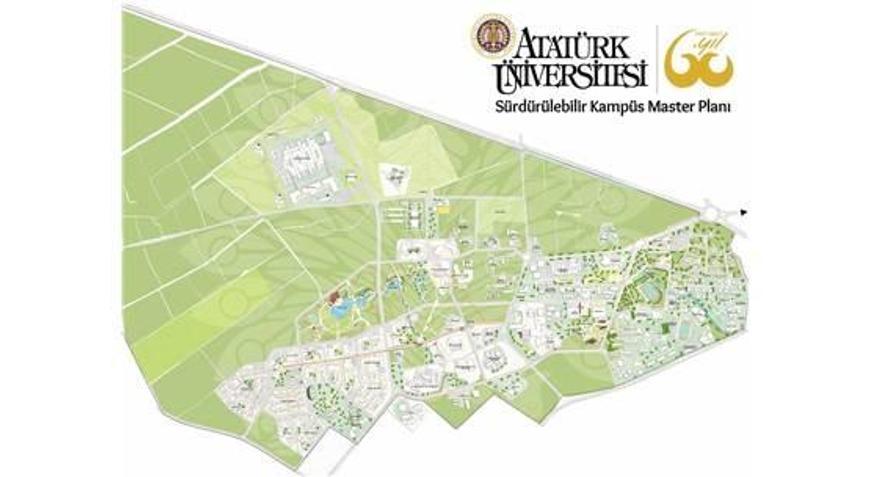
The Sustainable Campus Master Plan was developed by Atatürk University’s Faculty of Architecture and Design and registered as an environmental design project in 2018.
The plan covers the existing campus, residential areas and anticipated future development of the Western Campus.
It provides an institutional framework for considering environmental and spatial conditions together.
2.1. Integrated Land-Use Planning
The Master Plan examines campus land use, existing development and future expansion requirements.
This approach allows decisions concerning buildings and infrastructure to be considered in relation to the wider campus environment.
2.2. Landscape Planning
Landscape design is an integral component of the Master Plan.
The planning process considers the relationship between constructed spaces, vegetation, pedestrian environments and open areas.
2.3. Ecological Considerations
The Master Plan addresses environmental conditions as part of sustainable campus development.
Its interdisciplinary approach provides a framework for considering ecological characteristics when evaluating future development.
2.4. Campus Expansion
The planning scope includes the Western Campus and future development areas, allowing environmental and landscape considerations to be examined alongside spatial growth.
2.5. Institutional Ownership
The Master Plan was prepared through a university-led project involving specialists in urban planning, architecture and landscape design.
It therefore represents an institutional planning resource rather than an isolated environmental initiative.
Official Evidence
Sustainable Campus Master Plan – Full Document
Sustainable Campus Master Plan – AVESİS Project Record
3. Integration of Biodiversity into Campus Land-Use Decisions
Campus development affects existing vegetation, open spaces, soil surfaces and the habitats associated with them.
Atatürk University’s Sustainable Campus Master Plan provides a spatial planning framework within which these factors can be considered.
The relevant planning principles include:
- Examining existing environmental and landscape conditions before determining spatial development.
- Considering the relationship between built-up areas and surrounding open spaces.
- Incorporating landscape design into campus development.
- Addressing pedestrian circulation and connections between campus areas.
- Evaluating future development in relation to the existing campus structure.
- Maintaining a coherent approach to the management of campus green spaces.
These principles establish the planning context for biodiversity-sensitive development.
Specific biodiversity surveys, protected-species assessments or ecological approval requirements for individual construction projects should be documented separately where applicable.
4. Biodiversity Considerations in Building and Infrastructure Development
Atatürk University manages construction and infrastructure investments through institutional planning and investment-monitoring procedures.
The University’s 2024 Investment Monitoring and Evaluation Report, published in 2025, documents campus infrastructure works and associated expenditures.
The report identifies infrastructure activities associated with the Biodiversity Application and Research Centre building and its temporary storage area.
4.1. Biodiversity Research Infrastructure
The inclusion of the Biodiversity Centre within campus infrastructure investment demonstrates institutional support for facilities dedicated to biodiversity research and related activities.
4.2. Campus Infrastructure
The investment report documents campus infrastructure works, including improvements to roads, paved surfaces and associated facilities.
4.3. Landscape and Environmental Context
Campus infrastructure is part of the wider spatial environment addressed by the Sustainable Campus Master Plan.
4.4. Institutional Monitoring
The Strategy Development Department’s investment reporting provides a formal record of infrastructure implementation and expenditure.
These records establish that biodiversity-related facilities form part of the University’s development activities. They do not, by themselves, demonstrate that every construction project has undergone a species-specific biodiversity assessment.
Official Evidence
2024 Investment Monitoring and Evaluation Report
5. Campus Green Spaces and Environmental Planning
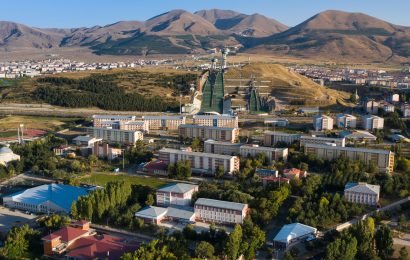
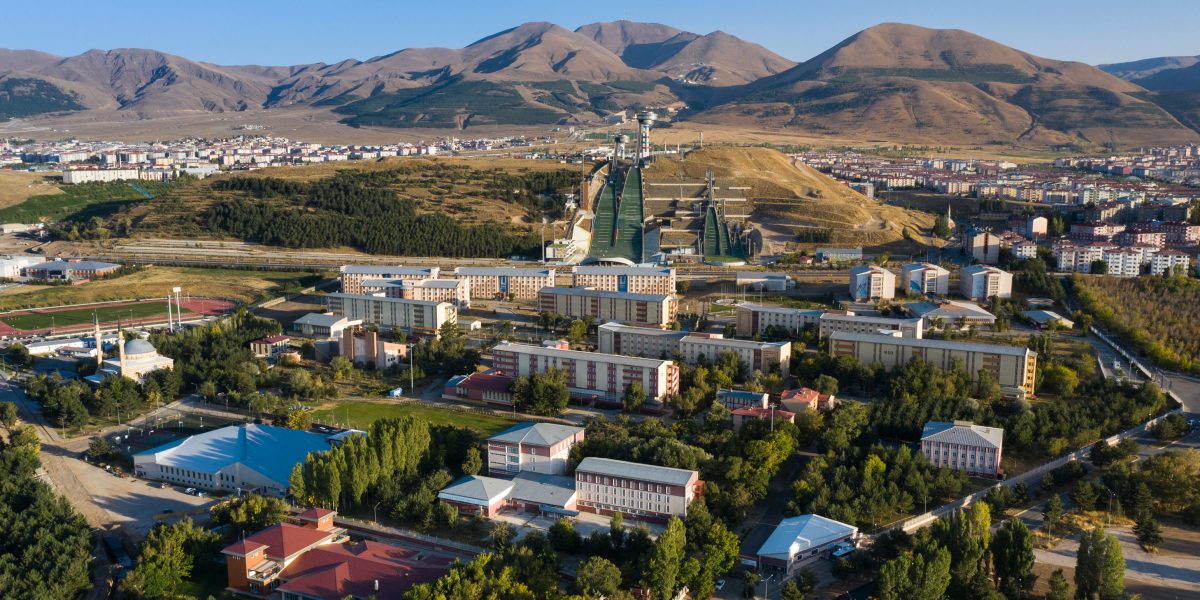
Atatürk University maintains an extensive campus environment containing open spaces, landscaped areas and vegetation.
The University has previously reported approximately:
| Campus Land Category | Reported Area |
|---|---|
| Open space | 33 million m² |
| Green area | 7 million m² |
| Enclosed building area | 1 million m² |
These figures provide an institutional baseline for understanding the scale of the campus environment.
Green spaces contribute to the physical character of the University and provide opportunities for vegetation management, ecological research and environmental education.
The presence of green areas does not automatically establish their biodiversity value. Their ecological contribution depends on factors such as plant composition, habitat condition and management practices.
Nevertheless, the scale of the University’s green-space resources makes their consideration relevant to long-term campus development.
Official Evidence
Atatürk University – Recognition Among the World’s Green Universities
6. Documented 2025 Implementation: Gaza Memorial Forest
Project: Gaza Memorial Forest (Gazze Hatıra Ormanı)
Implementation: May 2025
Official University Announcement: 3 June 2025
Location: Western Campus, near the Food and Livestock Application and Research Centre
Institutional Support: Atatürk University Rectorate
In 2025, Atatürk University established the Gaza Memorial Forest within its Western Campus.
The initiative was organised through cooperation between the Jerusalem Studies Application and Research Centre and the Faculty of Theology’s Nihâvend Music Club, with the support of the University Rectorate.
University administrators, academic staff, students and external representatives participated in the planting event.
6.1. Green-Space Development
The project introduced new tree saplings into a designated campus area.
6.2. Institutional Participation
The initiative involved the University Rectorate and multiple institutional units.
6.3. Campus Landscape Contribution
The newly planted area contributes to the University’s campus greening activities.
6.4. Long-Term Environmental Relevance
As the planted trees develop, they may contribute to vegetation cover and the landscape character of the campus.
Their eventual ecological contribution will depend on species selection, survival, maintenance and local habitat conditions.
6.5. Relevance to Planning and Development
The project provides a documented example of the University allocating and developing campus land for tree planting during the 2025 reporting year.
It demonstrates a practical green-space intervention within the University’s physical environment.
Official Evidence
Gaza Memorial Forest – Atatürk University, 3 June 2025
Atatürk University Bulletin – June 2025
7. Biodiversity Application and Research Centre
The Biodiversity Application and Research Centre provides scientific expertise relevant to the University’s understanding of biodiversity.
Its activities address biodiversity research, species documentation, conservation and environmental education.
The Centre contributes to institutional knowledge concerning plant and animal diversity.
7.1. Plant Biodiversity
Research and museum collections provide information about plant diversity and botanical characteristics.
7.2. Animal Biodiversity
The Centre documents different groups of animals through scientific collections and research activities.
7.3. Species and Ecosystem Conservation
The Centre’s conservation-related activities provide expertise relevant to understanding the ecological value of terrestrial environments.
7.4. Educational Resources
The Biodiversity Science Museum communicates information about biodiversity through exhibitions and educational activities.
7.5. Planning Relevance
Scientific knowledge about species and ecosystems can inform decisions concerning vegetation management, landscape planning and environmental protection.
The Centre therefore provides a source of expertise relevant to biodiversity-sensitive campus development.
Official Evidence
Biodiversity Application and Research Centre
Species and Ecosystem Conservation
Insect Biodiversity Exhibition
8. Landscape Architecture and Interdisciplinary Planning Expertise
The Sustainable Campus Master Plan was developed through cooperation between academic specialists in different design disciplines.
Its project team included expertise in:
Landscape Design
The planning and design of vegetation, open spaces and outdoor environments.
Urban Design
The relationship between buildings, public spaces and circulation networks.
Architectural Design
The integration of building development into the wider campus setting.
Spatial Planning
The organisation of existing land uses and future development areas.
This interdisciplinary structure supports the consideration of environmental conditions within institutional development planning.
Official Evidence
Sustainable Campus Master Plan – Full Publication
9. Green Campus Practices and Recognition
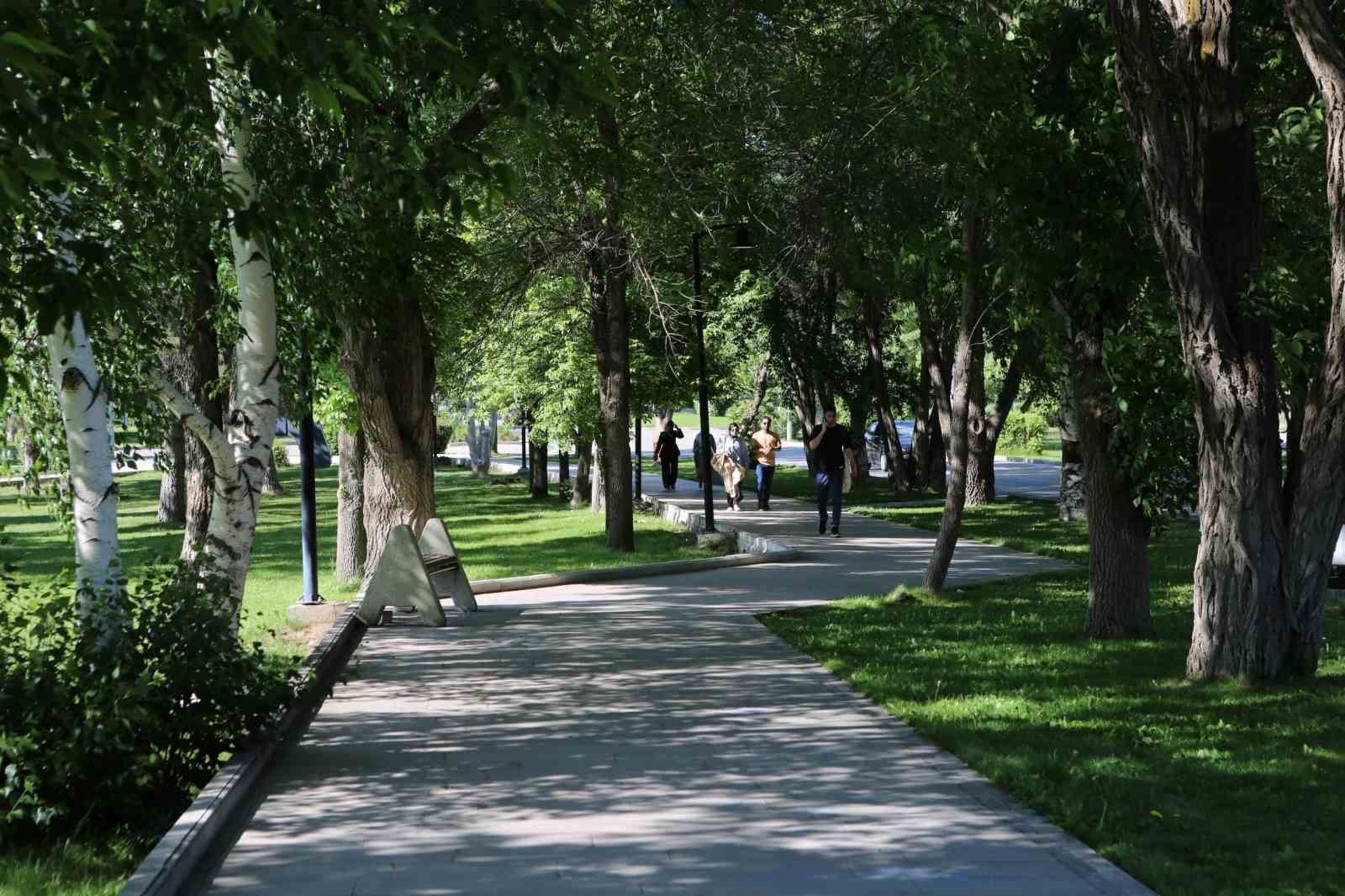
Atatürk University has incorporated campus greening and landscape management into its wider sustainability activities.
In 2024, the Faculty of Communication received a Green Campus Award recognising its environmental landscaping and green-space activities.
The award provides an example of environmental improvement at faculty level.
The University’s participation in the UI GreenMetric ranking also provides an external framework for reporting campus sustainability performance.
GreenMetric addresses a range of sustainability dimensions, including setting and infrastructure.
These activities support institutional awareness of sustainable campus management.
However, sustainability rankings and landscaping awards should be considered complementary evidence rather than substitutes for project-specific biodiversity assessments.
Official Evidence
Faculty of Communication – Green Campus Award
Atatürk University – Green Campus Recognition
10. Institutional Governance and Development Monitoring
Biodiversity-sensitive campus development requires coordination between planning, infrastructure management and environmental expertise.
Atatürk University’s relevant institutional structures include:
| Institutional Unit or Framework | Role |
|---|---|
| Sustainable Campus Master Plan | Long-term spatial and landscape planning |
| Rectorate | Institutional leadership and support |
| Strategy Development Department | Investment monitoring and reporting |
| Campus infrastructure units | Physical development and maintenance |
| Faculty of Architecture and Design | Planning and landscape expertise |
| Biodiversity Application and Research Centre | Biodiversity research and scientific knowledge |
| Community engagement units | Environmental participation and awareness |
Together, these structures provide institutional capacity for addressing the environmental dimensions of campus development.
The Sustainable Campus Master Plan and investment-monitoring reports are particularly relevant because they concern planning and physical development at the university level.
11. Biodiversity-Sensitive Planning Considerations
The University’s planning framework and biodiversity expertise support consideration of several environmental issues.
| Planning Area | Biodiversity Consideration |
|---|---|
| New building locations | Existing vegetation and surrounding environmental conditions |
| Campus expansion | Relationship between development areas and open spaces |
| Landscape design | Plant selection and ecological suitability |
| Green-space management | Vegetation condition and continuity |
| Infrastructure upgrades | Effects on surrounding land and vegetation |
| Pedestrian routes | Relationship between circulation and landscaped areas |
| Tree planting | Species suitability, maintenance and survival |
| Environmental education facilities | Access to biodiversity knowledge |
| Long-term campus planning | Balance between development and environmental quality |
These considerations provide a framework for evaluating the relationship between campus development and biodiversity.
The University’s published Master Plan establishes the planning foundation; implementation of individual ecological safeguards requires corresponding project documentation.
12. Reporting-Year Evidence and Institutional Continuity
The following records demonstrate the relationship between the University’s established planning framework and its documented development activities.
| Year | Evidence | Institutional Relevance |
|---|---|---|
| 2018 | Sustainable Campus Master Plan | Integrated spatial and landscape planning |
| 2024 | Green Campus Award | Faculty-level environmental landscaping |
| 2024 | Campus infrastructure investments | Institutional development and biodiversity-related facilities |
| 2025 | Publication of the 2024 Investment Monitoring Report | Formal infrastructure monitoring |
| 2025 | Gaza Memorial Forest | Campus tree planting and green-space development |
| 2025 | Continued operation of the Biodiversity Centre | Scientific support for biodiversity knowledge |
The 2025 tree-planting initiative provides a direct reporting-year example of campus greening.
The Sustainable Campus Master Plan remains the central institutional evidence concerning the integration of environmental considerations into spatial planning.
13. Monitoring Biodiversity in Future Development
Atatürk University’s established planning and research infrastructure provides a basis for assessing biodiversity considerations in future development.
Relevant monitoring measures include:
- Recording vegetation and habitat conditions before major site development.
- Documenting tree removal and replacement where applicable.
- Assessing the ecological suitability of landscape planting.
- Monitoring the survival of newly planted trees.
- Recording changes in campus green-space area.
- Considering habitat connectivity when planning new infrastructure.
- Consulting biodiversity specialists where development may affect sensitive areas.
- Maintaining environmental records for significant construction projects.
These measures represent practical assessment criteria and should be distinguished from formally adopted requirements unless documented in the relevant university procedures.
14. Alignment with Sustainable Development Goals
Atatürk University’s campus planning and environmental activities contribute to several Sustainable Development Goals.
SDG 11 – Sustainable Cities and Communities
Through integrated campus planning and the management of built and open spaces.
SDG 13 – Climate Action
Through campus greening and environmental sustainability activities.
SDG 15 – Life on Land
Through biodiversity research, vegetation management and consideration of terrestrial environments in development planning.
SDG 17 – Partnerships for the Goals
Through cooperation between university units and external stakeholders in environmental initiatives.
15. Evidence and Official References
1. Sustainable Campus Master Plan – Full Document
https://sdg.atauni.edu.tr/wp-content/uploads/2020/11/Ataturk-Universitesi-Surdurulebilir-YMP.pdf
2. Sustainable Campus Master Plan – AVESİS
3. Investment Monitoring and Evaluation Report
4. Gaza Memorial Forest – 2025
5. Atatürk University Bulletin – June 2025
https://ataunibulten.atauni.edu.tr/wp-content/uploads/2025/07/Haziran-2025.pdf
6. Biodiversity Application and Research Centre
7. Species and Ecosystem Conservation
https://abbm.atauni.edu.tr/tur-ve-ekosistem-koruma/
8. Faculty of Communication – Green Campus Award
9. University Green Campus Recognition
https://atauni.edu.tr/tr/ataturk-universitesi-dunyanin-en-yesil-250-universitesi-arasinda-yer-aldi
16. Contribution to SDG 15 – Life on Land

Atatürk University addresses environmental sustainability and biodiversity-related considerations through its institutional campus planning framework, landscape management, research infrastructure and green-space development activities.
The Sustainable Campus Master Plan establishes an integrated approach to existing land use, future expansion, landscape design and the relationship between built and open spaces.
The University’s infrastructure investment records demonstrate formal monitoring of campus development and investment in biodiversity-related facilities.
During 2025, the University implemented the Gaza Memorial Forest project within its Western Campus, creating a new tree-planted area through an institutionally supported initiative.
The Biodiversity Application and Research Centre provides scientific knowledge about plants, animals and ecosystems, while the University’s architecture and landscape disciplines contribute expertise relevant to sustainable development.
Together, these activities provide evidence of an institutional framework that considers environmental conditions in campus planning and supports the protection and development of green spaces.
This approach contributes to SDG 15 – Life on Land, Indicator 15.3.3: Including Local Biodiversity in Institutional Planning and Development Processes.