
Atatürk University supports student health and well-being through access to specialised healthcare services, psychological counselling, health-related education and institutional initiatives addressing women’s health, reproductive health and gender-based violence. Its healthcare and academic infrastructure provides students with access to relevant clinical expertise, while educational programmes and awareness activities promote health literacy, informed decision-making, dignity and personal well-being.
1. Access to Clinical and Reproductive Healthcare Services
Atatürk University provides specialised women’s and reproductive healthcare through its Research Hospital’s Department of Obstetrics and Gynaecology. The department offers services in general gynaecology, adolescent gynaecology, perinatology, urogynecology, menopause, gynaecological oncology and assisted reproductive treatment.
These services provide a clinical pathway for assessment, diagnosis, treatment and follow-up of reproductive and gynaecological health concerns. The department’s scope includes adolescent gynaecological problems, general reproductive health conditions, pregnancy-related care and specialised clinical services.
Available services include:
- General and adolescent gynaecology: Assessment and treatment of gynaecological conditions, including adolescent gynaecological concerns.
- Reproductive and pregnancy-related care: Perinatology, pregnancy monitoring and related specialist services.
- Urogynecology: Specialist care for conditions affecting pelvic floor and urinary health.
- Specialised women’s healthcare: Menopause and gynaecological oncology services.
Evidence: Atatürk University Research Hospital – Department of Obstetrics and Gynaecology
2. Sexual and Reproductive Health Education
Atatürk University integrates sexual and reproductive health knowledge into relevant health sciences education. Its academic programmes address reproductive health, family planning, women’s health and the delivery of evidence-informed healthcare.
The University’s 2024–2025 Ebelik programme documentation includes teaching and assessment in Sexual Health, Sexual Health Research Methods, Reproductive Health, and related subjects. The programme also includes subjects addressing sexual health and mental health, family planning and clinical practice.
The Nursing Faculty’s clinical practice framework for Birth, Women’s Health and Diseases Nursing requires students to identify the health education needs of individuals and families, plan and deliver health education, and demonstrate appropriate clinical practice skills. These activities strengthen professional knowledge and the capacity to communicate health information responsibly.
Key educational areas include:
- Sexual and reproductive health literacy
- Women’s health and reproductive system conditions
- Family planning and reproductive healthcare
- Health education and communication
- Clinical assessment and evidence-informed care
Evidence:
- Ebelik Programme – 2024–2025 Academic Documentation
- Nursing Faculty – Birth, Women’s Health and Diseases Nursing Clinical Practice Guide
3. Psychological Counselling, Confidentiality and Student Well-Being
The University’s Psychological Counselling and Guidance Application and Research Centre provides individual counselling services to undergraduate and postgraduate students. The Centre supports students in making informed decisions, developing communication skills, adapting to university life and addressing personal challenges.
The Centre states that counselling sessions are conducted according to the principle of confidentiality and that its services are free of charge for University students. Students can request appointments in person or through the Centre’s website.
Psychological support is an important complementary component of student well-being, particularly when personal relationships, emotional distress, safety concerns or other sensitive issues affect a student’s quality of life.
Evidence:
- Psychological Counselling and Guidance Centre – Student Services
- Psychological Counselling and Guidance Centre – Contact Information
4. Gender-Based Violence Prevention and Access to Support
Atatürk University addresses gender-based violence through awareness, education and collaboration with relevant institutions. These activities complement sexual and reproductive health provision by promoting personal safety, respectful relationships, rights awareness and access to appropriate support.
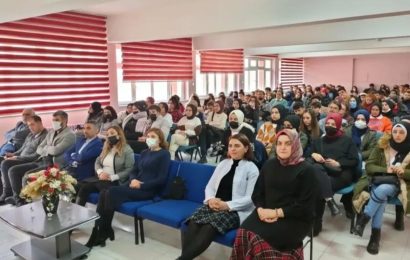
In February 2025, the University’s Women’s Studies Application and Research Centre participated in a training initiative addressing violence against women. The activity formed part of a wider programme involving universities and institutional partners, with training for law students and peer education.
On 25 November 2025, an event titled “The Traces of Violence Against Women” was held at Atatürk University in cooperation with Erzurum Technical University and the Provincial Directorate of Family and Social Services. The event addressed violence against women from social, media and gender-related perspectives.
These initiatives contribute to a campus environment that encourages awareness of gender-based violence and supports education on prevention, rights and social responsibility.
Evidence:
- Women’s Studies Centre – Violence Prevention Training, February 2025
- 2025 Activity Report – “The Traces of Violence Against Women”
5. Health Literacy and Research-Informed Education
The University supports health literacy through academic teaching and research on the understanding, evaluation and use of health information. The Nursing Faculty’s Health Literacy course addresses the role of health information in individual and public health, including women’s health and the health of children and adolescents.
Research conducted within the University’s academic environment also examines the relationship between health literacy and reproductive health-related attitudes. This work contributes to the evidence base for health education and highlights the importance of accessible, understandable and reliable information when making health-related decisions.
Evidence:
- Nursing Faculty – Health Literacy Course Catalogue
- AVESİS – Research on Health Literacy and Reproductive Health
6. Institutional Framework and Student Access
Atatürk University’s approach combines specialised healthcare, confidential psychological counselling, health sciences education and gender-based violence prevention. Together, these institutional mechanisms support students’ ability to access relevant professional expertise, understand health information and seek appropriate support when needed.
The University Hospital provides specialist clinical services, while the Psychological Counselling and Guidance Centre offers free and confidential counselling to students. Academic programmes develop professional competencies in sexual and reproductive health, and awareness initiatives address gender-based violence and personal safety.
Through these complementary services and educational activities, Atatürk University supports student health, informed decision-making and well-being, contributing to SDG 3 – Good Health and Well-being, Indicator 3.3.4: Sexual and Reproductive Health Care Services for Students.