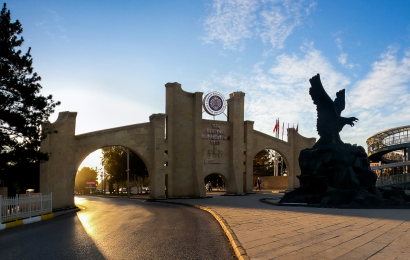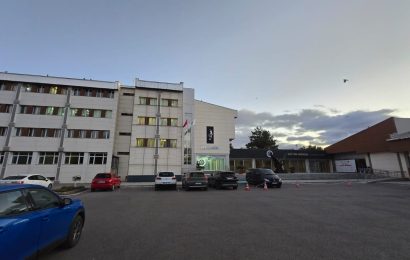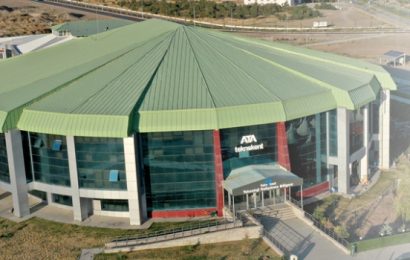

Ataturk University is committed to helping students from low-income households complete their higher education without being forced to discontinue their studies because of financial hardship.
The University maintains an institutional support framework addressing essential living and educational needs, including food, accommodation, transportation and financial assistance. This framework combines programmes administered directly by the University with support opportunities offered by public institutions, foundations and other organisations.
Particular attention is given to students experiencing economic disadvantage, including those from households within the lowest 20% of the national income distribution.
The University’s approach recognises that financial difficulties can affect students’ ability to remain enrolled, participate in academic activities and successfully complete their degree programmes.
Key Support Mechanisms
-
Transportation:
In partnership with the Erzurum Metropolitan Municipality, all Atatürk University students are entitled to a 35% discount on public bus services, significantly reducing the transportation expenses of disadvantaged students.Transportation costs represent a recurring financial burden for students travelling between their accommodation, academic buildings and other essential services.
Atatürk University’s previously reported support framework identifies discounted municipal transportation as an important form of assistance.
Public transportation services are provided by Erzurum Metropolitan Municipality, which administers student fare arrangements through the municipal transportation system.
Student discounts are available through the applicable municipal fare policies. These arrangements benefit eligible students generally, including those from economically disadvantaged households.
Although municipal transportation discounts are not administered directly by the University and are not exclusively targeted at low-income students, they complement the University’s support measures by reducing the cost of attending classes and accessing campus facilities.
Official sources:

-
Housing and Accommodation Support
Affordable accommodation is an important component of Atatürk University’s student welfare framework.
The University’s previously reported support arrangements include accommodation opportunities through its own student housing facilities and the national Credit and Dormitories Institution (KYK) administered by the Ministry of Youth and Sports.
The previous institutional submission identified a University-operated female student dormitory and approximately 26,000 KYK accommodation places across Erzurum, comprising around 16,000 places for female students and 10,000 for male students.
These figures describe the previously reported regional accommodation provision and should not be interpreted as the number of places reserved exclusively for Atatürk University students or students from low-income households.
The University also provides information on accommodation and financial support opportunities through its student services.
Access to affordable accommodation can reduce one of the largest recurring costs associated with university attendance, particularly for students who relocate from other provinces or rural areas.
Official sources:
- Credit and Dormitories Institution – Ministry of Youth and Sports
- Atatürk University – Student Opportunities and Scholarships

-
Food Assistance: University Meal Scholarship Programme
Atatürk University provides a structured meal scholarship programme for academically successful students from low-income households.
The programme is administered by the Department of Health, Culture and Sports through the University’s academic units.
Students submit applications to their faculties, schools or other relevant academic units, generally by the end of October.
Approved recipients receive one free meal each weekday throughout the academic year at University dining facilities.
This assistance directly reduces daily living expenses for eligible students. It also provides an established institutional mechanism for identifying and supporting students experiencing financial difficulties.
The University’s official Social Services Branch Directorate identifies low household income as an explicit criterion for this programme.
Official source: Atatürk University – Social Services Branch Directorate

-
Direct Financial Aid:
-
Atatürk University provides and facilitates access to financial support programmes for students who require assistance during their studies.
Its official student opportunities page identifies scholarship support for students with insufficient financial resources, including assistance provided through the Atatürk University Development Foundation.
The Development Foundation Scholarship supports students who lack adequate financial means and contributes to their ability to continue their education.
The University’s published student information also identifies institutional achievement scholarships and externally funded scholarship opportunities.
The Rectorate Scholarship, previously reported by the University, represents an additional institutional support channel, subject to the relevant eligibility criteria and funding arrangements.
Together, these programmes provide financial assistance opportunities beyond general national student support arrangements.
Official source: Atatürk University – Employment Opportunities and Scholarships
-
Paid Part-Time Employment for Students
Atatürk University operates a formal part-time student employment programme to provide eligible students with paid work opportunities during their education.
The programme is coordinated through the Department of Health, Culture and Sports.
Students may apply through their academic units for employment in University faculties, schools, institutes, research centres and administrative departments.
The University administers employment contracts, insurance procedures and salary payments through its designated student employment unit.
Under the published employment arrangements, students may work up to 15 hours per week.
Eligibility requirements include financial criteria, such as restrictions concerning students who already receive income at or above the minimum-wage threshold, subject to specified exceptions.
The programme therefore offers a structured opportunity for eligible students to supplement their income while remaining enrolled in higher education.
Official sources:
- Social Services Branch Directorate – Student Employment
- Part-Time Student Employment Contract
- Student Employment Eligibility Requirements
National Student Employment Support: İŞKUR Youth Programme
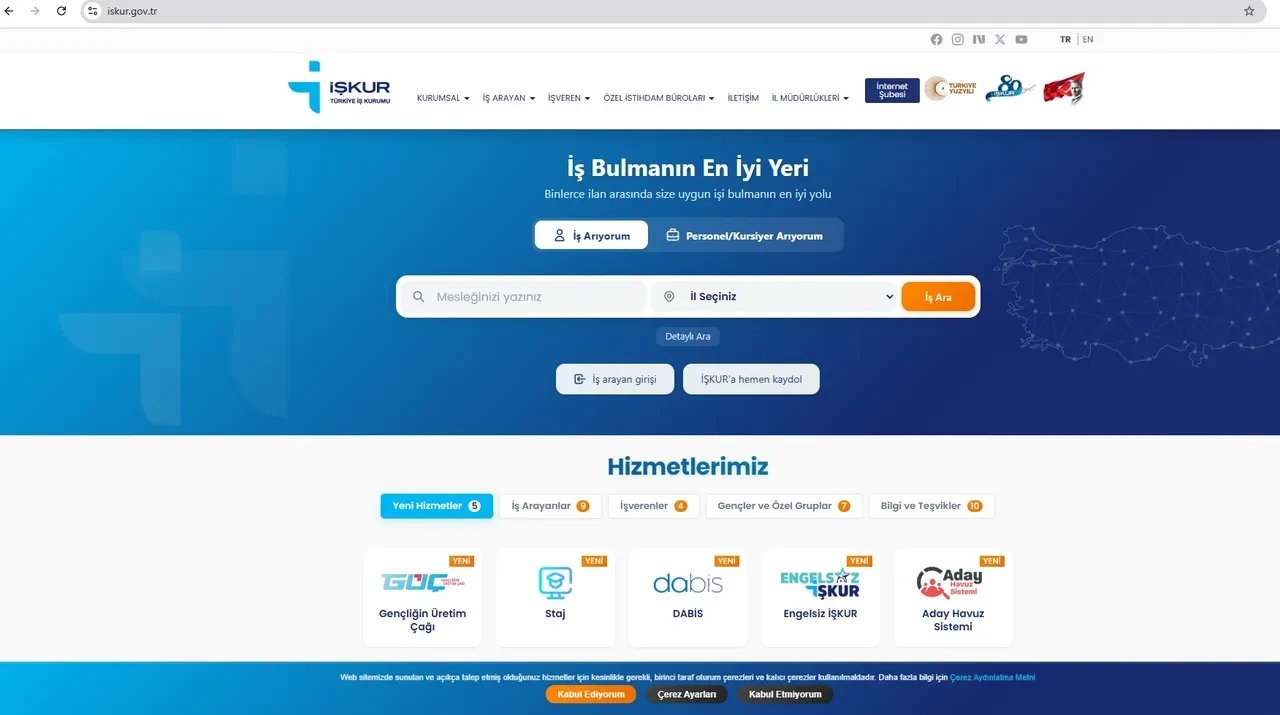
Atatürk University also participates in the national İŞKUR Youth Programme, which provides eligible university students with opportunities to gain work experience and receive financial compensation.
The programme complements the University’s existing part-time employment arrangements and provides another pathway for students seeking to meet their educational and living expenses.
The University’s Social Services Branch Directorate includes the programme among its student employment services.
As a national initiative, its financial support is distinguished from scholarships funded directly by the University.
Official source: Atatürk University – Social Services and Student Employment
Free Psychological Counselling and Student Wellbeing Services

Financial hardship can be accompanied by personal and academic difficulties that affect students’ educational continuity.
Atatürk University provides free psychological counselling through its Psychological Counselling and Guidance Application and Research Centre.
Established in 2017, the Centre supports students in addressing personal difficulties, developing problem-solving skills, improving academic adjustment and adapting to university life.
Students can access counselling through individual appointments, including online appointment arrangements.
The University states that counselling services are provided free of charge and that personal information is protected under confidentiality principles.
These services are available to the wider student population and provide an additional support mechanism for students experiencing socioeconomic disadvantage.
Official sources:
Special and External Scholarships
Beyond institutional bursaries, Atatürk University students also have access to national and regional scholarships offered by public institutions, municipalities, NGOs, and private donors. These programs complement the university’s own support mechanisms and widen the financial safety net.
| Support / Scholarship | Provider | Type of Support | Duration | Target Group |
|---|---|---|---|---|
| Public Bus Discount | Erzurum Metropolitan Municipality | 35–45% reduced fares on city buses | Continuous | All students (beneficial for low-income families) |
| KYK Housing Support | Credit and Dormitories Institution | Affordable dormitories, housing subsidies | Annual | Low-income students nationwide |
| University Meal Scholarship | Atatürk University | Free/subsidized meals | 9 months | Students with proven financial need |
| Rectorate Scholarship | Atatürk University Rectorate | Monthly financial aid | 4–12 months | Low-income students |
| Development Foundation Scholarship | Atatürk University Development Foundation | Grants covering tuition/living costs | Variable | Low-income and successful students |
| Social Support Scholarship | Erzurum Metropolitan Municipality | Annual financial assistance | Once a year | Students facing financial hardship |
| AFAD Scholarship | Disaster and Emergency Management Authority | Long-term support for disaster-affected students | 12 months | Students from disaster-affected households |
| TEV Education Bursary | Turkish Education Foundation (TEV) | Monthly bursary | 9 months | Successful, low-income students |
| Sabancı Foundation Scholarship | Sabancı Foundation | Education support | Annual | Selected fields, success + need |
| Vehbi Koç Foundation Scholarship | VKV | Monthly stipend | Annual | Low-income, successful students |
| Anadolu Foundation Scholarship | Anadolu Foundation | Grants for higher education | 9 months | Nationwide, success + need |
| Alarko AKEV Scholarship | Alarko Education & Culture Foundation | Monthly bursary | Annual | Disadvantaged students |
| ÇYDD Scholarship | Association for Supporting Contemporary Life | Education bursary | 9–10 months | Students in financial need |
| TOG Bursary | Community Volunteers Foundation | Financial + volunteering program | Annual | Students engaged in volunteerism |
| İnsan Foundation Scholarship | İnsan Vakfı | Monthly bursary | 9–10 months | Low-income students nationwide |
| Borusan Kocabıyık Foundation | Borusan Foundation | Financial grants | Annual | High-achieving, low-income students |
| SANKO Foundation Scholarship | Sani Konukoğlu Foundation | Monthly bursary | Annual | Public university students |
| Tekfen Foundation Scholarship | Tekfen Foundation | Monthly bursary (e.g., 8,000 TL / 7 months) | Annual | Selected STEM majors |
| EKEV Scholarship | Erzurum Education and Culture Foundation | Monthly bursary | 8–9 months | Students in Erzurum, need-based |
| TDV Scholarship | Turkish Religious Foundation | Grants for theology and related studies | Annual | Theology students |
| VGM General Directorate of Foundations Scholarship | VGM (state) | Bursary (approx. 3,000 TL/month) | 8 months | Students without KYK bursary |
| TÜBİTAK 2205 Undergraduate Bursary | TÜBİTAK BİDEB | Research/academic bursary | Annual | High-performing STEM students |
| İSOV Scholarship | Istanbul Chamber of Industry Foundation | Monthly bursary | Annual | Engineering students |
| Elginkan Foundation Scholarship | Elginkan Foundation | Monthly bursary | Annual | Selected universities and majors |
| Suna & İnan Kıraç Foundation Support | SİKV | Grants for education and culture | Variable | Students in need and excellence |
By combining its own institutional bursaries with national and private foundation supports, Atatürk University ensures that students from the lowest income groups receive strong financial backing throughout their academic journey. This integrated approach eliminates economic barriers.