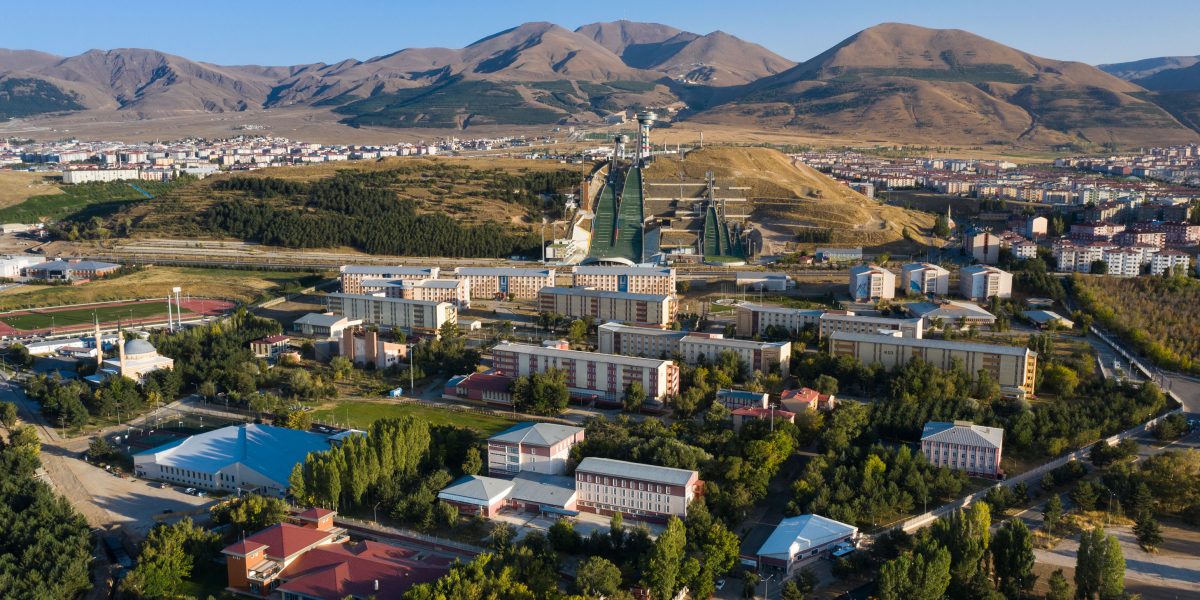
Atatürk University acts institutionally—through its faculties, research centres and community-engagement offices—to provide comprehensive educational and outreach programmes for local and national communities, aimed at the sustainable management of land for tourism. The university integrates curriculum, workshops, field experiences, community training and collaborative programmes to engage diverse stakeholders—locals, tourism operators, public authorities and students—on land-use practices in tourism contexts. The following detailed description outlines the structure, activities (including 2024-year examples), governance, and outcomes of these programmes.
1. Institutional Framework & Strategic Alignment
Atatürk University has embedded sustainable land-use for tourism education within its institutional strategy. The Faculty of Tourism’s 2024-2028 Strategic Plan includes explicit objectives such as “Develop training and awareness initiatives with stakeholders on the environmental, social and economic sustainability of tourism land use” and “Provide community outreach programmes for local tourism businesses and public institutions in the region.” (Turizm Fakültesi Strategic Plan 2024-2028)
The university’s outreach infrastructure is supported by its Toplumsal Duyarlılık Projeleri (TDP) Application and Research Centre, which mandates projects from 2023 onwards to align with the Sustainable Development Goals (including those related to sustainable land use and tourism). These formal governance structures show that the university acts as a body, not just individual units, to deliver sustainable land-management education for tourism.
2. Curriculum and Academic Programmes Incorporating Land-Management for Tourism
The Faculty of Tourism offers dedicated course modules on “Sustainable Tourism”, “Destination Planning and Land Use”, and “Eco-tourism and Landscape Management” in its 2024-2025 academic year curriculum. Students are exposed to field-based assignments, community outreach components and land-management case studies. By delivering these academic programmes, the university ensures that education on sustainable land-use in tourism is embedded in institutional teaching.
In 2024, the Faculty also delivered a special intensive seminar series titled “Tourism Land Stewardship in Eastern Anatolia”, open to local tourism operators and municipal officials, covering sustainable land zoning, eco-tourism best practices and heritage‐landscape protection.
3. Community Outreach Projects & Public Engagement (2024 Evidence)
In 2024, Atatürk University carried out the following major outreach initiatives on sustainable land-management for tourism:
-
“Erzurum Alpine Trails & Eco-Tourism Land Stewardship Workshop” (April 2024) – a weekend training programme delivered in partnership with local municipalities and tourism SMEs around the Palandöken mountain region. Participants included local guides, landowners, youth groups and tourism entrepreneurs. The workshop addressed trail-impact management, habitat-protection in tourism zones, and developed local land-use protocol for hiking and nature tourism sites.
-
“Community-Based Agro-Tourism Land-Use Education Programme” (September 2024) – a 6-week evening course jointly led by the Faculty of Tourism and Faculty of Agriculture, targeting local farmers and agro-tourism hosts. Topics included sustainable land-management for farm-stay tourism, terrace-farming for visitors, visitor-flow management, heritage landscape presentation and low-impact lodging expansions.
-
“Sustainable Land-Use for Winter Tourism Resorts” Training Series (November–December 2024) – an outreach module for resort managers, municipal planners and tourism operators in the Erzurum region focused on the sustainable design of ski resorts, lodging placement, watershed & slope protection, visitor carrying-capacity and land-zoning issues.
These three programmes demonstrate Atatürk University’s institutional delivery of community-oriented education in sustainable land-management for tourism—reaching beyond its student body into local and regional stakeholders.
4. Education/Outreach Focus on Sustainable Management of Land for Tourism
The content and format of the delivered programmes reflect best practice in sustainable land-management for tourism:
-
Field-based workshops and land-use site visits (e.g., alpine trails, ski-resort zones) allow participants to observe and assess land-management issues in tourism contexts.
-
Joint academic-community formats (e.g., the agro-tourism course) integrate students, farmers, tourism operators, enabling cross-sector knowledge transfer and local capacity-building.
-
Formal certification and follow-up modules enable stakeholders to adopt sustainable land-management protocols in their tourism businesses or municipal services.
-
The programmes include modules on: visitor-carrying capacity, landscape-impact mitigation, site planning for tourism infrastructure, stakeholder engagement in land-use decisions, environmental monitoring of tourism land zones, eco-certification of tourism land-use, and heritage-landscape interpretation linked to land stewardship.
5. Governance, Monitoring & Institutional Ownership
Atatürk University coordinates these educational/outreach programmes through an institutional structure: the Faculty of Tourism, the Toplumsal Duyarlılık Projeleri Centre (TDP) and associated unit committees. The TDP Centre’s 2024 Application Principles document mandates SDG-alignment and outreach objectives for all supported projects, ensuring institutional oversight.
At the Faculty level, a “Sustainable Tourism & Land-Use Steering Committee” chaired by the Dean meets quarterly to review programme reach, stakeholder feedback, land-use outcomes and integrate findings into the strategic plan. Annual reporting is published via the university quality office and used to refine future outreach.
The governance model indicates that Atatürk University acts as a coordinated body delivering sustainable land-management education for tourism, not as ad-hoc individual efforts.